Araceae
Giraffe's Knees: The African Aroid with Spotted Knobbly Stems
Gonatopus boivinii
Keep soil consistently moist during the growing season. Avoid direct sunlight — prefers filtered or dappled shade. Reduce watering during winter dormancy. Fertilize monthly in spring and summer.
Every 5 days
Low light
15° - 32°C
60% - 85%
Categories
What is Giraffe's Knees?
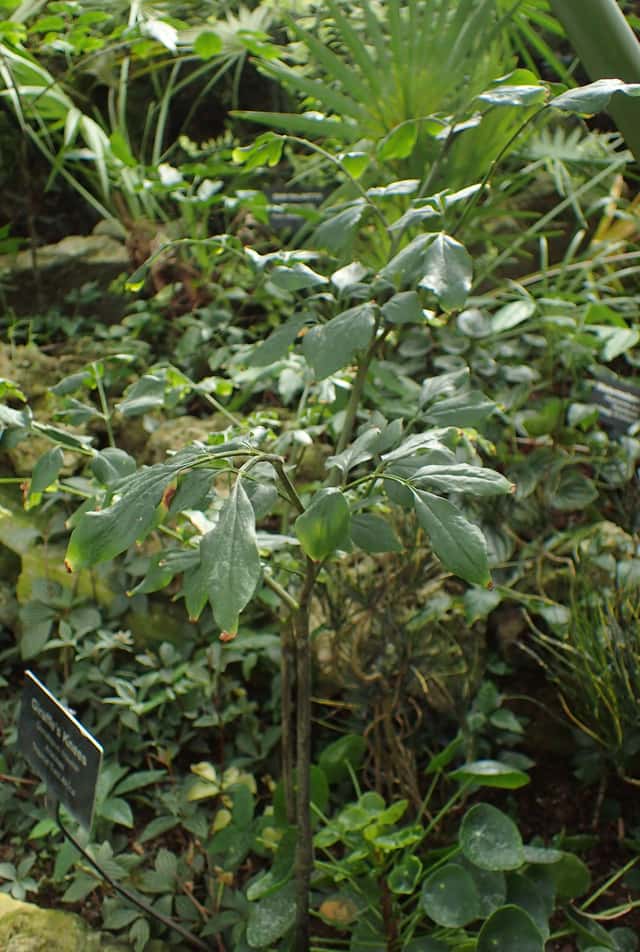
Giraffe's Knees (Gonatopus boivinii) is a medium-care plant from the Araceae family. Gonatopus boivinii, commonly known as Giraffe's Knees, is a rare tuberous aroid native to East Africa (Kenya and Tanzania). Its distinctive stem features swollen knobby nodes that resemble a giraffe's knobbly knees, making it one of the most visually unique houseplants available. A single large marb...
Giraffe's Knees grows up to 90cm, spread of 60cm, watering every 5 days, 15°C – 32°C, 60–85% humidity. It is suitable for indoor environments and not safe for pets.
Without precautions, ingestion can cause irritation in pets. Keep out of reach of cats and dogs. Without adequate drainage, root rot can develop within 10 days.
How to Care for Giraffe's Knees?
TLDR: Giraffe's Knees needs Low light, watering every 5 days, and temperatures between 15-32°C with 60-85% humidity.
How Often Should You Water Giraffe's Knees?
Water every 4–6 days during active growth, keeping soil moist but not waterlogged. In winter, when the plant goes dormant, reduce watering significantly — the tuber tolerates temporary dryness.
How Much Light Does Giraffe's Knees Need?
Place in bright indirect light or semi-shade. Avoid direct sun which can scorch the marbled foliage. A well-lit corner or near a curtained window is ideal.
What Is the Best Soil for Giraffe's Knees?
Use rich, well-draining loamy soil with organic matter. A mix of potting soil, perlite, and coco coir works excellently. Maintain pH between 5.5 and 7.0.
What Pot Should You Use for Giraffe's Knees?
Ceramic or terracotta pot with drainage holes. The pot weight helps support the large leaf. Repot every 2 years or when the tuber fills the pot.
Care Schedule
Fertilize
Every 30 days
Misting
Every 3 days
Repot
Every 730 days
What Is Giraffe's Knees and Where Does It Come From?
Gonatopus boivinii, commonly known as Giraffe's Knees, is a rare tuberous aroid native to East Africa (Kenya and Tanzania). Its distinctive stem features swollen knobby nodes that resemble a giraffe's knobbly knees, making it one of the most visually unique houseplants available. A single large marbled leaf emerges from the flat tuber, reaching up to 90 cm tall. It is a deciduous plant that goes dormant in winter, dropping its leaf.
How to Propagate Giraffe's Knees?
Tuber Division
Divide only during winter dormancy. Use a sterilized knife to prevent fungal infections.
- 1 Remove tuber from pot during dormancy
- 2 Divide into sections ensuring each piece has at least one growth point
- 3 Allow cut surfaces to callous for 24 hours
- 4 Plant in moist, well-draining substrate
- 5 Keep in a warm, slightly humid spot until new growth appears
Materials needed:
Seed Propagation
Seed propagation is slow and unreliable. Tuber division is strongly preferred.
- 1 Collect ripe seeds from flowers
- 2 Sow in moist, well-draining substrate
- 3 Cover lightly with a thin layer of substrate
- 4 Maintain in warm, humid environment
- 5 Expect germination in 4–8 weeks
Materials needed:
How Big Does Giraffe's Knees Grow?
TLDR: Giraffe's Knees can reach up to 90cm tall with Slow growth rate.
Max height
90cm
Spread
60cm
Growth rate
Slow
Foliage
Deciduous
Warning: Toxic Plant
This plant can be toxic if ingested. Keep out of reach of:
Plant Uses
Ornamental
Great for decoration
Is your plant showing symptoms?
Click on the symptom to discover possible causes:
What Diseases Commonly Affect Giraffe's Knees?
TLDR: Giraffe's Knees is susceptible to 5 known diseases. Monitor regularly for early detection.
Root Rot
Root rot is a serious fungal disease that affects the root system of plants, causing them to decay and die. It is primarily caused by overwatering, poor drainage, or soil-borne fungi such as Pythium, Phytophthora, Rhizoctonia, and Fusarium. The disease thrives in waterlogged conditions where roots are deprived of oxygen, making them susceptible to fungal infection.
Overwatering
Overwatering occurs when plants receive too much water, depriving roots of oxygen and causing root rot. This environmental stress is one of the most common causes of houseplant death, as waterlogged soil prevents roots from breathing and functioning properly.
Spider Mites
Spider mites are tiny arachnids (less than 1/20 inch long) related to spiders and ticks that feed on plant sap. They thrive in hot, dry conditions and can cause significant damage to ornamental and vegetable plants. During severe infestations, crop losses can reach 14% or higher as these pests disrupt vital plant processes including photosynthesis, carbon dioxide absorption, and transpiration.
Aphids
Aphids are small, soft-bodied, pear-shaped insects (1/16 to 1/8 inch long) that feed by sucking nutrient-rich sap from plants. They reproduce rapidly and can quickly weaken plants, causing distorted growth and transmitting plant viruses. Aphids come in various colors including green, black, red, yellow, brown, and gray. They secrete honeydew, a sticky substance that attracts ants and encourages sooty mold growth.
Fun Facts
The genus name Gonatopus comes from Greek meaning "knee" and "foot", a direct reference to the unique stem nodes
It is closely related to Zamioculcas zamiifolia (ZZ Plant), another beloved African houseplant
Each plant produces only ONE leaf at a time, making every single leaf extra special
The flat tuber can survive periods of complete drought during dormancy by storing water and nutrients
Frequently asked questions
How often should I water Giraffe's Knees?
Is Giraffe's Knees toxic?
Why did my Giraffe's Knees lose its leaf?
What light does Giraffe's Knees need?
When does Giraffe's Knees flower?
Compare with similar plants
| Attribute | Difficulty | Light | Watering | Pet Safe |
|---|---|---|---|---|
| Dark Fieldcap | Medium | Low light | 2d | ⚠️ |
| Azalea | Medium | Partial shade | 3d | ⚠️ |
| Muriel's Bamboo | Medium | Partial shade | 3d | ✓ |
| Bougainvillea | Medium | Direct sun | 7d | ⚠️ |