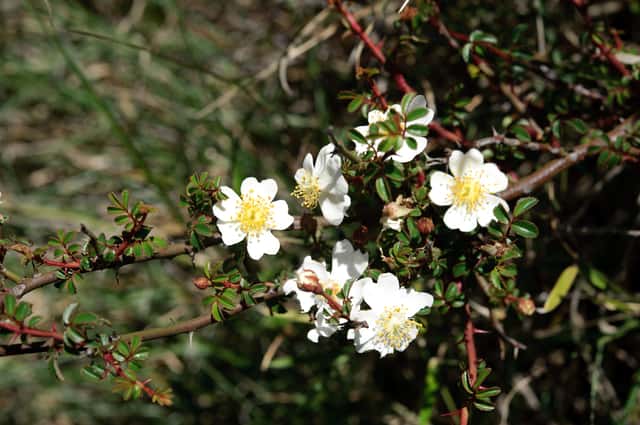
Rosaceae
Glandular Rose: Full Sun Plant
Rosa transmorrisonensis
Plant in a sunny spot with well-drained soil. Hardy in USDA zones 8-11. Tolerates moderate cold and high humidity.
Every 4 days
Direct sun
5° - 28°C
50% - 80%
Categories
What is Glandular Rose?
Glandular Rose (Rosa transmorrisonensis) is a medium-care plant from the Rosaceae family. Rosa transmorrisonensis is a climbing rose native to Taiwan and the Philippines (Luzon), found in subtropical mountain biomes. It is distinguished from related species by its glabrous (smooth) styles.
Glandular Rose grows up to 3.0m, spread of 200cm, watering every 4 days, 5°C – 28°C, 50–80% humidity. It is not suitable for indoor environments and safe for pets.
Unlike many popular species, Glandular Rose is safe to keep around pets.
How to Care for Glandular Rose?
TLDR: Glandular Rose needs Direct sun, watering every 4 days, and temperatures between 5-28°C with 50-80% humidity.
How Often Should You Water Glandular Rose?
Water 1-2 times per week in summer, reducing in winter. Avoid waterlogging.
How Much Light Does Glandular Rose Need?
Full sun is ideal; tolerates partial shade but flowers less.
What Is the Best Soil for Glandular Rose?
Rich, well-drained soil with pH 6.0-7.0.
Care Schedule
Fertilize
Every 30 days
Misting
Every 3 days
Rotate
Every 7 days
Repot
Every 730 days
What Is Glandular Rose and Where Does It Come From?
Rosa transmorrisonensis is a climbing rose native to Taiwan and the Philippines (Luzon), found in subtropical mountain biomes. It is distinguished from related species by its glabrous (smooth) styles.
How Big Does Glandular Rose Grow?
TLDR: Glandular Rose can reach up to 3.0m tall with Medium growth rate.
Max height
3.0m
Spread
2.0m
Growth rate
Medium
Foliage
Semi-evergreen
Plant Uses
Ornamental
Great for decoration
Is your plant showing symptoms?
Click on the symptom to discover possible causes:
What Diseases Commonly Affect Glandular Rose?
TLDR: Glandular Rose is susceptible to 6 known diseases. Monitor regularly for early detection.
Black Spot
Black spot is the most serious fungal disease affecting roses, caused by the fungus Diplocarpon rosae. It is characterized by dark circular spots on leaves that progress to yellowing and premature leaf drop. The disease thrives in humid and cool conditions, especially early in the growing season.
Powdery Mildew
Powdery mildew is a common fungal disease caused by various fungi species including Erysiphe, Podosphaera, Oïdium, and Leveillula. It affects over 10,000 plant species worldwide. The disease thrives in warm, dry climates with high humidity and appears as a distinctive white powdery coating on plant surfaces.
Rust
Rust is a common fungal disease caused by fungi in the order Pucciniales that affects a wide variety of plants. The disease gets its name from the characteristic orange, yellow, or reddish-brown pustules that appear on leaves, resembling metal rust. This obligate fungal parasite requires living plants to survive and can cause significant economic losses in agricultural crops.
Aphids
Aphids are small, soft-bodied, pear-shaped insects (1/16 to 1/8 inch long) that feed by sucking nutrient-rich sap from plants. They reproduce rapidly and can quickly weaken plants, causing distorted growth and transmitting plant viruses. Aphids come in various colors including green, black, red, yellow, brown, and gray. They secrete honeydew, a sticky substance that attracts ants and encourages sooty mold growth.
Compare with similar plants
| Attribute | Difficulty | Light | Watering | Pet Safe |
|---|---|---|---|---|
| Dark Fieldcap | Medium | Low light | 2d | ⚠️ |
| Azalea | Medium | Partial shade | 3d | ⚠️ |
| Muriel's Bamboo | Medium | Partial shade | 3d | ✓ |
| Bougainvillea | Medium | Direct sun | 7d | ⚠️ |




