Amaranthaceae
Glasswort: Edible Plant
Salicornia
Glasswort is a true halophyte: it requires plenty of sunlight, constantly moist, salty-sandy soil, and regular watering with slightly saline water. As an annual plant, it can be grown from seed and is threatened by relatively few pests or diseases, provided it is not overwatered.
Every 3 days
Direct sun
10° - 30°C
% - %
Categories
What is Glasswort?
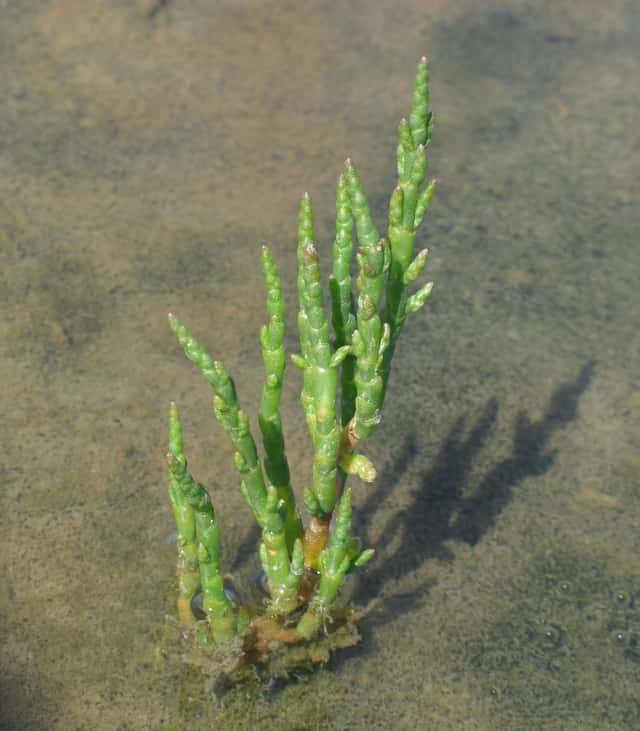
Glasswort (Salicornia) is a medium-care plant from the Amaranthaceae family. Glasswort (Salicornia) is a genus of annual, succulent-stemmed plants in the Amaranthaceae family, adapted to saltwater habitats. Its jointed, leafless, succulent shoots are green, often turning red or orange in the fall. It grows in coastal salt marshes, saline soils, and on the shores of salt lake...
Glasswort grows up to 40cm, spread of 30cm, watering every 3 days, 10°C – 30°C. It is suitable for indoor environments and safe for pets.
Unlike many popular species, Glasswort is safe to keep around pets. Without adequate drainage, root rot can develop within 7 days.
How to Care for Glasswort?
TLDR: Glasswort needs Direct sun, watering every 3 days, and temperatures between 10-30°C with 40-70% humidity.
How Often Should You Water Glasswort?
Keep the soil consistently moist; it even tolerates occasionally waterlogged conditions—shoots will begin to wilt in dry soil. For watering, slightly salty water (approx. 1 tablespoon of salt per liter of water) can be used occasionally, as the plant is salt-tolerant. Avoid prolonged standing water in potting media when kept in containers, as this can lead to root rot.
How Much Light Does Glasswort Need?
Requires full sun, at least 6-8 hours of direct light daily—the more light it receives, the fleshier and more flavorful the shoots will be.
What Is the Best Soil for Glasswort?
Prefers loose-textured, sandy or sandy-loam soil with a slightly alkaline pH (approx. 7-9). Good drainage is important, although the plant tolerates temporary flooding well, as its natural habitat is regularly inundated by tides.
What Pot Should You Use for Glasswort?
Choose a wide, shallow pot or tray with good drainage holes and a sandy-peaty potting mix. Since it can be watered with salt water, avoid metal or sensitive coated containers—glazed ceramic or plastic are durable solutions.
Care Schedule
Fertilize
Every 14 days
What Is Glasswort and Where Does It Come From?
Glasswort (Salicornia) is a genus of annual, succulent-stemmed plants in the Amaranthaceae family, adapted to saltwater habitats. Its jointed, leafless, succulent shoots are green, often turning red or orange in the fall. It grows in coastal salt marshes, saline soils, and on the shores of salt lakes, where almost no other plants can survive. Its young shoots are also known as "sea asparagus" or "sea beans" and are a sought-after vegetable worldwide for their crunchy, salty flavor.
How to Propagate Glasswort?
Sowing seeds
Germination can be prolonged and uneven; be patient. Avoid drying out during the germination period.
- 1 Sow seeds on the surface of a moist, sandy medium in spring
- 2 Cover very thinly with about 0.5-1 cm of potting medium
- 3 Keep the medium constantly moist at a temperature of 20-25°C
- 4 After germination, place in full sun and gradually acclimate to slightly salty irrigation water
Materials needed:
How Big Does Glasswort Grow?
TLDR: Glasswort can reach up to 40cm tall with Fast growth rate.
Max height
40cm
Spread
30cm
Growth rate
Fast
Foliage
Deciduous
Plant Uses
Edible
Can be consumed
Medicinal
Medicinal properties
Ornamental
Great for decoration
Medicinal Uses
- Rich in minerals (primarily sodium and iodine), it is used in folk nutrition to replenish salt content
- Some research, mainly from South Korea, has investigated the potential role of its extracts in supporting the treatment of high blood pressure and fatty liver, as well as its antioxidant effects
- These are preliminary results—always seek medical advice before using for medicinal purposes
Culinary Uses
- Young shoots can be eaten raw in salads or briefly blanched in boiling water
- A classic side dish for fish and seafood due to its crunchy texture and natural salty taste
- Can be preserved as a pickle in vinegar (often sold as "pickled sea asparagus")
Is your plant showing symptoms?
Click on the symptom to discover possible causes:
What Diseases Commonly Affect Glasswort?
TLDR: Glasswort is susceptible to 7 known diseases. Monitor regularly for early detection.
Aphids
Aphids are small, soft-bodied, pear-shaped insects (1/16 to 1/8 inch long) that feed by sucking nutrient-rich sap from plants. They reproduce rapidly and can quickly weaken plants, causing distorted growth and transmitting plant viruses. Aphids come in various colors including green, black, red, yellow, brown, and gray. They secrete honeydew, a sticky substance that attracts ants and encourages sooty mold growth.
Root Rot
Root rot is a serious fungal disease that affects the root system of plants, causing them to decay and die. It is primarily caused by overwatering, poor drainage, or soil-borne fungi such as Pythium, Phytophthora, Rhizoctonia, and Fusarium. The disease thrives in waterlogged conditions where roots are deprived of oxygen, making them susceptible to fungal infection.
Gray Mold (Botrytis Blight)
Gray mold, caused by the fungus Botrytis cinerea, is a widespread necrotrophic pathogen affecting over 1,400 plant species. It thrives in cool, humid conditions and attacks weakened or aging plant tissues, causing soft rot and characteristic gray fuzzy growth.
Bacterial Leaf Spot
Bacterial leaf spot is a plant disease caused by bacteria in the Xanthomonas and Pseudomonas genera that affects various ornamental and edible plants. The bacteria infect leaves through wounds or natural openings, causing characteristic lesions that can lead to premature leaf drop and plant weakening.
Meaning & Symbolism
Glasswort is a symbol of resilience and adaptability: it thrives and bears fruit even where high salinity would kill almost any other plant.
Compare with similar plants
| Attribute | Difficulty | Light | Watering | Pet Safe |
|---|---|---|---|---|
| Dark Fieldcap | Medium | Low light | 2d | ⚠️ |
| Azalea | Medium | Partial shade | 3d | ⚠️ |
| Muriel's Bamboo | Medium | Partial shade | 3d | ✓ |
| Bougainvillea | Medium | Direct sun | 7d | ⚠️ |




