Colchicaceae
Gloriosa Lily (Gloriosa rothschildiana) – Complete Care Guide
Gloriosa rothschildiana
Gloriosa Lily thrives in bright, direct light with regular watering during the growing season. Keep humidity moderate to high, ensure warm temperatures, and provide a sturdy support structure for climbing. Allow tubers to dry out fully in winter dormancy. All parts of the plant are highly toxic — handle with gloves.
Every 7 days
Bright indirect
18° - 30°C
50% - 70%
Categories
What is Gloriosa Lily?
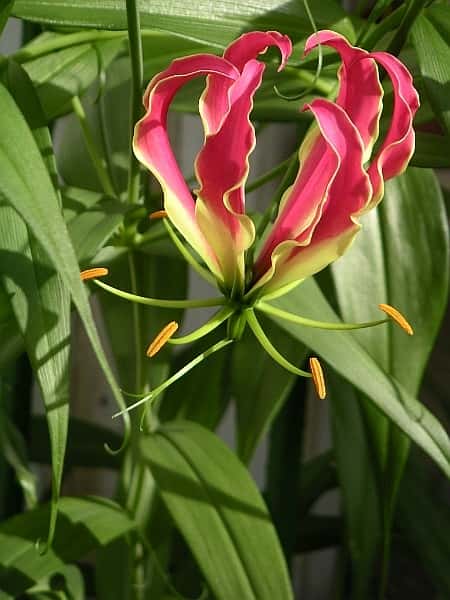
Gloriosa Lily (Gloriosa rothschildiana) is a medium-care plant from the Colchicaceae family. Gloriosa rothschildiana, commonly known as the Gloriosa Lily or Flame Lily, is a spectacular climbing plant native to Tropical Africa. It produces stunning flame-like flowers with reflexed red and yellow petals, making it one of the most exotic and eye-catching flowering plants available. Growing fr...
Gloriosa Lily grows up to 2.0m, spread of 60cm, watering every 7 days, 18°C – 30°C, 50–70% humidity. It is suitable for indoor environments and not safe for pets.
Without precautions, ingestion can cause irritation in pets. Keep out of reach of cats and dogs. Without adequate drainage, root rot can develop within 14 days.
How to Care for Gloriosa Lily?
TLDR: Gloriosa Lily needs Bright indirect, watering every 7 days, and temperatures between 18-30°C with 50-70% humidity.
How Often Should You Water Gloriosa Lily?
Water regularly during the growing season (spring-summer), keeping the soil consistently moist but never waterlogged. Allow the top inch of soil to dry slightly between waterings. Reduce watering significantly in autumn and stop entirely in winter when the plant goes dormant.
How Much Light Does Gloriosa Lily Need?
Gloriosa Lily requires bright light and can handle direct morning sun. Place it near a south or east-facing window indoors, or in a sunny garden spot outdoors. Avoid harsh afternoon sun in very hot climates, which can scorch the delicate flowers.
What Is the Best Soil for Gloriosa Lily?
Plant in a light, well-draining potting mix enriched with organic matter. A blend of quality potting soil, perlite, and orchid bark works well. Good drainage is essential — soggy soil leads to tuber rot, which is the most common cause of plant failure.
What Pot Should You Use for Gloriosa Lily?
A terracotta or ceramic pot with excellent drainage holes is ideal, as these materials help prevent waterlogging. Use a medium-to-large pot (at least 25-30 cm diameter) to accommodate tuber growth, and provide a trellis or bamboo canes for the plant to climb.
Care Schedule
Fertilize
Every 30 days
Misting
Every 7 days
Repot
Every 365 days
What Is Gloriosa Lily and Where Does It Come From?
Gloriosa rothschildiana, commonly known as the Gloriosa Lily or Flame Lily, is a spectacular climbing plant native to Tropical Africa. It produces stunning flame-like flowers with reflexed red and yellow petals, making it one of the most exotic and eye-catching flowering plants available. Growing from a V-shaped tuber, this vigorous climber uses leaf-tip tendrils to scale supports, reaching up to 2 meters in height. It is the national flower of Zimbabwe and Sri Lanka.
How to Propagate Gloriosa Lily?
Tuber Division
Handle tubers with care — they are extremely brittle and snap easily. Wear gloves as all plant parts are toxic. Store unplanted tubers in a cool, dry place until ready to plant.
- 1 Wait until the tubers are fully dormant in late winter or early spring
- 2 Carefully lift and separate the V-shaped tubers, ensuring each section has at least one growing tip
- 3 Dust the cut surfaces with sulfur powder to prevent rot
- 4 Plant each tuber section horizontally 5-8 cm deep in fresh, well-draining potting mix
- 5 Water lightly and place in a warm spot (20-25°C) to encourage sprouting
Materials needed:
Seed Propagation
Seed propagation is slow and unpredictable. Tuber division is far more reliable for home growers.
- 1 Collect ripe red seeds in autumn after pods split open
- 2 Soak seeds in warm water for 24 hours to improve germination
- 3 Sow seeds on the surface of moist seed-raising mix
- 4 Cover lightly and maintain temperature at 24-27°C
- 5 Germination takes 4-12 weeks; seedlings will not flower for 2-3 years
Materials needed:
How Big Does Gloriosa Lily Grow?
TLDR: Gloriosa Lily can reach up to 2.0m tall with Fast growth rate.
Max height
2.0m
Spread
60cm
Growth rate
Fast
Foliage
Deciduous
Warning: Toxic Plant
This plant can be toxic if ingested. Keep out of reach of:
Plant Uses
Ornamental
Great for decoration
Is your plant showing symptoms?
Click on the symptom to discover possible causes:
What Diseases Commonly Affect Gloriosa Lily?
TLDR: Gloriosa Lily is susceptible to 7 known diseases. Monitor regularly for early detection.
Root Rot
Root rot is a serious fungal disease that affects the root system of plants, causing them to decay and die. It is primarily caused by overwatering, poor drainage, or soil-borne fungi such as Pythium, Phytophthora, Rhizoctonia, and Fusarium. The disease thrives in waterlogged conditions where roots are deprived of oxygen, making them susceptible to fungal infection.
Aphids
Aphids are small, soft-bodied, pear-shaped insects (1/16 to 1/8 inch long) that feed by sucking nutrient-rich sap from plants. They reproduce rapidly and can quickly weaken plants, causing distorted growth and transmitting plant viruses. Aphids come in various colors including green, black, red, yellow, brown, and gray. They secrete honeydew, a sticky substance that attracts ants and encourages sooty mold growth.
Anthracnose
Anthracnose is a fungal disease caused by fungi in the genus Colletotrichum that affects many plants, including vegetables, fruits, and trees. The disease thrives in cool, wet conditions, causing dark, sunken lesions on leaves, stems, flowers, and fruits.
Spider Mites
Spider mites are tiny arachnids (less than 1/20 inch long) related to spiders and ticks that feed on plant sap. They thrive in hot, dry conditions and can cause significant damage to ornamental and vegetable plants. During severe infestations, crop losses can reach 14% or higher as these pests disrupt vital plant processes including photosynthesis, carbon dioxide absorption, and transpiration.
Meaning & Symbolism
The Gloriosa Lily symbolizes glory, pride, beauty, and ambition. As the national flower of Zimbabwe, it represents the spirit and resilience of the nation. It is often associated with good fortune and is a popular choice for exotic floral arrangements.
Fun Facts
Gloriosa Lily is the national flower of both Zimbabwe and Sri Lanka, making it one of very few plants to hold this honor in multiple countries.
The V-shaped tubers are extremely brittle and snap easily — a broken tuber can still grow into a full plant if each half has a growing tip.
All parts of the plant contain colchicine, the same compound used in gout medication, but in concentrations high enough to be fatal if ingested.
This plant does not grow from a true bulb but from a fleshy rhizome-tuber, and it climbs using clever hook-like tendrils at the tips of its leaves.
Frequently asked questions
How often should I water Gloriosa Lily?
Is Gloriosa Lily toxic to cats and dogs?
How do I store Gloriosa Lily tubers in winter?
Why are my Gloriosa Lily leaves turning yellow?
Does Gloriosa Lily need a support structure?
Compare with similar plants
| Attribute | Difficulty | Light | Watering | Pet Safe |
|---|---|---|---|---|
| Dark Fieldcap | Medium | Low light | 2d | ⚠️ |
| Azalea | Medium | Partial shade | 3d | ⚠️ |
| Muriel's Bamboo | Medium | Partial shade | 3d | ✓ |
| Bougainvillea | Medium | Direct sun | 7d | ⚠️ |




