Asteraceae
Goat's Beard: Edible Plant
Tragopogon
Grow in full sun in deep, loose, well-drained soil. Water moderately, letting the soil dry out almost completely between waterings, and avoid waterlogging, which harms the taproot's development.
Every 7 days
Direct sun
° - °C
% - %
Categories
What is Goat's Beard?
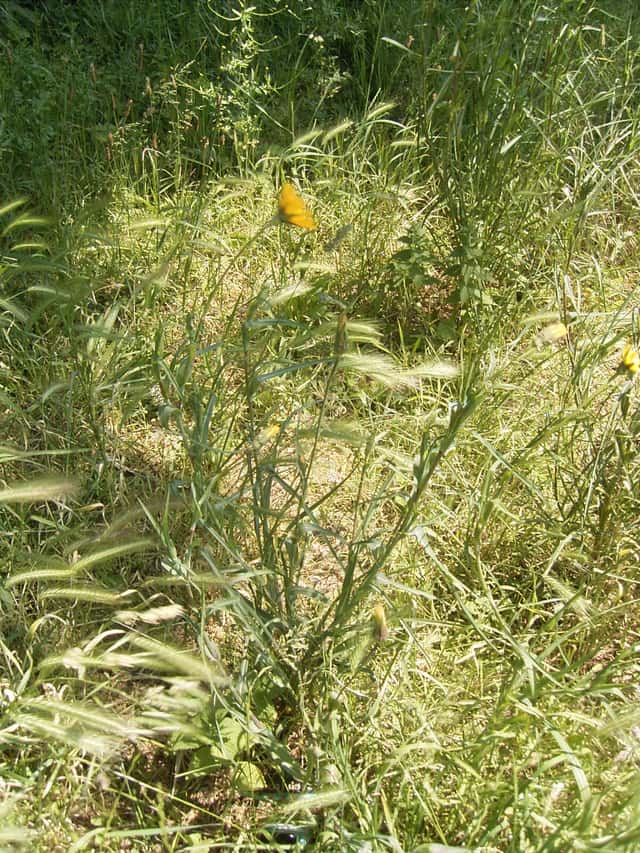
Goat's Beard (Tragopogon) is a easy-care plant from the Asteraceae family. Tragopogon is a genus of biennial or perennial herbs in the Asteraceae family, native to Europe and Asia, with narrow grass-like leaves and milky sap. It produces large daisy-like flowers in shades of yellow or purple, followed by large fluffy seed heads. The most widely cultivated species, salsify...
Goat's Beard grows up to 1.2m, spread of 60cm, watering every 7 days. It is not suitable for indoor environments and safe for pets.
Unlike many tropical plants, Goat's Beard tolerates watering mistakes. Best for beginners. Unlike many popular species, Goat's Beard is safe to keep around pets.
How to Care for Goat's Beard?
TLDR: Goat's Beard needs Direct sun, watering every 7 days, and temperatures between 15-30°C with 40-70% humidity.
How Often Should You Water Goat's Beard?
Water deeply about once a week, letting the soil dry out almost completely in between; soggy soil damages the root and reduces harvest quality.
How Much Light Does Goat's Beard Need?
Needs full sun -- at least 6 hours of direct light a day -- for healthy growth and flowering.
What Is the Best Soil for Goat's Beard?
Prefers deep, loose, well-drained soil, from sandy to clay, with a neutral to slightly alkaline pH; stony or compacted soil deforms the root.
What Pot Should You Use for Goat's Beard?
Not ideal for shallow pots due to its deep taproot; if container-grown, use a deep pot (30+ cm / 12+ in) with good drainage.
What Is Goat's Beard and Where Does It Come From?
Tragopogon is a genus of biennial or perennial herbs in the Asteraceae family, native to Europe and Asia, with narrow grass-like leaves and milky sap. It produces large daisy-like flowers in shades of yellow or purple, followed by large fluffy seed heads. The most widely cultivated species, salsify (T. porrifolius), is grown for its edible root, prized for its subtle oyster-like flavor.
How to Propagate Goat's Beard?
Direct sowing in deep soil
Avoid transplanting established seedlings, as this deforms the taproot; always sow directly in prepared soil.
- 1 Prepare a bed with deep, loose, well-drained soil free of stones
- 2 Sow directly in its final spot, since the taproot does not tolerate transplanting
- 3 Cover seeds lightly with soil and keep moist until germination
- 4 Thin seedlings to 15-30 cm (6-12 in) apart
Materials needed:
How Big Does Goat's Beard Grow?
TLDR: Goat's Beard can reach up to 1.2m tall with Medium growth rate.
Max height
1.2m
Spread
60cm
Growth rate
Medium
Foliage
Deciduous
Plant Uses
Edible
Can be consumed
Ornamental
Great for decoration
Medicinal Uses
- Historically used in folk remedies as a digestive tonic and for chest complaints (per 17th-century accounts by herbalist John Gerard)
Culinary Uses
- Root boiled or roasted, with a subtle oyster-like flavor, used as a root vegetable
- Young shoots and leaves eaten raw in salads or cooked like greens
Is your plant showing symptoms?
Click on the symptom to discover possible causes:
What Diseases Commonly Affect Goat's Beard?
TLDR: Goat's Beard is susceptible to 5 known diseases. Monitor regularly for early detection.
White Rust
Powdery Mildew
Powdery mildew is a common fungal disease caused by various fungi species including Erysiphe, Podosphaera, Oïdium, and Leveillula. It affects over 10,000 plant species worldwide. The disease thrives in warm, dry climates with high humidity and appears as a distinctive white powdery coating on plant surfaces.
Rust
Rust is a common fungal disease caused by fungi in the order Pucciniales that affects a wide variety of plants. The disease gets its name from the characteristic orange, yellow, or reddish-brown pustules that appear on leaves, resembling metal rust. This obligate fungal parasite requires living plants to survive and can cause significant economic losses in agricultural crops.
Aphids
Aphids are small, soft-bodied, pear-shaped insects (1/16 to 1/8 inch long) that feed by sucking nutrient-rich sap from plants. They reproduce rapidly and can quickly weaken plants, causing distorted growth and transmitting plant viruses. Aphids come in various colors including green, black, red, yellow, brown, and gray. They secrete honeydew, a sticky substance that attracts ants and encourages sooty mold growth.
Meaning & Symbolism
Punctuality and the passage of time -- the folk name 'Jack-go-to-bed-at-noon' refers to flowers that open at dawn and close by midday.
Compare with similar plants
| Attribute | Difficulty | Light | Watering | Pet Safe |
|---|---|---|---|---|
| Field Maple | Easy | Bright indirect | 14d | ✓ |
| Silver Birch | Easy | Direct sun | 14d | ✓ |
| Common Blanketflower | Easy | Direct sun | 10d | ✓ |
| Cushion Bush | Easy | Direct sun | 14d | ✓ |





