Euphorbiaceae
Gold Dust Croton (Codiaeum variegatum 'Gold Dust') Care Guide
Codiaeum variegatum 'Gold Dust'
Give this croton bright, indirect light with a little direct morning sun to keep its gold speckling vivid, and water once the top inch of soil dries out, cutting back in winter. It thrives in warm rooms (16-29°C) with moderate to high humidity and well-draining, slightly acidic potting mix. Keep it away from cold drafts and sudden moves, since leaf drop is its main stress response.
Every 7 days
Bright indirect
16° - 29°C
40% - 60%
Categories
What is Gold Dust Croton?
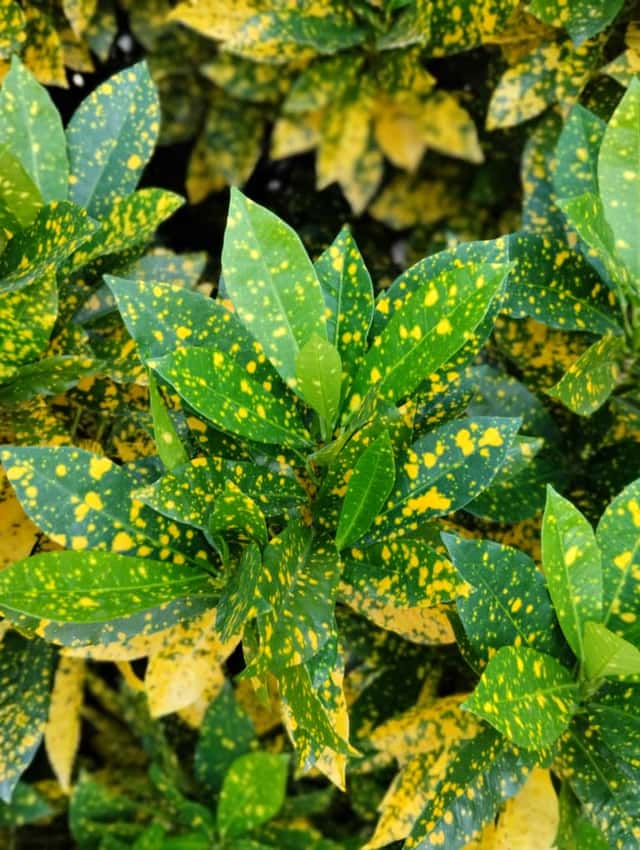
Gold Dust Croton (Codiaeum variegatum 'Gold Dust') is a medium-care plant from the Euphorbiaceae family. Gold Dust croton is a compact cultivar of Codiaeum variegatum prized for its glossy, leathery green leaves flecked with bright yellow-gold speckles, as if dusted with paint. Native to Indonesia and the Pacific Islands, it grows as a rounded shrub outdoors in frost-free climates and as a colorful hou...
Gold Dust Croton grows up to 3.0m, spread of 180cm, watering every 7 days, 16°C – 29°C, 40–60% humidity. It is suitable for indoor environments and not safe for pets.
Without precautions, ingestion can cause irritation in pets. Keep out of reach of cats and dogs. Without adequate drainage, root rot can develop within 14 days.
How to Care for Gold Dust Croton?
TLDR: Gold Dust Croton needs Bright indirect, watering every 7 days, and temperatures between 16-29°C with 40-60% humidity.
How Often Should You Water Gold Dust Croton?
Check the top 2-3 cm of soil before watering again — water thoroughly when it feels dry, but never let the pot sit in standing water, as soggy roots quickly lead to root rot.
How Much Light Does Gold Dust Croton Need?
Place it near an east- or south-facing window with bright, filtered light; too little light fades the gold speckles to plain green, while harsh midday sun can scorch the leaves.
What Is the Best Soil for Gold Dust Croton?
Use a well-draining, humus-rich potting mix with a slightly acidic pH, such as a standard houseplant blend amended with perlite or bark.
What Pot Should You Use for Gold Dust Croton?
Choose a pot with generous drainage holes, ideally terracotta, to help excess moisture escape and reduce the risk of waterlogged roots.
Care Schedule
Fertilize
Every 75 days
Repot
Every 730 days
What Is Gold Dust Croton and Where Does It Come From?
Gold Dust croton is a compact cultivar of Codiaeum variegatum prized for its glossy, leathery green leaves flecked with bright yellow-gold speckles, as if dusted with paint. Native to Indonesia and the Pacific Islands, it grows as a rounded shrub outdoors in frost-free climates and as a colorful houseplant elsewhere, typically reaching around 60-90 cm indoors. Like all crotons, it belongs to the spurge family (Euphorbiaceae) and exudes a milky, irritating sap when cut or damaged.
How to Propagate Gold Dust Croton?
Cuttings root fastest in warm conditions with high humidity, and this method is the only reliable way to reproduce the exact leaf pattern and coloring of 'Gold Dust'.
- 1 Take a 10-15 cm stem cutting with 3-5 leaves from a healthy, mature plant.
- 2 Let the cut end dry for a few hours to reduce sap flow and lower infection risk.
- 3 Remove the lowest leaves and dip the cut end in rooting hormone if using.
- 4 Plant the cutting in a well-draining, slightly moist potting mix.
- 5 Cover loosely with a plastic bag to maintain humidity and place in bright, indirect light.
- 6 Keep the mix consistently moist; roots typically form in 4-8 weeks.
Materials needed:
How Big Does Gold Dust Croton Grow?
TLDR: Gold Dust Croton can reach up to 3.0m tall with Medium growth rate.
Max height
3.0m
Spread
1.8m
Growth rate
Medium
Foliage
Evergreen
Warning: Toxic Plant
This plant can be toxic if ingested. Keep out of reach of:
Plant Uses
Ornamental
Great for decoration
Is your plant showing symptoms?
Click on the symptom to discover possible causes:
What Diseases Commonly Affect Gold Dust Croton?
TLDR: Gold Dust Croton is susceptible to 7 known diseases. Monitor regularly for early detection.
Spider Mites
Spider mites are tiny arachnids (less than 1/20 inch long) related to spiders and ticks that feed on plant sap. They thrive in hot, dry conditions and can cause significant damage to ornamental and vegetable plants. During severe infestations, crop losses can reach 14% or higher as these pests disrupt vital plant processes including photosynthesis, carbon dioxide absorption, and transpiration.
Root Rot
Root rot is a serious fungal disease that affects the root system of plants, causing them to decay and die. It is primarily caused by overwatering, poor drainage, or soil-borne fungi such as Pythium, Phytophthora, Rhizoctonia, and Fusarium. The disease thrives in waterlogged conditions where roots are deprived of oxygen, making them susceptible to fungal infection.
Leaf Spot
Leaf spot is a common fungal disease caused by various pathogens including Alternaria, Ascochyta, Colletotrichum, Septoria, and Venturia. It primarily affects leaves, causing discolored spots that can lead to premature leaf drop if left untreated.
Mealybugs
Mealybugs are small, soft-bodied insects covered with a white, waxy, cottony material. They are common pests of houseplants and outdoor plants in mild climates. These sap-sucking insects feed on plant tissue, causing damage, stunted growth, and can lead to plant death if left untreated. They produce sticky honeydew which attracts sooty mold.
Meaning & Symbolism
Croton foliage is often associated with warmth, vibrancy, and welcome in tropical decor, and in some Southeast Asian traditions it is planted near entrances for good fortune.
Fun Facts
The 'gold dust' speckles are irregular blotches of carotenoid pigment, not disease spots, and each leaf's pattern is slightly unique.
Crotons are native to Indonesia, Malaysia, and the western Pacific islands, where they grow as understory shrubs.
The plant's milky sap can stain skin and fabric and was historically used in some Pacific cultures for dyeing.
Only stem cuttings reliably reproduce the exact 'Gold Dust' leaf pattern — seed-grown plants revert to variable coloring.
Frequently asked questions
Is Gold Dust croton toxic to pets?
Why is my Gold Dust croton dropping leaves?
Why are the leaves losing their gold speckles and turning green?
Can I grow Gold Dust croton outdoors?
How do I propagate Gold Dust croton?
Compare with similar plants
| Attribute | Difficulty | Light | Watering | Pet Safe |
|---|---|---|---|---|
| Dark Fieldcap | Medium | Low light | 2d | ⚠️ |
| Azalea | Medium | Partial shade | 3d | ⚠️ |
| Muriel's Bamboo | Medium | Partial shade | 3d | ✓ |
| Bougainvillea | Medium | Direct sun | 7d | ⚠️ |
Choose & Compare
Sources & References
- Codiaeum variegatum | NC State Extension Gardener Plant Toolbox
- Gold Dust Croton Care: How To Grow Codiaeum Variegatum
- Croton (Codiaeum variegatum): All You Need To Know
- Croton Are Toxic To Pets | Pet Poison Helpline
- Cróton - Codiaeum variegatum - Jardineiro.net
- Cuidados Crotón (Guía Práctica) - Pur Plant




