Actinidiaceae
Golden Kiwifruit: Edible Plant
Actinidia chinensis
Grow in full sun with fertile, well-draining soil, watering regularly to keep soil evenly moist. Provide a strong support structure for the twining vine and prune annually in winter, avoiding cuts to last season's fruiting wood.
Every 4 days
Bright indirect
-10° - 35°C
40% - 70%
Categories
What is Golden Kiwifruit?
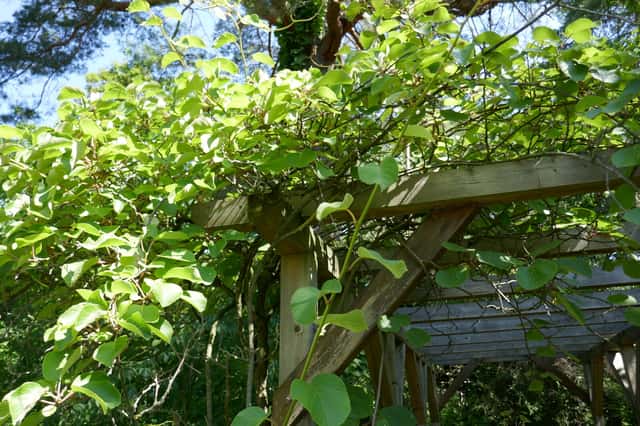
Golden Kiwifruit (Actinidia chinensis) is a medium-care plant from the Actinidiaceae family. Actinidia chinensis is a vigorous deciduous climbing vine native to China, grown for its sweet, golden-fleshed edible fruit. It is dioecious, requiring both male and female plants for fruit set, and needs sturdy support such as a trellis or pergola to climb.
Golden Kiwifruit grows up to 9.0m, spread of 500cm, watering every 4 days, -10°C – 35°C, 40–70% humidity. It is not suitable for indoor environments and safe for pets.
Unlike many popular species, Golden Kiwifruit is safe to keep around pets.
How to Care for Golden Kiwifruit?
TLDR: Golden Kiwifruit needs Bright indirect, watering every 4 days, and temperatures between -10-35°C with 40-70% humidity.
How Often Should You Water Golden Kiwifruit?
Keep soil evenly moist with regular watering, especially in summer; avoid waterlogging as the vine is prone to root rot in poorly drained soil.
How Much Light Does Golden Kiwifruit Need?
Prefers full sun (6-8 hours daily) for best fruit production, though it tolerates partial shade with reduced yields.
What Is the Best Soil for Golden Kiwifruit?
Needs fertile, well-draining soil rich in organic matter with a pH of 5.5-7.5; avoid heavy, waterlogged clay.
What Pot Should You Use for Golden Kiwifruit?
Not ideal for small containers; if potted, use a large container (60L+/15gal+) with excellent drainage and trellis support.
Care Schedule
Fertilize
Every 60 days
What Is Golden Kiwifruit and Where Does It Come From?
Actinidia chinensis is a vigorous deciduous climbing vine native to China, grown for its sweet, golden-fleshed edible fruit. It is dioecious, requiring both male and female plants for fruit set, and needs sturdy support such as a trellis or pergola to climb.
How to Propagate Golden Kiwifruit?
Semi-hardwood cutting
Use a propagator with high humidity and keep out of direct sun until rooted.
- 1 Take 15-20 cm semi-hardwood cuttings in late summer
- 2 Remove lower leaves and dip the base in rooting hormone
- 3 Plant in a well-draining medium and maintain high humidity
Materials needed:
How Big Does Golden Kiwifruit Grow?
TLDR: Golden Kiwifruit can reach up to 9.0m tall with Fast growth rate.
Max height
9.0m
Spread
5.0m
Growth rate
Fast
Foliage
Deciduous
Plant Uses
Edible
Can be consumed
Ornamental
Great for decoration
Medicinal Uses
- Vitamin C source
- Supports digestion
Culinary Uses
- Eaten fresh
- Fruit salads
- Juices and smoothies
- Desserts
Is your plant showing symptoms?
Click on the symptom to discover possible causes:
What Diseases Commonly Affect Golden Kiwifruit?
TLDR: Golden Kiwifruit is susceptible to 5 known diseases. Monitor regularly for early detection.
Bacterial Canker
Serious bacterial disease affecting stone fruits and tomatoes caused by Pseudomonas syringae or Clavibacter michiganensis. Creates sunken lesions that ooze sap.
Root Rot
Root rot is a serious fungal disease that affects the root system of plants, causing them to decay and die. It is primarily caused by overwatering, poor drainage, or soil-borne fungi such as Pythium, Phytophthora, Rhizoctonia, and Fusarium. The disease thrives in waterlogged conditions where roots are deprived of oxygen, making them susceptible to fungal infection.
Root-Knot Nematodes
Root-knot nematodes (Meloidogyne species) are microscopic roundworms that parasitize plant roots, causing characteristic galls or knots. These soil-borne pests are among the most economically damaging plant pathogens worldwide, affecting a wide range of ornamental and edible plants. The nematodes inject enzymes into root cells, causing abnormal swelling and disrupting water and nutrient uptake.
Thrips
Thrips are tiny cigar-shaped insects (1/25-inch long) that damage plants by sucking plant juices and scraping at fruits, flowers, and leaves. With over 6,000 species and rapid reproduction (lifecycle as short as 14 days), they can quickly infest plants and transmit viruses like tomato spotted wilt virus.
Meaning & Symbolism
Associated with vitality and energy due to its vitamin C-rich fruit.
Compare with similar plants
| Attribute | Difficulty | Light | Watering | Pet Safe |
|---|---|---|---|---|
| Dark Fieldcap | Medium | Low light | 2d | ⚠️ |
| Azalea | Medium | Partial shade | 3d | ⚠️ |
| Muriel's Bamboo | Medium | Partial shade | 3d | ✓ |
| Bougainvillea | Medium | Direct sun | 7d | ⚠️ |
Choose & Compare
Sources & References
- Actinidia chinensis - NC State Extension Gardener Plant Toolbox
- Golden Kiwi (Actinidia chinensis) - Gardenia.net
- QTL contribute to resistance to bacterial canker (Psa) in kiwifruit (Actinidia chinensis)
- Golden Kiwi Growing Zone and Care Factors
- How to Propagate Actinidia chinensis
- Behavioral differences among domestic cats in response to cat-attracting plants (actinidine)




