Pinaceae
Golden Larch: Medicinal Uses & Care Tips
Pseudolarix amabilis
The Golden Larch requires full sun, consistently moist but well-drained, slightly acidic soil, and protection from strong winds and summer heat. It does not tolerate compacted clay or limestone soils. It grows slowly and is virtually free of serious diseases or pests.
Every 10 days
Bright indirect
-29° - 29°C
40% - 70%
Categories
What is Golden Larch?
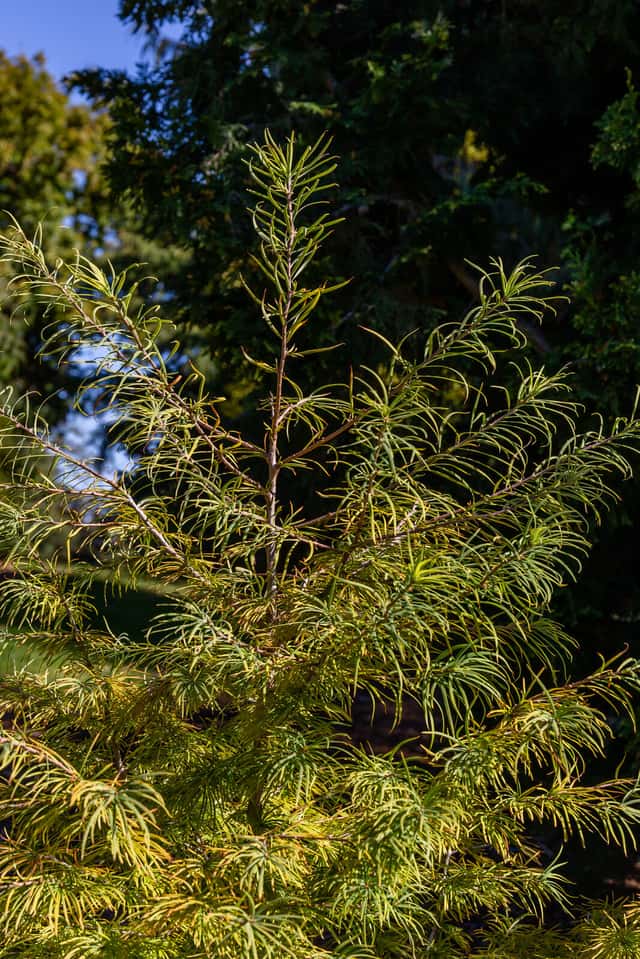
Golden Larch (Pseudolarix amabilis) is a medium-care plant from the Pinaceae family. The Golden Larch (Pseudolarix amabilis) is a deciduous conifer native to eastern China and the sole species in the genus Pseudolarix. Unlike most conifers, it sheds its needles every autumn, which turn a striking golden-yellow color before falling, giving the tree its name. It is slow-growing and ca...
Golden Larch grows up to 15.0m, spread of 900cm, watering every 10 days, -29°C – 29°C, 40–70% humidity. It is not suitable for indoor environments and safe for pets.
Unlike many popular species, Golden Larch is safe to keep around pets.
How to Care for Golden Larch?
TLDR: Golden Larch needs Bright indirect, watering every 10 days, and temperatures between -29-29°C with 40-70% humidity.
How Often Should You Water Golden Larch?
Keep the soil evenly moist but never waterlogged—water when the surface layer of the soil begins to dry. Poor drainage quickly leads to root rot.
How Much Light Does Golden Larch Need?
It thrives best in full sun; it tolerates light partial shade but does not thrive in full shade.
What Is the Best Soil for Golden Larch?
Use fertile, well-drained loamy soil rich in organic matter, with a slightly acidic to neutral pH (5.0–6.5). Avoid limestone and heavy clay soils.
What Pot Should You Use for Golden Larch?
For container planting (e.g., bonsai), choose a wide, shallow bonsai pot made of unglazed stoneware or ceramic with large drainage holes to prevent water from pooling around the roots.
Care Schedule
Fertilize
Every 180 days
Repot
Every 730 days
What Is Golden Larch and Where Does It Come From?
The Golden Larch (Pseudolarix amabilis) is a deciduous conifer native to eastern China and the sole species in the genus Pseudolarix. Unlike most conifers, it sheds its needles every autumn, which turn a striking golden-yellow color before falling, giving the tree its name. It is slow-growing and can reach 9–18 m in height in cultivation, featuring soft, light-green needles arranged in tufts on short spurs. Instead of true flowers, it develops cones: smaller male pollen cones in spring and upright, ovoid female cones that mature to a reddish-brown color and disintegrate after the seeds ripen. It is highly valued as a specimen ornamental tree and as a bonsai for its seasonal beauty and unique appearance.
How Big Does Golden Larch Grow?
TLDR: Golden Larch can reach up to 15.0m tall with Slow growth rate.
Max height
15.0m
Spread
9.0m
Growth rate
Slow
Foliage
Deciduous
Plant Uses
Ornamental
Great for decoration
Medicinal
Medicinal properties
Medicinal Uses
- The root bark is traditionally used in Chinese medicine as 'Tu Jing Pi' to treat fungal skin infections such as ringworm, due to its proven fungicidal activity against fungi of the genera Epidermophyton and Trichophyton.
Is your plant showing symptoms?
Click on the symptom to discover possible causes:
What Diseases Commonly Affect Golden Larch?
TLDR: Golden Larch is susceptible to 7 known diseases. Monitor regularly for early detection.
Aphids
Aphids are small, soft-bodied, pear-shaped insects (1/16 to 1/8 inch long) that feed by sucking nutrient-rich sap from plants. They reproduce rapidly and can quickly weaken plants, causing distorted growth and transmitting plant viruses. Aphids come in various colors including green, black, red, yellow, brown, and gray. They secrete honeydew, a sticky substance that attracts ants and encourages sooty mold growth.
Caterpillars
Caterpillars are the larval stage of moths and butterflies that feed voraciously on plant foliage, stems, flowers, and fruits. Common species include cabbage loopers, tomato hornworms, armyworms, and cutworms. These pests can cause extensive damage by consuming large amounts of plant tissue in a short time. They vary in size from small (1/4 inch) to large (5 inches), with colors ranging from green to brown, often featuring stripes or spots. Caterpillars are highly mobile and can quickly spread throughout gardens, making them one of the most destructive common pests.
Mealybugs
Mealybugs are small, soft-bodied insects covered with a white, waxy, cottony material. They are common pests of houseplants and outdoor plants in mild climates. These sap-sucking insects feed on plant tissue, causing damage, stunted growth, and can lead to plant death if left untreated. They produce sticky honeydew which attracts sooty mold.
Rust
Rust is a common fungal disease caused by fungi in the order Pucciniales that affects a wide variety of plants. The disease gets its name from the characteristic orange, yellow, or reddish-brown pustules that appear on leaves, resembling metal rust. This obligate fungal parasite requires living plants to survive and can cause significant economic losses in agricultural crops.
Meaning & Symbolism
The Golden Larch, one of the few conifers that changes color and sheds its needles, symbolizes the transience of beauty, change, and the acceptance of life cycles. Its longevity and resilience serve as a reminder of constancy amidst change every autumn.
Compare with similar plants
| Attribute | Difficulty | Light | Watering | Pet Safe |
|---|---|---|---|---|
| Dark Fieldcap | Medium | Low light | 2d | ⚠️ |
| Azalea | Medium | Partial shade | 3d | ⚠️ |
| Muriel's Bamboo | Medium | Partial shade | 3d | ✓ |
| Bougainvillea | Medium | Direct sun | 7d | ⚠️ |




