Begoniaceae
Grape Leaf Begonia (Begonia reniformis)
Begonia reniformis
A shrub-like begonia for warmth and part shade: well-drained mix, water when the surface dries and keep water off the leaves. It is not frost hardy; in cold climates grow it in a pot indoors.
Every 5 days
Partial shade
° - °C
% - %
Categories
What is Grape Leaf Begonia?
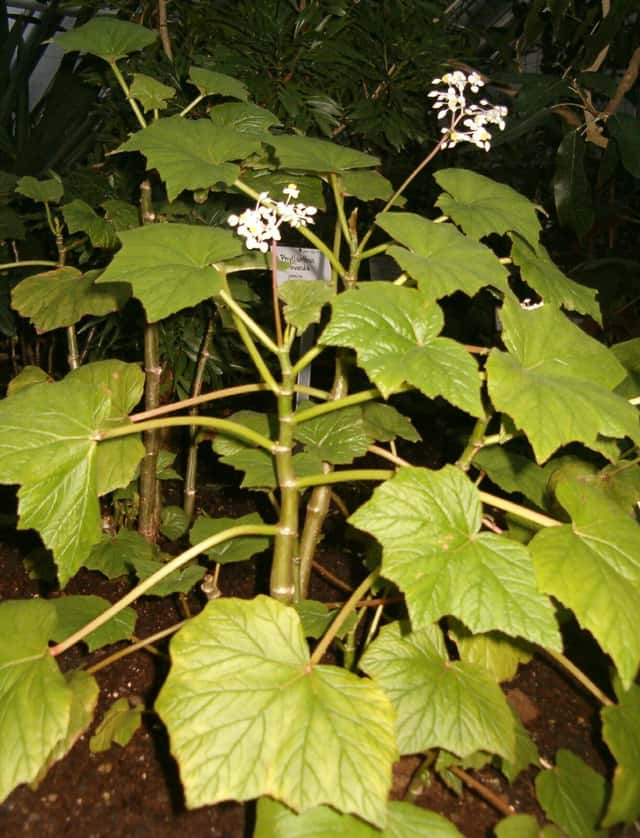
Grape Leaf Begonia (Begonia reniformis) is a medium-care plant from the Begoniaceae family. Begonia reniformis is a shrubby begonia native to central and eastern Brazil and introduced to Hawaii. It has thick, segmented, soft-woody stems that can exceed 1.5 m and large lobed leaves that look like grapevine leaves, with a few scattered hairs. Small white flowers appear in airy sprays held ab...
Grape Leaf Begonia grows up to 1.8m, watering every 5 days. It is suitable for indoor environments and not safe for pets.
Without precautions, ingestion can cause irritation in pets. Keep out of reach of cats and dogs. Without adequate drainage, root rot can develop within 10 days.
How to Care for Grape Leaf Begonia?
TLDR: Grape Leaf Begonia needs Partial shade, watering every 5 days, and temperatures between 15-30°C with 40-70% humidity.
How Often Should You Water Grape Leaf Begonia?
Water when the top few centimetres are dry, about every 5 days in warm weather. Overwatering rots the roots. Water the soil, not the leaves.
How Much Light Does Grape Leaf Begonia Need?
Part shade or bright filtered light. It takes more sun if kept moist, but strong, dry sun scorches the leaves.
What Is the Best Soil for Grape Leaf Begonia?
A light, well-drained mix rich in organic matter that never stays soggy.
What Pot Should You Use for Grape Leaf Begonia?
A pot with good drainage holes, clay or plastic, filled with a light mix.
What Is Grape Leaf Begonia and Where Does It Come From?
Begonia reniformis is a shrubby begonia native to central and eastern Brazil and introduced to Hawaii. It has thick, segmented, soft-woody stems that can exceed 1.5 m and large lobed leaves that look like grapevine leaves, with a few scattered hairs. Small white flowers appear in airy sprays held above the leaves, with separate male and female flowers. It was long also known as Begonia vitifolia, now treated as a synonym.
How to Propagate Grape Leaf Begonia?
Stem cutting
Do not let the mix get soggy or the cutting will rot.
- 1 Cut a stem piece with 2-3 nodes
- 2 Remove lower leaves and halve large ones
- 3 Insert in light, moist mix or stand in water
- 4 Keep warm and bright, out of direct sun
Materials needed:
Leaf cutting
Slower than stem cuttings.
- 1 Cut a healthy leaf with its stalk
- 2 Insert the stalk in moist mix
- 3 Cover with plastic to hold humidity
- 4 Wait for plantlets at the base
Materials needed:
Division
Divide when you repot.
- 1 Remove the plant from its pot
- 2 Separate clumps with roots
- 3 Pot each piece separately
Materials needed:
How Big Does Grape Leaf Begonia Grow?
TLDR: Grape Leaf Begonia can reach up to 1.8m tall with Medium growth rate.
Max height
1.8m
Warning: Toxic Plant
This plant can be toxic if ingested. Keep out of reach of:
Plant Uses
Ornamental
Great for decoration
Is your plant showing symptoms?
Click on the symptom to discover possible causes:
What Diseases Commonly Affect Grape Leaf Begonia?
TLDR: Grape Leaf Begonia is susceptible to 6 known diseases. Monitor regularly for early detection.
Powdery Mildew
Powdery mildew is a common fungal disease caused by various fungi species including Erysiphe, Podosphaera, Oïdium, and Leveillula. It affects over 10,000 plant species worldwide. The disease thrives in warm, dry climates with high humidity and appears as a distinctive white powdery coating on plant surfaces.
Mealybugs
Mealybugs are small, soft-bodied insects covered with a white, waxy, cottony material. They are common pests of houseplants and outdoor plants in mild climates. These sap-sucking insects feed on plant tissue, causing damage, stunted growth, and can lead to plant death if left untreated. They produce sticky honeydew which attracts sooty mold.
Spider Mites
Spider mites are tiny arachnids (less than 1/20 inch long) related to spiders and ticks that feed on plant sap. They thrive in hot, dry conditions and can cause significant damage to ornamental and vegetable plants. During severe infestations, crop losses can reach 14% or higher as these pests disrupt vital plant processes including photosynthesis, carbon dioxide absorption, and transpiration.
sap-sucking pests
Group of pests including aphids and scales, feeding on sugary sap on leaves, twigs, and branches. These pests often produce honeydew, which can later be infected by a fungal disease
Fun Facts
Reniformis means kidney-shaped, yet the leaves look more like grapevine leaves.
It shares the English name grape leaf begonia with the South African Begonia dregei.
Frequently asked questions
Is grape leaf begonia toxic to pets?
How often should I water?
Can it take sun?
Is it frost hardy?
Compare with similar plants
| Attribute | Difficulty | Light | Watering | Pet Safe |
|---|---|---|---|---|
| Dark Fieldcap | Medium | Low light | 2d | ⚠️ |
| Azalea | Medium | Partial shade | 3d | ⚠️ |
| Muriel's Bamboo | Medium | Partial shade | 3d | ✓ |
| Bougainvillea | Medium | Direct sun | 7d | ⚠️ |




