Asteraceae
Gray Everlasting: Medicinal Uses & Care Tips
Gamochaeta coarctata
A hardy plant that requires full or partial sunlight. It prefers well-drained soils with consistent moisture. Low maintenance and tolerant of low-fertility soils. As a winter species, it grows actively during the cold seasons. It propagates by seeds, forming a persistent seed bank in the soil.
Every 7-10 days
Bright indirect
° - °C
% - %
Categories
What is Gray Everlasting?
Gray Everlasting (Gamochaeta coarctata) is a easy-care plant from the Asteraceae family. Gamochaeta coarctata is an annual or biennial winter herbaceous herb, native to South America (from Colombia to Uruguay), and naturalized in parts of Eurasia, Australia, and North America. It is a low-growing plant (15-50 cm) with decumbent-ascending stems covered in dense white pubescence. The basa...
Gray Everlasting grows up to 50cm. It is not suitable for indoor environments and safe for pets.
Unlike many tropical plants, Gray Everlasting tolerates watering mistakes. Best for beginners. Unlike many popular species, Gray Everlasting is safe to keep around pets.
How to Care for Gray Everlasting?
TLDR: Gray Everlasting needs Bright indirect, watering every 7 days, and temperatures between 15-30°C with 40-70% humidity.
How Often Should You Water Gray Everlasting?
Keep the soil consistently moist but not waterlogged. It is not tolerant of extreme drought; water when the top layer begins to dry out.
How Much Light Does Gray Everlasting Need?
Prefer direct or full sunlight. It occurs naturally in open, bright habitats, though it can also be found in partially shaded locations.
What Is the Best Soil for Gray Everlasting?
Use well-drained soil, preferably with moderate organic matter content. It adapts well to sandy and low-fertility soils.
What Pot Should You Use for Gray Everlasting?
Pots with good drainage; large sizes are not necessary given the plant's low stature.
What Is Gray Everlasting and Where Does It Come From?
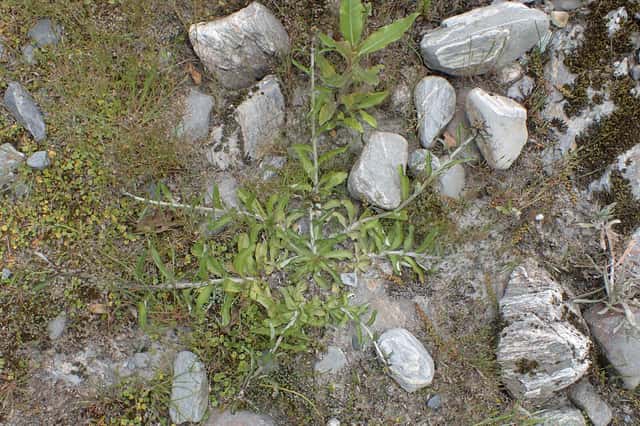
Gamochaeta coarctata is an annual or biennial winter herbaceous herb, native to South America (from Colombia to Uruguay), and naturalized in parts of Eurasia, Australia, and North America. It is a low-growing plant (15-50 cm) with decumbent-ascending stems covered in dense white pubescence. The basal leaves form a rosette and are spatulate to oblanceolate. The flowers are arranged in a dense spike, with cylindrical heads containing a few yellow disc florets and no ray florets.
How Big Does Gray Everlasting Grow?
TLDR: Gray Everlasting can reach up to 50cm tall with Medium growth rate.
Max height
50cm
Growth rate
Medium
Foliage
Deciduous
Plant Uses
Medicinal
Medicinal properties
Medicinal Uses
- Flower infusion for gastrointestinal discomfort
- Traditional tea as a digestive aid
- Popular use for headaches
- Anti-inflammatory and antioxidant properties reported in phytochemical analyses of the genus
Is your plant showing symptoms?
Click on the symptom to discover possible causes:
What Diseases Commonly Affect Gray Everlasting?
TLDR: Gray Everlasting is susceptible to 2 known diseases. Monitor regularly for early detection.
Powdery Mildew
Powdery mildew is a common fungal disease caused by various fungi species including Erysiphe, Podosphaera, Oïdium, and Leveillula. It affects over 10,000 plant species worldwide. The disease thrives in warm, dry climates with high humidity and appears as a distinctive white powdery coating on plant surfaces.
Root Rot
Root rot is a serious fungal disease that affects the root system of plants, causing them to decay and die. It is primarily caused by overwatering, poor drainage, or soil-borne fungi such as Pythium, Phytophthora, Rhizoctonia, and Fusarium. The disease thrives in waterlogged conditions where roots are deprived of oxygen, making them susceptible to fungal infection.
Compare with similar plants
| Attribute | Difficulty | Light | Watering | Pet Safe |
|---|---|---|---|---|
| Field Maple | Easy | Bright indirect | 14d | ✓ |
| Silver Birch | Easy | Direct sun | 14d | ✓ |
| Common Blanketflower | Easy | Direct sun | 10d | ✓ |
| Cushion Bush | Easy | Direct sun | 14d | ✓ |





