Araceae
Great Duckweed: Fast Growing
Spirodela polyrhiza
Great Duckweed is among the easiest aquatic plants to grow—it simply requires stagnant or very slow-moving water, plenty of light, and warm water. It is not grown in substrate but floats freely on the surface of an aquarium, pond, or tank, where it absorbs nutrients directly from the water. It grows extremely fast and can cover the entire surface in a short time, so it needs regular thinning. It is undemanding, hardy, and tolerates a wide range of conditions, but it must never dry out.
Every 7-10 days
Bright indirect
15° - 30°C
% - %
Categories
What is Great Duckweed?
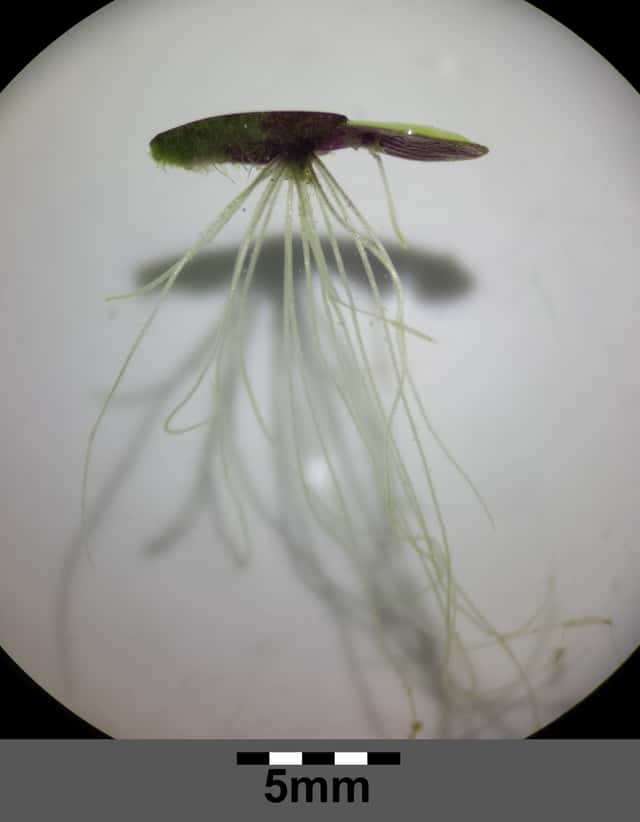
Great Duckweed (Spirodela polyrhiza) is a easy-care plant from the Araceae family. Great Duckweed (Spirodela polyrhiza) is a tiny free-floating aquatic plant from the Arum family (Araceae, subfamily Lemnoideae). Its round to oval fronds measure only 2–10 mm; they are fresh green on the upper side and reddish-purple on the underside. Unlike related duckweed species, each frond prod...
Great Duckweed grows up to 1cm, spread of 1cm, 15°C – 30°C. It is suitable for indoor environments and safe for pets.
Unlike many tropical plants, Great Duckweed tolerates watering mistakes. Best for beginners. Unlike many popular species, Great Duckweed is safe to keep around pets.
How to Care for Great Duckweed?
TLDR: Great Duckweed needs Bright indirect, watering every 7 days, and temperatures between 15-30°C with 40-70% humidity.
How Often Should You Water Great Duckweed?
This plant lives permanently in water, so traditional watering does not apply—instead, maintain a constant water level and top up evaporated water. It prefers stagnant to slightly flowing water; strong currents or waves will scatter and damage it. Never allow the water level to drop so low that the plant is left without water.
How Much Light Does Great Duckweed Need?
It tolerates a range from moderate to full sunlight—in an aquarium, moderate to medium-strong lighting is sufficient (about 12–16 hours of light per day is recommended), while outdoors in a pond, it thrives best in full sun (at least 6 hours of direct sunlight per day).
What Is the Best Soil for Great Duckweed?
It does not require substrate or soil—the roots hang freely in the water column and serve primarily for nutrient uptake and stabilizing the plant on the surface, not for anchoring in soil.
What Pot Should You Use for Great Duckweed?
It does not need a pot or drainage holes—an open, shallow, and wide container, aquarium, or pond without strong currents is ideal, providing sufficient surface area for it to spread freely.
What Is Great Duckweed and Where Does It Come From?
Great Duckweed (Spirodela polyrhiza) is a tiny free-floating aquatic plant from the Arum family (Araceae, subfamily Lemnoideae). Its round to oval fronds measure only 2–10 mm; they are fresh green on the upper side and reddish-purple on the underside. Unlike related duckweed species, each frond produces 7 to 21 thin roots (instead of the usual one), allowing it to float easily on the surface of stagnant or slow-moving waters and form dense mats. It reproduces primarily vegetatively by budding new fronds from the mother plant, flowering only rarely. In autumn, it produces turions—starch-rich storage buds that sink to the bottom to overwinter, resurfacing and germinating in spring when water temperatures reach around 15 °C. It is one of the fastest-growing flowering plants in the world and is found in the wild almost globally.
How to Propagate Great Duckweed?
Division of frond clusters
- A new colony can double in size in just a few days under suitable conditions.
- Remove damaged or browning fronds to prevent the accumulation of dead material in the water.
- 1 Take a portion of the floating mat with several frond clusters from the mother tank.
- 2 Gently separate the individual frond clusters from each other by hand or using a sieve.
- 3 Transfer the separated fronds to a new tank or pond with clean, stagnant water and plenty of light.
- 4 Ensure a water temperature of 15–30 °C and let the plant float freely on the surface.
Natural budding of new fronds
- With warm water and sufficient light, budding occurs practically continuously.
- In spring, when the water warms above approx. 15 °C, turions will resurface and germinate on their own.
- 1 The plant naturally creates new daughter fronds from pocket-like slits on the sides of the mother frond.
- 2 The daughter fronds eventually detach themselves and continue to grow independently.
- 3 In autumn, some fronds may instead produce heavier turions that sink to the bottom to overwinter.
How Big Does Great Duckweed Grow?
TLDR: Great Duckweed can reach up to 1cm tall with Fast growth rate.
Max height
1cm
Spread
1cm
Growth rate
Fast
Foliage
Semi-evergreen
Plant Uses
Ornamental
Great for decoration
Medicinal Uses
- In Traditional Chinese Medicine, it is known as 'Fu Ping' and has been used for over 2,000 years as a herb to promote sweating and reduce fever during colds accompanied by wind and heat.
- It was traditionally used to encourage the eruption of measles and other skin rashes in their early stages.
- In the folk medicine of China, Japan, and Korea, it was used for hives, eczema, and itchy skin.
- It was also attributed with diuretic properties for edema and urinary difficulties.
Is your plant showing symptoms?
Click on the symptom to discover possible causes:
What Diseases Commonly Affect Great Duckweed?
TLDR: Great Duckweed is susceptible to 2 known diseases. Monitor regularly for early detection.
Aphids
Aphids are small, soft-bodied, pear-shaped insects (1/16 to 1/8 inch long) that feed by sucking nutrient-rich sap from plants. They reproduce rapidly and can quickly weaken plants, causing distorted growth and transmitting plant viruses. Aphids come in various colors including green, black, red, yellow, brown, and gray. They secrete honeydew, a sticky substance that attracts ants and encourages sooty mold growth.
Slugs and Snails
Slugs and snails are mollusks that feed on plant tissue, causing irregular holes in leaves and damage to young seedlings. They are most active at night and in moist conditions, leaving characteristic silvery slime trails. These pests can quickly devastate gardens, especially during wet seasons.
Meaning & Symbolism
Due to its incredibly rapid ability to multiply, Great Duckweed symbolizes abundance, fertility, and unstoppable growth. Its ability to purify water of excess nutrients also links it to the symbolism of renewal and purity. As a tiny, inconspicuous plant without showy flowers, it also serves as a reminder of the value of modesty and adaptability.
Compare with similar plants
| Attribute | Difficulty | Light | Watering | Pet Safe |
|---|---|---|---|---|
| Field Maple | Easy | Bright indirect | 14d | ✓ |
| Silver Birch | Easy | Direct sun | 14d | ✓ |
| Common Blanketflower | Easy | Direct sun | 10d | ✓ |
| Cushion Bush | Easy | Direct sun | 14d | ✓ |
Choose & Compare
Sources & References
- Spirodela polyrhiza - Wikipedia
- Greater Duckweed - NC State Extension Gardener Plant Toolbox
- Spirodela Polyrhiza Care Guide (Giant Duckweed)
- Spirodela polyrhiza - Pladias: Database of Slovak Flora and Vegetation
- Spirodela polyrhiza: Identification, Health Benefits, Uses, Invasive Concerns, and Pet Safety
- Fu Ping (Duckweed / Spirodela Polyrhiza) - Chinese Herbs Info





