Crassulaceae
Great Stonecrop (Hylotelephium maximum) Care Guide
Hylotelephium maximum
Great Stonecrop is an extremely low-maintenance, drought-tolerant perennial. Grow it in full sun with well-drained, moderately fertile soil, and water only once the soil has dried out completely. It tolerates poor, dry soils and needs little to no winter protection down to USDA zone 4a. Cut back old stems in spring before new growth emerges.
Every 14 days
Direct sun
-34° - 32°C
30% - 50%
Categories
What is Great Stonecrop?
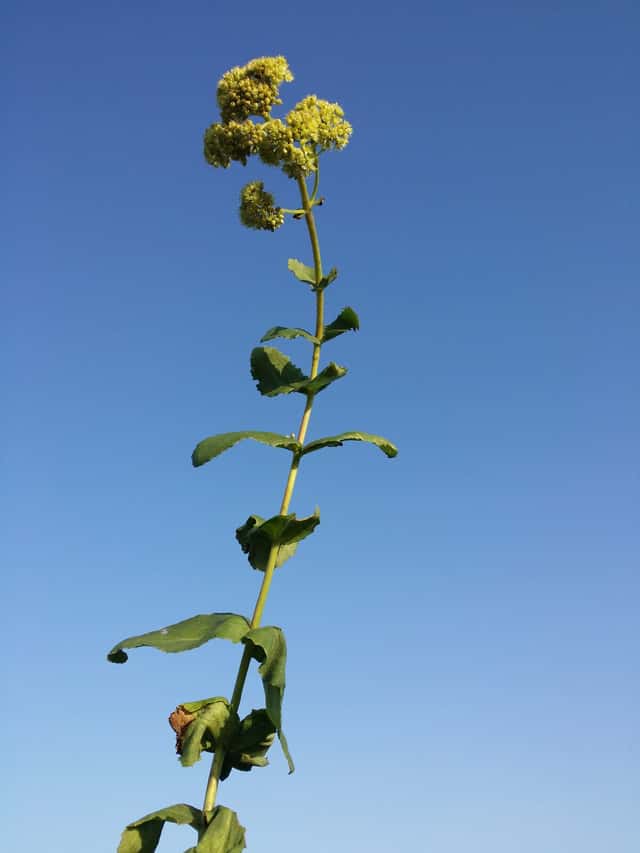
Great Stonecrop (Hylotelephium maximum) is a easy-care plant from the Crassulaceae family. Hylotelephium maximum, commonly known as great stonecrop or orpine, is a robust, clump-forming succulent perennial in the Crassulaceae family native to Europe, the Caucasus, and western Siberia. It forms upright, fleshy stems 30-80 cm tall arising from a tuberous rootstock, with broad, opposite, gre...
Great Stonecrop grows up to 80cm, watering every 14 days, -34°C – 32°C, 30–50% humidity. It is not suitable for indoor environments and safe for pets.
Unlike many tropical plants, Great Stonecrop tolerates watering mistakes. Best for beginners. Unlike many popular species, Great Stonecrop is safe to keep around pets.
How to Care for Great Stonecrop?
TLDR: Great Stonecrop needs Direct sun, watering every 14 days, and temperatures between -34-32°C with 30-50% humidity.
How Often Should You Water Great Stonecrop?
Let the soil dry out completely between waterings; this succulent stores water in its fleshy leaves and stems and is highly susceptible to rot if kept too wet.
How Much Light Does Great Stonecrop Need?
Provide full sun for at least 6 hours a day for the sturdiest growth and best flowering; in hot climates it tolerates light afternoon shade, but too much shade causes weak, floppy stems.
What Is the Best Soil for Great Stonecrop?
Use a well-draining soil rich in mineral content, ideally with added grit or sand; calcareous, stony soils that mimic its native rocky slopes work best.
Care Schedule
Fertilize
Every 365 days
What Is Great Stonecrop and Where Does It Come From?
Hylotelephium maximum, commonly known as great stonecrop or orpine, is a robust, clump-forming succulent perennial in the Crassulaceae family native to Europe, the Caucasus, and western Siberia. It forms upright, fleshy stems 30-80 cm tall arising from a tuberous rootstock, with broad, opposite, grey-green succulent leaves. In late summer and autumn (September-October) it produces dense, flattened clusters of small creamy-white to pale pink flowers that attract bees and butterflies. Long treated as a subspecies of Hylotelephium telephium (as Sedum maximum), it thrives on dry, stony, calcareous slopes and forest edges at elevations up to 2,500 m, and is prized in gardens for its drought tolerance and low-maintenance nature.
How to Propagate Great Stonecrop?
Division
Divide every 3-4 years to keep clumps vigorous and prevent floppy, overcrowded growth.
- 1 Lift the clump in early spring or early summer before flowering
- 2 Separate the tuberous rootstock into sections, ensuring each piece has healthy shoots and roots
- 3 Replant divisions immediately at the same depth in well-drained soil
- 4 Water lightly to settle the soil, then let it dry before watering again
Materials needed:
Softwood stem cuttings
Rooted side-shoots often form naturally at the base of stems in late winter and can be detached and replanted directly.
- 1 Take 8-10 cm non-flowering shoot tips in early summer
- 2 Remove the lowest leaves and let the cut end callus for a few hours
- 3 Insert the cutting into a well-draining mix of sand and potting soil
- 4 Keep lightly moist until roots form, then treat as a mature plant
Materials needed:
Seed sowing
Germination and growth from seed are slow; division or cuttings are faster ways to obtain flowering-size plants.
- 1 Surface-sow fine seed onto a well-draining seed mix in a cold greenhouse in spring
- 2 Do not cover the seed; press it gently onto the surface
- 3 Keep the mix from drying out until germination
- 4 Prick out and pot on seedlings once they are large enough to handle
Materials needed:
How Big Does Great Stonecrop Grow?
TLDR: Great Stonecrop can reach up to 80cm tall with Medium growth rate.
Max height
80cm
Growth rate
Medium
Foliage
Deciduous
Warning: Toxic Plant
This plant can be toxic if ingested. Keep out of reach of:
Plant Uses
Ornamental
Great for decoration
Medicinal
Medicinal properties
Edible
Can be consumed
Medicinal Uses
- topical wound treatment
Culinary Uses
- edible leaves (cooked)
Is your plant showing symptoms?
Click on the symptom to discover possible causes:
What Diseases Commonly Affect Great Stonecrop?
TLDR: Great Stonecrop is susceptible to 8 known diseases. Monitor regularly for early detection.
Root Rot
Root rot is a serious fungal disease that affects the root system of plants, causing them to decay and die. It is primarily caused by overwatering, poor drainage, or soil-borne fungi such as Pythium, Phytophthora, Rhizoctonia, and Fusarium. The disease thrives in waterlogged conditions where roots are deprived of oxygen, making them susceptible to fungal infection.
Crown Rot
Crown rot is a serious fungal disease that attacks the crown (base) of the plant where the stem meets the soil. It is caused by various fungal pathogens including Phytophthora, Fusarium, and Rhizoctonia. The disease thrives in waterlogged conditions and can quickly spread to kill the entire plant if not addressed promptly.
Powdery Mildew
Powdery mildew is a common fungal disease caused by various fungi species including Erysiphe, Podosphaera, Oïdium, and Leveillula. It affects over 10,000 plant species worldwide. The disease thrives in warm, dry climates with high humidity and appears as a distinctive white powdery coating on plant surfaces.
Slugs and Snails
Slugs and snails are mollusks that feed on plant tissue, causing irregular holes in leaves and damage to young seedlings. They are most active at night and in moist conditions, leaving characteristic silvery slime trails. These pests can quickly devastate gardens, especially during wet seasons.
Fun Facts
Hylotelephium maximum was for decades classified as Hylotelephium telephium subsp. maximum, and its old scientific name, Sedum maximum, is still widely used in older field guides.
Its dense, star-shaped flower clusters bloom in September and October, making it one of the latest-flowering succulents in European gardens, providing crucial late-season nectar for bees and butterflies.
In parts of the Caucasus, the fleshy leaves have traditionally been split open and applied directly to calluses, cuts, and burns to soften and soothe the skin.
Its natural habitat includes dry, rocky river gorges and calcareous slopes at elevations up to 2,500 meters.
Frequently asked questions
How often should I water Hylotelephium maximum?
Is Hylotelephium maximum the same plant as Sedum maximum?
Does great stonecrop need winter protection?
Is Hylotelephium maximum toxic?
When does great stonecrop bloom?
Compare with similar plants
| Attribute | Difficulty | Light | Watering | Pet Safe |
|---|---|---|---|---|
| Field Maple | Easy | Bright indirect | 14d | ✓ |
| Silver Birch | Easy | Direct sun | 14d | ✓ |
| Common Blanketflower | Easy | Direct sun | 10d | ✓ |
| Cushion Bush | Easy | Direct sun | 14d | ✓ |
Choose & Compare
Sources & References
- Hylotelephium maximum (Grand Stonecrop) - World of Succulents
- How to grow hylotelephium - RHS Growing Guide
- Hylotelephium maximum - Useful Temperate Plants
- Hylotelephium maximum (L.) Holub (syn. Sedum maximum (L.) Suter)
- Flora Vascular - Hylotelephium maximum
- Sedum telephium - InfoJardin ficha
- Hylotelephium maximum (L.) Holub - GBIF
- Hylotelephium - NC State Extension Gardener Plant Toolbox
- Caring for Sedum Succulents: A Complete Guide





