Fabaceae
Greater Bird's-foot Trefoil: Complete Growing Guide
Lotus pedunculatus
A rugged, low-maintenance perennial that is largely pest- and disease-free. It prefers consistently moist to boggy soil, full sun to partial shade, and needs little to no fertilizing thanks to its nitrogen-fixing roots.
Every 3 days
Bright indirect
-20° - 30°C
50% - 90%
Categories
What is Greater Bird's-foot Trefoil?
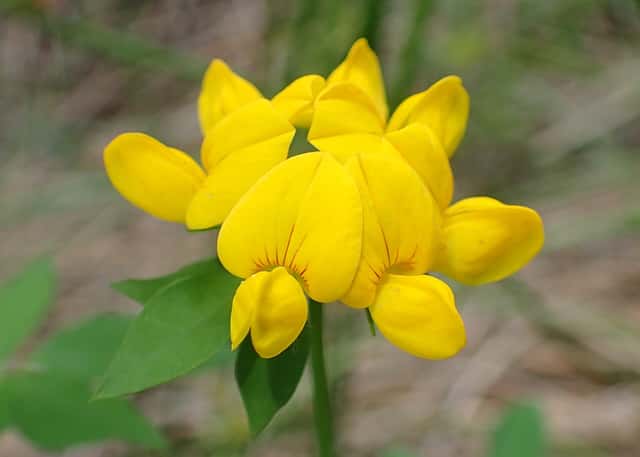
Greater Bird's-foot Trefoil (Lotus pedunculatus) is a easy-care plant from the Fabaceae family. Greater bird's-foot trefoil (Lotus pedunculatus) is a herbaceous perennial legume native to Europe, found in damp meadows, wet ditches, marshes and riverbanks. It differs from related trefoils by its always-hollow stem and reflexed sepals. It bears clusters of golden-yellow flowers and, as a nitroge...
Greater Bird's-foot Trefoil grows up to 80cm, spread of 100cm, watering every 3 days, -20°C – 30°C, 50–90% humidity. It is not suitable for indoor environments and safe for pets.
Unlike many tropical plants, Greater Bird's-foot Trefoil tolerates watering mistakes. Best for beginners. Unlike many popular species, Greater Bird's-foot Trefoil is safe to keep around pets.
How to Care for Greater Bird's-foot Trefoil?
TLDR: Greater Bird's-foot Trefoil needs Bright indirect, watering every 3 days, and temperatures between -20-30°C with 50-90% humidity.
How Often Should You Water Greater Bird's-foot Trefoil?
Keep the soil evenly moist to wet at all times; ideal along pond edges, ditches, or slow-draining beds. Avoid letting it dry out completely.
How Much Light Does Greater Bird's-foot Trefoil Need?
Grows best in full sun but tolerates partial shade; flowering is reduced in low light.
What Is the Best Soil for Greater Bird's-foot Trefoil?
Prefers loamy, moisture-retentive soil rich in organic matter, slightly acidic to neutral (pH 5.5-7.0), and constantly damp.
What Is Greater Bird's-foot Trefoil and Where Does It Come From?
Greater bird's-foot trefoil (Lotus pedunculatus) is a herbaceous perennial legume native to Europe, found in damp meadows, wet ditches, marshes and riverbanks. It differs from related trefoils by its always-hollow stem and reflexed sepals. It bears clusters of golden-yellow flowers and, as a nitrogen-fixing legume, is valued both as a forage crop and as a wildlife-friendly ornamental for wet gardens and pond margins.
How to Propagate Greater Bird's-foot Trefoil?
Seed sowing
Seeds germinate best after cold stratification or mechanical scarification.
- 1 Collect seeds from mature pods in late summer
- 2 Lightly scarify seeds to speed up germination
- 3 Sow in moist soil in full sun to partial shade in spring
- 4 Keep soil consistently moist until germination
Materials needed:
Clump division
Water generously after dividing to help establishment.
- 1 Dig up the clump in early spring
- 2 Divide the rhizome into rooted sections
- 3 Replant immediately in moist soil
Materials needed:
How Big Does Greater Bird's-foot Trefoil Grow?
TLDR: Greater Bird's-foot Trefoil can reach up to 80cm tall with Medium growth rate.
Max height
80cm
Spread
1.0m
Growth rate
Medium
Foliage
Deciduous
Plant Uses
Ornamental
Great for decoration
Ground Cover
Soil coverage
Is your plant showing symptoms?
Click on the symptom to discover possible causes:
What Diseases Commonly Affect Greater Bird's-foot Trefoil?
TLDR: Greater Bird's-foot Trefoil is susceptible to 3 known diseases. Monitor regularly for early detection.
Aphids
Aphids are small, soft-bodied, pear-shaped insects (1/16 to 1/8 inch long) that feed by sucking nutrient-rich sap from plants. They reproduce rapidly and can quickly weaken plants, causing distorted growth and transmitting plant viruses. Aphids come in various colors including green, black, red, yellow, brown, and gray. They secrete honeydew, a sticky substance that attracts ants and encourages sooty mold growth.
Caterpillars
Caterpillars are the larval stage of moths and butterflies that feed voraciously on plant foliage, stems, flowers, and fruits. Common species include cabbage loopers, tomato hornworms, armyworms, and cutworms. These pests can cause extensive damage by consuming large amounts of plant tissue in a short time. They vary in size from small (1/4 inch) to large (5 inches), with colors ranging from green to brown, often featuring stripes or spots. Caterpillars are highly mobile and can quickly spread throughout gardens, making them one of the most destructive common pests.
Pythium Root Rot
Pythium root rot is a serious fungal disease caused by various Pythium species including P. aphanidermatum, P. ultimum, and P. irregulare. These water molds are present in practically all cultivated soils and attack plant roots under wet conditions, causing rapid wet rot that can extend into the stem. The disease is favored by poor drainage, overwatering, and specific temperatures depending on the species.
Fun Facts
Its stem is always hollow, unlike common bird's-foot trefoil (Lotus corniculatus), which has a solid stem.
It is a host plant for the wood white butterfly (Leptidea sinapis).
As a legume, it fixes atmospheric nitrogen into the soil via root bacteria.
Frequently asked questions
Does greater bird's-foot trefoil need a lot of water?
Does greater bird's-foot trefoil need fertilizer?
Is greater bird's-foot trefoil toxic to pets?
How much sun does greater bird's-foot trefoil need?
Compare with similar plants
| Attribute | Difficulty | Light | Watering | Pet Safe |
|---|---|---|---|---|
| Field Maple | Easy | Bright indirect | 14d | ✓ |
| Silver Birch | Easy | Direct sun | 14d | ✓ |
| Common Blanketflower | Easy | Direct sun | 10d | ✓ |
| Cushion Bush | Easy | Direct sun | 14d | ✓ |





