Lamiaceae
Greek Sage (Salvia fruticosa)
Salvia fruticosa
An easygoing Mediterranean herb: give it full sun, gritty well-draining soil, and let it dry out fully between waterings. Prune lightly after flowering to keep growth compact and fragrant.
Every 12 days
Direct sun
-10° - 35°C
30% - 50%
Categories
What is Greek Sage?
Greek Sage (Salvia fruticosa) is a easy-care plant from the Lamiaceae family. Salvia fruticosa, commonly called Greek sage or three-lobed sage, is an aromatic, evergreen shrub native to rocky hillsides of the Eastern Mediterranean, including Greece, Crete, Turkey, Cyprus, and the Levant. Its soft, silvery-green, three-lobed leaves release a warm, resinous fragrance milder tha...
Greek Sage grows up to 1.0m, spread of 100cm, watering every 12 days, -10°C – 35°C, 30–50% humidity. It is not suitable for indoor environments and safe for pets.
Unlike many tropical plants, Greek Sage tolerates watering mistakes. Best for beginners. Unlike many popular species, Greek Sage is safe to keep around pets.
How to Care for Greek Sage?
TLDR: Greek Sage needs Direct sun, watering every 12 days, and temperatures between -10-35°C with 30-50% humidity.
How Often Should You Water Greek Sage?
Water deeply but infrequently, only once the top 5cm of soil is completely dry -- roughly every 10-14 days in summer and much less in winter. Overwatering is the most common cause of failure.
How Much Light Does Greek Sage Need?
Needs full, direct sun for at least 6 hours a day. Indoors, place on the sunniest windowsill available; leggy, pale growth signals insufficient light.
What Is the Best Soil for Greek Sage?
Use a gritty, well-draining mix (cactus or Mediterranean herb blend) amended with sand or perlite. Rich, moisture-retentive soil promotes root rot.
What Pot Should You Use for Greek Sage?
Unglazed terracotta pot with generous drainage holes, mimicking the rocky, fast-draining slopes of its native habitat.
What Is Greek Sage and Where Does It Come From?
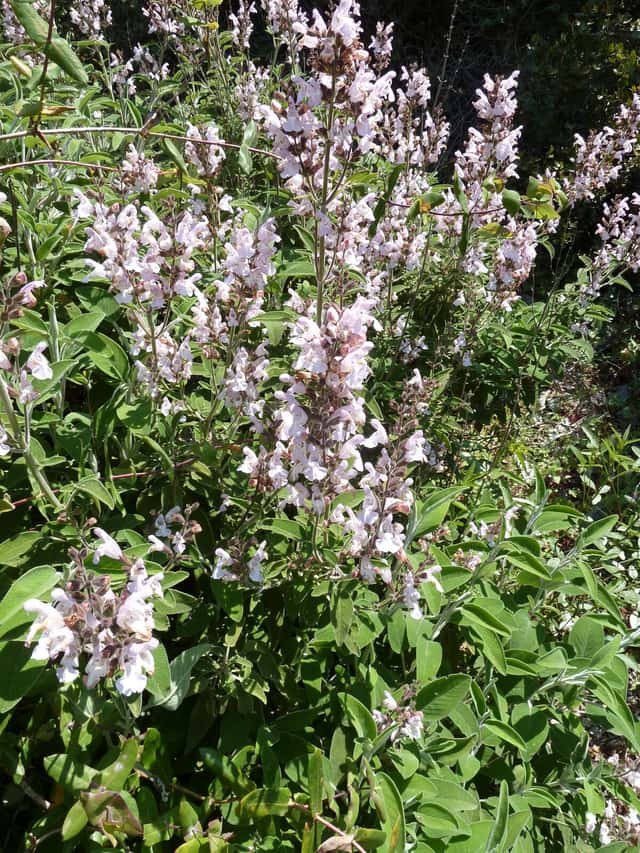
Salvia fruticosa, commonly called Greek sage or three-lobed sage, is an aromatic, evergreen shrub native to rocky hillsides of the Eastern Mediterranean, including Greece, Crete, Turkey, Cyprus, and the Levant. Its soft, silvery-green, three-lobed leaves release a warm, resinous fragrance milder than common sage, and its pink-to-lilac flower spikes attract bees and butterflies through late spring and summer. Grown for centuries as a culinary herb and folk remedy, it thrives in poor, dry, sun-baked soil and needs almost no attention once established.
How to Propagate Greek Sage?
Stem cutting
Avoid overwatering the cutting; sage roots best in slightly dry, airy substrate.
- 1 Cut a 10cm non-flowering stem tip just below a leaf node
- 2 Strip the lower leaves and let the cut callous for a few hours
- 3 Insert into a gritty, well-draining cutting mix
- 4 Keep lightly moist and in bright, indirect light until roots form
Materials needed:
Seed sowing
Germination can be uneven; sow more seeds than needed.
- 1 Sow seeds shallowly in well-draining seed mix
- 2 Keep at 18-21C until germination
- 3 Thin seedlings once true leaves appear
- 4 Transplant after the last frost
Materials needed:
How Big Does Greek Sage Grow?
TLDR: Greek Sage can reach up to 1.0m tall with Medium growth rate.
Max height
1.0m
Spread
1.0m
Growth rate
Medium
Foliage
Evergreen
Plant Uses
Ornamental
Great for decoration
Aromatic
Pleasant fragrance
Medicinal
Medicinal properties
Edible
Can be consumed
Medicinal Uses
- Soothes sore throats and coughs
- Aids digestion and relieves bloating
- Antiseptic and anti-inflammatory infusions
- Traditionally used for menstrual and menopausal discomfort
- Antioxidant-rich herbal tea ("faskomilo")
Culinary Uses
- Flavors roasted meats, poultry, and game
- Brewed as a traditional Greek herbal tea
- Added to legume and vegetable stews
- Infused into olive oil for marinades and dressings
- Dried and blended into winter seasoning mixes
Is your plant showing symptoms?
Click on the symptom to discover possible causes:
What Diseases Commonly Affect Greek Sage?
TLDR: Greek Sage is susceptible to 5 known diseases. Monitor regularly for early detection.
Powdery Mildew
Powdery mildew is a common fungal disease caused by various fungi species including Erysiphe, Podosphaera, Oïdium, and Leveillula. It affects over 10,000 plant species worldwide. The disease thrives in warm, dry climates with high humidity and appears as a distinctive white powdery coating on plant surfaces.
Spider Mites
Spider mites are tiny arachnids (less than 1/20 inch long) related to spiders and ticks that feed on plant sap. They thrive in hot, dry conditions and can cause significant damage to ornamental and vegetable plants. During severe infestations, crop losses can reach 14% or higher as these pests disrupt vital plant processes including photosynthesis, carbon dioxide absorption, and transpiration.
Aphids
Aphids are small, soft-bodied, pear-shaped insects (1/16 to 1/8 inch long) that feed by sucking nutrient-rich sap from plants. They reproduce rapidly and can quickly weaken plants, causing distorted growth and transmitting plant viruses. Aphids come in various colors including green, black, red, yellow, brown, and gray. They secrete honeydew, a sticky substance that attracts ants and encourages sooty mold growth.
Whiteflies
Whiteflies are small, soft-bodied, winged insects closely related to aphids and mealybugs. They are moth-like in appearance, about 1/16 inch long, triangular in shape, and gray-white in color. These sap-sucking pests feed on plant tissue, causing yellowing, stunted growth, and wilting. They also excrete honeydew, which attracts ants and promotes sooty mold growth. Whiteflies can transmit serious plant viruses.
Meaning & Symbolism
In Mediterranean folklore sage was considered nearly sacred, tied to wisdom, longevity, and protection; the Latin name Salvia derives from salvare, "to heal" or "to save."
Fun Facts
The genus name Salvia comes from the Latin salvare, meaning "to heal" or "to save."
Its leaves are traditionally three-lobed, giving rise to the name "three-lobed sage."
Dried Greek sage leaves are the base of the popular Greek mountain herbal tea, faskomilo.
Frequently asked questions
How often should I water Greek sage?
Is Greek sage toxic to cats or dogs?
Can I grow Greek sage indoors?
What is the difference between Greek sage and common sage?
Compare with similar plants
| Attribute | Difficulty | Light | Watering | Pet Safe |
|---|---|---|---|---|
| Field Maple | Easy | Bright indirect | 14d | ✓ |
| Silver Birch | Easy | Direct sun | 14d | ✓ |
| Common Blanketflower | Easy | Direct sun | 10d | ✓ |
| Cushion Bush | Easy | Direct sun | 14d | ✓ |
Choose & Compare
Sources & References
- Salvia fruticosa (Greek Sage) - My Mediterranean Garden
- Salvia fruticosa - Greek Sage, Greek oregano - PFAF Plant Database
- Greek Sage (Salvia Fruticosa) Care Guide - Plantiary
- Salvia fruticosa (Greek Sage) - Practical Plants
- Salvia - Home & Garden Information Center, Clemson
- 11 Common Problems With Salvia Plants - Epic Gardening
- Salvia fruticosa - Wikipedia





