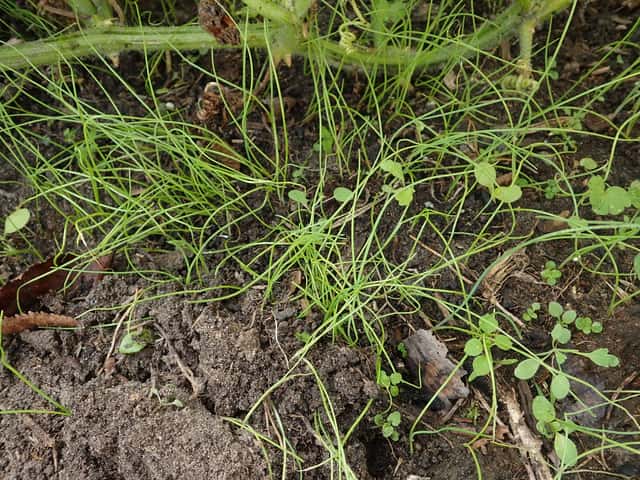
Amaryllidaceae
Green onions: Edible Plant
Allium fistulosum
An easy-to-grow plant that requires full sun and soil rich in organic matter, with frequent watering to maintain moisture.
Every 7 days
Direct sun
7° - 35°C
30% - 50%
Categories
What is Green onions?
Green onions (Allium fistulosum) is a easy-care plant from the Amaryllidaceae family. Allium fistulosum, popularly known as green onions, is a perennial herbaceous plant essential for any vegetable garden. Its leaves are cylindrical, hollow, and deep green, growing in compact clumps. Unlike the common onion, it does not form developed globose bulbs, being prized for the mild and refr...
Green onions grows up to 60cm, spread of 30cm, watering every 7 days, 7°C – 35°C, 30–50% humidity. It is not suitable for indoor environments and not safe for pets.
Unlike many tropical plants, Green onions tolerates watering mistakes. Best for beginners. Without precautions, ingestion can cause irritation in pets. Keep out of reach of cats and dogs.
How to Care for Green onions?
TLDR: Green onions needs Direct sun, watering every 7 days, and temperatures between 7-35°C with 30-50% humidity.
How Often Should You Water Green onions?
Water whenever the soil surface is dry to the touch, but avoid waterlogging to prevent root rot.
How Much Light Does Green onions Need?
For vigorous growth and crunchy leaves, green onions should receive at least 6 hours of direct sunlight per day.
What Is the Best Soil for Green onions?
Use a mixture of potting soil with earthworm castings to ensure the necessary nutrients.
What Pot Should You Use for Green onions?
Pots with good drainage and a minimum depth of 15-20 cm to allow for root development.
Care Schedule
Fertilize
Every 30 days
What Is Green onions and Where Does It Come From?
Allium fistulosum, popularly known as green onions, is a perennial herbaceous plant essential for any vegetable garden. Its leaves are cylindrical, hollow, and deep green, growing in compact clumps. Unlike the common onion, it does not form developed globose bulbs, being prized for the mild and refreshing flavor of its stalks and white bases.
How to Propagate Green onions?
Clump Division
- This is the fastest way to multiply your green onion garden.
- 1 Removal
Carefully remove the green onion clump from the pot or soil, taking care not to damage the roots.
- 2 Separation
Separate the clumps individually by hand, ensuring each part has some roots and leaves.
- 3 Replanting
Plant the divisions in rich soil and water immediately to settle the earth.
Materials needed:
Sowing
- Avoid burying the seeds too deep to facilitate sprout emergence.
- 1 Preparation
Prepare a seed tray with light, well-drained substrate.
- 2 Sowing
Place the seeds 0.5 cm deep and cover lightly.
- 3 Maintenance
Keep the substrate constantly moist and in a place with indirect light until germination.
Materials needed:
How Big Does Green onions Grow?
TLDR: Green onions can reach up to 60cm tall with Fast growth rate.
Max height
60cm
Spread
30cm
Growth rate
Fast
Foliage
Evergreen
Warning: Toxic Plant
This plant can be toxic if ingested. Keep out of reach of:
Plant Uses
Edible
Can be consumed
Ornamental
Great for decoration
Medicinal Uses
- Source of vitamins A, C, and K
- Aids in digestion
- Mild anti-inflammatory properties
Culinary Uses
- Garnish for finishing dishes
- Ingredient in omelets and quiches
- Base for sauces and vinaigrettes
- Soups and broths
Is your plant showing symptoms?
Click on the symptom to discover possible causes:
What Diseases Commonly Affect Green onions?
TLDR: Green onions is susceptible to 12 known diseases. Monitor regularly for early detection.
Rust
Rust is a common fungal disease caused by fungi in the order Pucciniales that affects a wide variety of plants. The disease gets its name from the characteristic orange, yellow, or reddish-brown pustules that appear on leaves, resembling metal rust. This obligate fungal parasite requires living plants to survive and can cause significant economic losses in agricultural crops.
Thrips
Thrips are tiny cigar-shaped insects (1/25-inch long) that damage plants by sucking plant juices and scraping at fruits, flowers, and leaves. With over 6,000 species and rapid reproduction (lifecycle as short as 14 days), they can quickly infest plants and transmit viruses like tomato spotted wilt virus.
Aphids
Aphids are small, soft-bodied, pear-shaped insects (1/16 to 1/8 inch long) that feed by sucking nutrient-rich sap from plants. They reproduce rapidly and can quickly weaken plants, causing distorted growth and transmitting plant viruses. Aphids come in various colors including green, black, red, yellow, brown, and gray. They secrete honeydew, a sticky substance that attracts ants and encourages sooty mold growth.
Downy Mildew
Downy mildew is a fungal-like disease caused by oomycetes (water molds) that thrives in cool, wet conditions. It affects a wide range of plants, causing yellowing leaves with fuzzy white-gray growth underneath, leading to defoliation and reduced yields if left untreated.
Meaning & Symbolism
Represents versatility and resilience in daily life.
Compare with similar plants
| Attribute | Difficulty | Light | Watering | Pet Safe |
|---|---|---|---|---|
| Field Maple | Easy | Bright indirect | 14d | ✓ |
| Silver Birch | Easy | Direct sun | 14d | ✓ |
| Common Blanketflower | Easy | Direct sun | 10d | ✓ |
| Cushion Bush | Easy | Direct sun | 14d | ✓ |





