Sarraceniaceae
Gulf Purple Pitcher Plant (Sarracenia rosea): Care Guide
Sarracenia rosea
Give it full sun or as much light as possible. Never let the soil dry out: grow the pot in a tray with 4-6 cm of rain or distilled water. Use a peat and sand mix and do not fertilize the soil. It needs a cool winter dormancy.
Every 2 days
Bright indirect
-12° - °C
% - %
Categories
What is Gulf Purple Pitcher Plant?
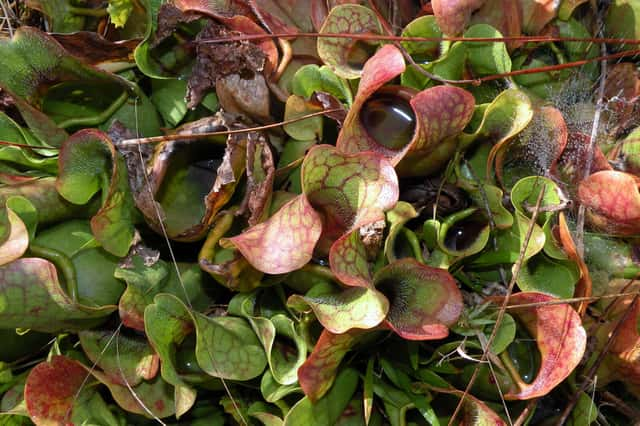
Gulf Purple Pitcher Plant (Sarracenia rosea) is a medium-care plant from the Sarraceniaceae family. Gulf purple pitcher plant (Sarracenia rosea) is a carnivorous perennial native to the Gulf Coast of the southeastern United States, from Mississippi to Georgia. Its leaves form low, often ground-hugging pitchers with upward-facing mouths that trap and digest insects. It was treated as a variety of S...
Gulf Purple Pitcher Plant grows up to 30cm, watering every 2 days. It is suitable for indoor environments and safe for pets.
Unlike many popular species, Gulf Purple Pitcher Plant is safe to keep around pets. Without adequate drainage, root rot can develop within 7 days.
How to Care for Gulf Purple Pitcher Plant?
TLDR: Gulf Purple Pitcher Plant needs Bright indirect, watering every 2 days, and temperatures between -12-30°C with 40-70% humidity.
How Often Should You Water Gulf Purple Pitcher Plant?
Keep the pot standing in 4-6 cm of water at all times and top up every day or two in hot weather. Use only rain, distilled or reverse-osmosis water: salts and minerals in tap water harm the roots. Never let it dry out.
How Much Light Does Gulf Purple Pitcher Plant Need?
It needs plenty of light: full sun outdoors or strong grow lights indoors. It is one of the Sarracenia best suited to growing under lights year round and tolerates a little more shade than most of its relatives.
What Is the Best Soil for Gulf Purple Pitcher Plant?
Use a nutrient-poor 1:1 mix of peat and sand (perlite can replace sand outdoors). Never use garden soil, compost or regular potting mix.
What Pot Should You Use for Gulf Purple Pitcher Plant?
A plastic pot with drainage holes, 16-20 cm wide for mature plants, always standing in a water tray. Avoid terracotta and unglazed ceramic, which leach minerals.
What Is Gulf Purple Pitcher Plant and Where Does It Come From?
Gulf purple pitcher plant (Sarracenia rosea) is a carnivorous perennial native to the Gulf Coast of the southeastern United States, from Mississippi to Georgia. Its leaves form low, often ground-hugging pitchers with upward-facing mouths that trap and digest insects. It was treated as a variety of Sarracenia purpurea until 1999, when it was raised to species rank for its larger flowers on shorter stalks, light pink petals and different pitcher structure. It is state-listed as threatened in Florida.
How to Propagate Gulf Purple Pitcher Plant?
Rhizome division
Only divide large clumps. Use a clean, sharp knife and remove dead material to prevent rot.
- 1 At the end of winter dormancy, lift the plant from its pot
- 2 Cut the rhizome into sections, each with roots and a growing point
- 3 Pot each section in peat and sand mix
- 4 Stand the pots in water in good light
Materials needed:
Seed
Seedlings take several years to flower. Never let the medium dry out.
- 1 Cold-stratify the seed, moist, for a few weeks
- 2 Sow on the surface of moist peat without covering
- 3 Keep under strong light and high humidity
- 4 Transplant seedlings once established
Materials needed:
How Big Does Gulf Purple Pitcher Plant Grow?
TLDR: Gulf Purple Pitcher Plant can reach up to 30cm tall with Medium growth rate.
Max height
30cm
Foliage
Evergreen
Plant Uses
Ornamental
Great for decoration
Is your plant showing symptoms?
Click on the symptom to discover possible causes:
What Diseases Commonly Affect Gulf Purple Pitcher Plant?
TLDR: Gulf Purple Pitcher Plant is susceptible to 6 known diseases. Monitor regularly for early detection.
Grey Mould
Root Rot
Root rot is a serious fungal disease that affects the root system of plants, causing them to decay and die. It is primarily caused by overwatering, poor drainage, or soil-borne fungi such as Pythium, Phytophthora, Rhizoctonia, and Fusarium. The disease thrives in waterlogged conditions where roots are deprived of oxygen, making them susceptible to fungal infection.
Aphids
Aphids are small, soft-bodied, pear-shaped insects (1/16 to 1/8 inch long) that feed by sucking nutrient-rich sap from plants. They reproduce rapidly and can quickly weaken plants, causing distorted growth and transmitting plant viruses. Aphids come in various colors including green, black, red, yellow, brown, and gray. They secrete honeydew, a sticky substance that attracts ants and encourages sooty mold growth.
Scale Insects
Scale insects are small sap-sucking pests that appear as brown, shell-like bumps on plant stems and leaves. There are over 25 species, divided into armored (hard) and unarmored (soft) scales. They feed by piercing plant tissue and extracting sap, which weakens the plant and can lead to yellowing, stunted growth, and even death if left untreated. They also excrete honeydew, which attracts ants and promotes sooty mold growth.
Fun Facts
Until 1999 it was classified as a variety of Sarracenia purpurea.
It is the only Sarracenia with light pink petals.
It readily colonizes roadside drainage ditches along the Gulf Coast.
Frequently asked questions
Can I water Gulf purple pitcher plant with tap water?
Do I need to feed it insects?
When should I trim the pitchers?
Compare with similar plants
| Attribute | Difficulty | Light | Watering | Pet Safe |
|---|---|---|---|---|
| Dark Fieldcap | Medium | Low light | 2d | ⚠️ |
| Azalea | Medium | Partial shade | 3d | ⚠️ |
| Muriel's Bamboo | Medium | Partial shade | 3d | ✓ |
| Bougainvillea | Medium | Direct sun | 7d | ⚠️ |




