Asteraceae
Gynura (purple passion and relatives)
Gynura
Warm-climate plant: bright light without harsh afternoon sun, moist but not soggy soil, and regular pinching so it does not get leggy.
Every 7 days
Partial shade
13° - 30°C
40% - 70%
Categories
What is Gynura?
Gynura (Gynura) is a easy-care plant from the Asteraceae family. Gynura is a genus of herbs and climbers in the daisy family, with about 45 species from tropical Asia and Africa. The best known is Gynura aurantiaca, the purple passion or velvet plant, whose leaves are covered in purple hairs that look like fabric. Others, such as Gynura procumbens and Gynura bico...
Gynura grows up to 1.2m, spread of 90cm, watering every 7 days, 13°C – 30°C, 40–70% humidity. It is suitable for indoor environments and safe for pets.
Unlike many tropical plants, Gynura tolerates watering mistakes. Best for beginners. Unlike many popular species, Gynura is safe to keep around pets. Without adequate drainage, root rot can develop within 14 days.
How to Care for Gynura?
TLDR: Gynura needs Partial shade, watering every 7 days, and temperatures between 13-30°C with 40-70% humidity.
How Often Should You Water Gynura?
Water when the top 2 cm of soil is dry, about once a week. Water the soil, not the hairy leaves, and cut back in winter.
How Much Light Does Gynura Need?
Bright, indirect light near a window. In low light the purple passion turns green and loses its color.
What Is the Best Soil for Gynura?
Light, rich potting mix that drains well. Adding some perlite or coarse sand keeps it from staying soggy.
What Pot Should You Use for Gynura?
A 15 to 20 cm pot with a drainage hole, or a hanging basket for the trailing species.
Care Schedule
Fertilize
Every 30 days
Repot
Every 365 days
What Is Gynura and Where Does It Come From?
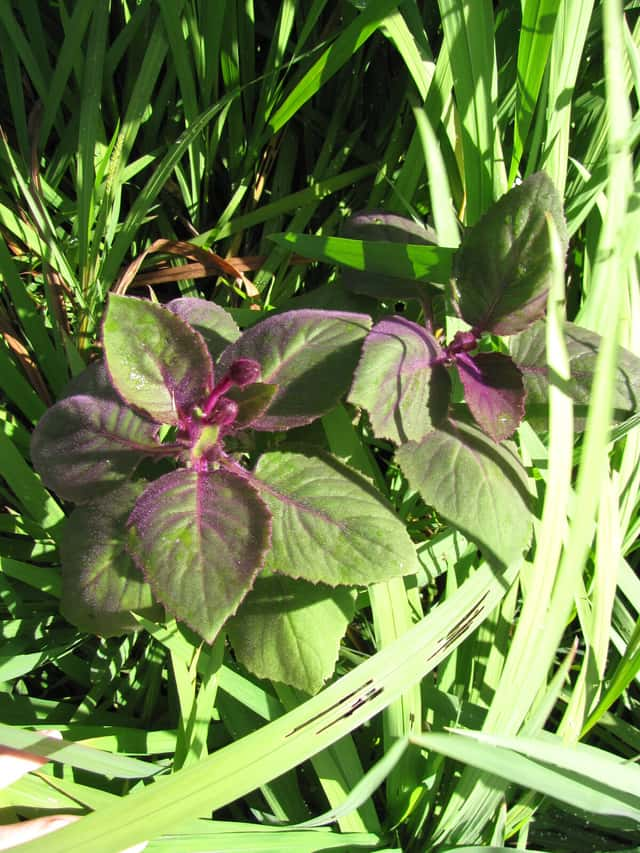
Gynura is a genus of herbs and climbers in the daisy family, with about 45 species from tropical Asia and Africa. The best known is Gynura aurantiaca, the purple passion or velvet plant, whose leaves are covered in purple hairs that look like fabric. Others, such as Gynura procumbens and Gynura bicolor, are grown in Asia as leafy greens and for tea. All of them like warmth, bright light and moist soil, grow fast and root easily from cuttings. The flowers are small, orange or yellow, and in some species smell bad. Some species have their own page.
How to Propagate Gynura?
Stem cutting
Root several cuttings at once and plant them together for a full pot. Plants get old and sparse after 2 or 3 years, so refresh them with cuttings.
- 1 Cut a stem tip 8 to 10 cm long
- 2 Remove the lower leaves
- 3 Place it in water or moist potting mix
- 4 Pot it up once the roots are 2 to 3 cm long
Materials needed:
How Big Does Gynura Grow?
TLDR: Gynura can reach up to 1.2m tall with Fast growth rate.
Max height
1.2m
Spread
90cm
Growth rate
Fast
Foliage
Evergreen
Plant Uses
Ornamental
Great for decoration
Edible
Can be consumed
Medicinal
Medicinal properties
Medicinal Uses
- Gynura procumbens is used as a tea in traditional Southeast Asian medicine
Culinary Uses
- Leaves of Gynura procumbens and Gynura bicolor are eaten raw or stir-fried in Asia
Is your plant showing symptoms?
Click on the symptom to discover possible causes:
What Diseases Commonly Affect Gynura?
TLDR: Gynura is susceptible to 6 known diseases. Monitor regularly for early detection.
Root Rot
Root rot is a serious fungal disease that affects the root system of plants, causing them to decay and die. It is primarily caused by overwatering, poor drainage, or soil-borne fungi such as Pythium, Phytophthora, Rhizoctonia, and Fusarium. The disease thrives in waterlogged conditions where roots are deprived of oxygen, making them susceptible to fungal infection.
Aphids
Aphids are small, soft-bodied, pear-shaped insects (1/16 to 1/8 inch long) that feed by sucking nutrient-rich sap from plants. They reproduce rapidly and can quickly weaken plants, causing distorted growth and transmitting plant viruses. Aphids come in various colors including green, black, red, yellow, brown, and gray. They secrete honeydew, a sticky substance that attracts ants and encourages sooty mold growth.
Whiteflies
Whiteflies are small, soft-bodied, winged insects closely related to aphids and mealybugs. They are moth-like in appearance, about 1/16 inch long, triangular in shape, and gray-white in color. These sap-sucking pests feed on plant tissue, causing yellowing, stunted growth, and wilting. They also excrete honeydew, which attracts ants and promotes sooty mold growth. Whiteflies can transmit serious plant viruses.
Mealybugs
Mealybugs are small, soft-bodied insects covered with a white, waxy, cottony material. They are common pests of houseplants and outdoor plants in mild climates. These sap-sucking insects feed on plant tissue, causing damage, stunted growth, and can lead to plant death if left untreated. They produce sticky honeydew which attracts sooty mold.
Fun Facts
Gynura means female tail in Greek, after the long stigma of the flower
The purple hairs on the leaves shine when light hits them from behind
In Malaysia Gynura procumbens is called longevity spinach
Frequently asked questions
Why did my purple passion turn green?
Is Gynura toxic to cats and dogs?
Can I eat the leaves?
Should I keep the flowers?
Compare with similar plants
| Attribute | Difficulty | Light | Watering | Pet Safe |
|---|---|---|---|---|
| Field Maple | Easy | Bright indirect | 14d | ✓ |
| Iberian Houseleek | Easy | Direct sun | 14d | ✓ |
| Silver Birch | Easy | Direct sun | 14d | ✓ |
| Common Blanketflower | Easy | Direct sun | 10d | ✓ |





