Lamiaceae
Gypsywort: Ground Cover Plant
Lycopus europaeus
Gypsywort thrives best in a sunny to semi-shady location with consistently wet to moist, nutrient-rich soil – ideal at the edge of a pond or stream. It is frost-hardy, easy to care for, and largely free of diseases and pests. Only its vigorous runner growth should be monitored.
Every 2 days
Partial shade
-20° - 35°C
60% - 95%
Categories
What is Gypsywort?
Gypsywort (Lycopus europaeus) is a easy-care plant from the Lamiaceae family. Gypsywort (Lycopus europaeus) is a perennial herbaceous plant from the mint family (Lamiaceae), widely distributed throughout Europe, the Caucasus, and West Asia. It prefers to grow on banks, in reeds, and sedge stands on wet to flooded, nutrient-rich soils. The plant, 30 to 120 cm tall, forms oppos...
Gypsywort grows up to 1.0m, spread of 60cm, watering every 2 days, -20°C – 35°C, 60–95% humidity. It is not suitable for indoor environments and safe for pets.
Unlike many tropical plants, Gypsywort tolerates watering mistakes. Best for beginners. Unlike many popular species, Gypsywort is safe to keep around pets.
How to Care for Gypsywort?
TLDR: Gypsywort needs Partial shade, watering every 2 days, and temperatures between -20-35°C with 60-95% humidity.
How Often Should You Water Gypsywort?
The soil should never dry out – ideally plant directly by water or in a constantly moist bog garden; if necessary, cultivate in a pot without drainage holes with standing water.
How Much Light Does Gypsywort Need?
Sunny to semi-shady locations are preferred; light shade is also tolerated as long as the soil remains moist.
What Is the Best Soil for Gypsywort?
Nutrient-rich, sandy to loamy or peaty soil with high moisture is ideal; the pH value can range from slightly acidic to slightly alkaline.
What Pot Should You Use for Gypsywort?
Since Gypsywort requires constant wetness, it is hardly suitable for classic pots with drainage holes – a bog garden pot or planting basket without drainage, permanently placed in shallow water at the pond's edge, is better.
What Is Gypsywort and Where Does It Come From?
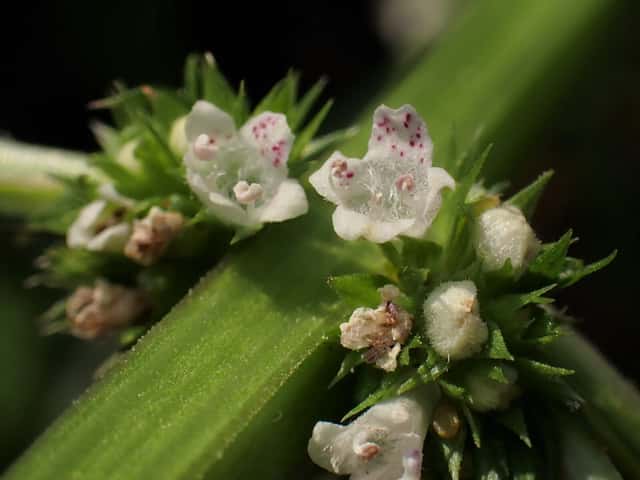
Gypsywort (Lycopus europaeus) is a perennial herbaceous plant from the mint family (Lamiaceae), widely distributed throughout Europe, the Caucasus, and West Asia. It prefers to grow on banks, in reeds, and sedge stands on wet to flooded, nutrient-rich soils. The plant, 30 to 120 cm tall, forms opposite, deeply lobed leaves whose shape resembles a wolf's paw – hence the German and Latin names (Greek "lykos" = wolf, "pous" = foot). From July to September, small white, violet-dotted labiate flowers appear in the leaf axils, attracting numerous wild bees, hoverflies, and butterflies. The vigorous plant spreads rapidly via underground runners.
How to Propagate Gypsywort?
How Big Does Gypsywort Grow?
TLDR: Gypsywort can reach up to 1.0m tall with Fast growth rate.
Max height
1.0m
Spread
60cm
Growth rate
Fast
Foliage
Deciduous
Plant Uses
Medicinal
Medicinal properties
Ground Cover
Soil coverage
Edible
Can be consumed
Medicinal Uses
- Traditionally used for mild hyperthyroidism with vegetative-nervous accompanying symptoms according to Commission E
- For nervous restlessness, palpitations, and difficulty falling asleep
- In folk medicine as a cough remedy for chronic cough
- For mastodynia (cycle-related breast pain)
Is your plant showing symptoms?
Click on the symptom to discover possible causes:
What Diseases Commonly Affect Gypsywort?
TLDR: Gypsywort is susceptible to 1 known diseases. Monitor regularly for early detection.
Meaning & Symbolism
The name Gypsywort (Greek "lykos" = wolf, "pous" = foot) refers to the deeply lobed leaves, whose shape resembles a wolf's paw – a symbol of the wild, untamed power of this marsh plant.
Compare with similar plants
| Attribute | Difficulty | Light | Watering | Pet Safe |
|---|---|---|---|---|
| Field Maple | Easy | Bright indirect | 14d | ✓ |
| Silver Birch | Easy | Direct sun | 14d | ✓ |
| Common Blanketflower | Easy | Direct sun | 10d | ✓ |
| Cushion Bush | Easy | Direct sun | 14d | ✓ |





