Lamiaceae
Coleus hadiensis (Hairy Coleus) Care Guide
Coleus hadiensis
An easy-care, drought-tolerant plant that thrives in bright indirect light or morning sun with afternoon shade. Water only once the top of the soil has dried out, and grow it in well-draining, organically rich soil. It grows quickly and responds well to occasional pinching to keep it compact and bushy.
Every 9 days
Partial shade
° - °C
% - %
Categories
What is Hairy Coleus?
Hairy Coleus (Coleus hadiensis) is a easy-care plant from the Lamiaceae family. Coleus hadiensis, formerly known as Plectranthus hadiensis, is a fast-growing, semi-succulent shrub native to South Africa's Eastern Cape and KwaZulu-Natal provinces, extending through eastern tropical Africa to the southern Arabian Peninsula. It forms an erect to decumbent shrub up to 1.5 m tall an...
Hairy Coleus grows up to 1.5m, spread of 100cm, watering every 9 days. It is suitable for indoor environments and safe for pets.
Unlike many tropical plants, Hairy Coleus tolerates watering mistakes. Best for beginners. Unlike many popular species, Hairy Coleus is safe to keep around pets. Without adequate drainage, root rot can develop within 18 days.
How to Care for Hairy Coleus?
TLDR: Hairy Coleus needs Partial shade, watering every 9 days, and temperatures between 15-30°C with 40-70% humidity.
How Often Should You Water Hairy Coleus?
Let the top inch (2.5 cm) of soil dry out between waterings. Its semi-succulent stems store water, so it tolerates missed waterings far better than soggy, waterlogged soil, which quickly leads to root rot.
How Much Light Does Hairy Coleus Need?
Place it within about 3 feet of a bright window, or outdoors in a spot with morning sun and afternoon shade. Too little light causes leggy growth and leaf drop.
What Is the Best Soil for Hairy Coleus?
Use a well-draining potting mix enriched with organic matter (such as compost or coco coir), plus perlite or coarse sand to keep the roots from sitting in moisture.
What Pot Should You Use for Hairy Coleus?
A terracotta or other porous pot with ample drainage holes, to help the semi-succulent roots avoid sitting in moisture.
Care Schedule
Fertilize
Every 21 days
Repot
Every 365 days
What Is Hairy Coleus and Where Does It Come From?
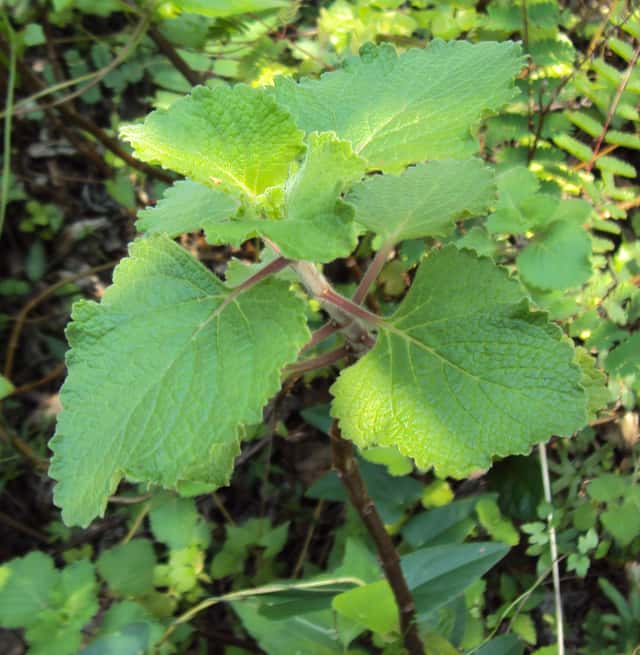
Coleus hadiensis, formerly known as Plectranthus hadiensis, is a fast-growing, semi-succulent shrub native to South Africa's Eastern Cape and KwaZulu-Natal provinces, extending through eastern tropical Africa to the southern Arabian Peninsula. It forms an erect to decumbent shrub up to 1.5 m tall and 1 m wide, with soft, felted, aromatic leaves and terminal clusters of mauve to purple (occasionally white) tubular flowers that bloom from autumn into winter.
How to Propagate Hairy Coleus?
Stem cutting
Rooting hormone is not necessary for this species; keep cuttings out of direct hot sun while they root.
- 1 Cut a healthy tip or stem section about 15 cm long, just below a node
- 2 Remove about a third of the leaves from the lower part of the cutting
- 3 Insert the cutting into a well-drained mix of river sand, perlite or vermiculite
- 4 Keep the medium moist but not wet in a warm, humid spot with good airflow
- 5 Transplant into a container once roots are well established
Materials needed:
How Big Does Hairy Coleus Grow?
TLDR: Hairy Coleus can reach up to 1.5m tall with Fast growth rate.
Max height
1.5m
Spread
1.0m
Growth rate
Fast
Foliage
Evergreen
Plant Uses
Ornamental
Great for decoration
Medicinal
Medicinal properties
Aromatic
Pleasant fragrance
Medicinal Uses
- Traditional wound healing
- Traditional relief for coughs and colds
Is your plant showing symptoms?
Click on the symptom to discover possible causes:
What Diseases Commonly Affect Hairy Coleus?
TLDR: Hairy Coleus is susceptible to 8 known diseases. Monitor regularly for early detection.
Root Rot
Root rot is a serious fungal disease that affects the root system of plants, causing them to decay and die. It is primarily caused by overwatering, poor drainage, or soil-borne fungi such as Pythium, Phytophthora, Rhizoctonia, and Fusarium. The disease thrives in waterlogged conditions where roots are deprived of oxygen, making them susceptible to fungal infection.
Overwatering
Overwatering occurs when plants receive too much water, depriving roots of oxygen and causing root rot. This environmental stress is one of the most common causes of houseplant death, as waterlogged soil prevents roots from breathing and functioning properly.
Spider Mites
Spider mites are tiny arachnids (less than 1/20 inch long) related to spiders and ticks that feed on plant sap. They thrive in hot, dry conditions and can cause significant damage to ornamental and vegetable plants. During severe infestations, crop losses can reach 14% or higher as these pests disrupt vital plant processes including photosynthesis, carbon dioxide absorption, and transpiration.
Mealybugs
Mealybugs are small, soft-bodied insects covered with a white, waxy, cottony material. They are common pests of houseplants and outdoor plants in mild climates. These sap-sucking insects feed on plant tissue, causing damage, stunted growth, and can lead to plant death if left untreated. They produce sticky honeydew which attracts sooty mold.
Meaning & Symbolism
In its native South Africa this plant has long been valued in traditional medicine for wound healing, and is regarded by some communities as a protective, resilient plant.
Fun Facts
Its felted, gray-green leaves give off a Vicks VapoRub-like scent when brushed or crushed, inspiring its common name.
It was only moved from the genus Plectranthus into Coleus in 2019 after taxonomic revision.
In the wild it acts as a pioneer plant, quickly colonizing disturbed ground in forest and grassland habitats.
Frequently asked questions
How often should I water Coleus hadiensis?
Is Coleus hadiensis toxic to pets?
How do I propagate Coleus hadiensis?
Why is my Coleus hadiensis dropping leaves?
Compare with similar plants
| Attribute | Difficulty | Light | Watering | Pet Safe |
|---|---|---|---|---|
| Field Maple | Easy | Bright indirect | 14d | ✓ |
| Silver Birch | Easy | Direct sun | 14d | ✓ |
| Common Blanketflower | Easy | Direct sun | 10d | ✓ |
| Cushion Bush | Easy | Direct sun | 14d | ✓ |





