Malvaceae
Halberdleaf Rosemallow: Full Sun Plant
Hibiscus laevis
An easy, vigorous plant for full sun and consistently moist to wet, rich soil. Keep it well watered, cut it back in late winter, and it will return each year and draw in butterflies and bees.
Every 3 days
Direct sun
-25° - 35°C
40% - 80%
Categories
What is Halberdleaf Rosemallow?
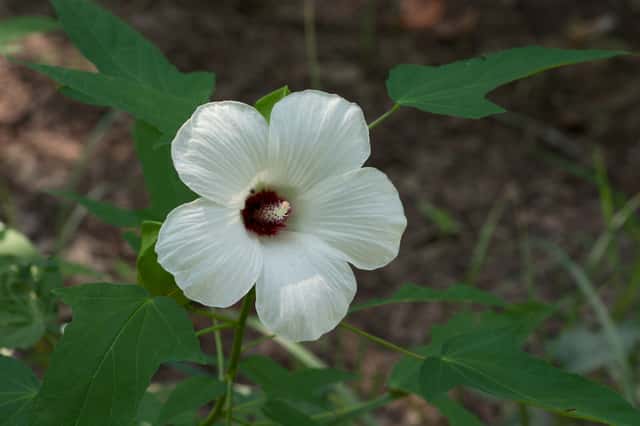
Halberdleaf Rosemallow (Hibiscus laevis) is a easy-care plant from the Malvaceae family. Hibiscus laevis is a stout, upright herbaceous perennial native to North American wetland margins, named for its distinctive three-lobed, halberd-shaped leaves. From summer into fall it bears large, hollyhock-like flowers in white to pink with a deep maroon throat that open by day and close at night...
Halberdleaf Rosemallow grows up to 1.8m, spread of 90cm, watering every 3 days, -25°C – 35°C, 40–80% humidity. It is not suitable for indoor environments and safe for pets.
Unlike many tropical plants, Halberdleaf Rosemallow tolerates watering mistakes. Best for beginners. Unlike many popular species, Halberdleaf Rosemallow is safe to keep around pets.
How to Care for Halberdleaf Rosemallow?
TLDR: Halberdleaf Rosemallow needs Direct sun, watering every 3 days, and temperatures between -25-35°C with 40-80% humidity.
How Often Should You Water Halberdleaf Rosemallow?
Keep the soil evenly moist to wet at all times; this waterside plant dislikes drying out and thrives even in boggy ground or shallow standing water.
How Much Light Does Halberdleaf Rosemallow Need?
Full sun gives the strongest flowering; it tolerates light shade but blooms less. Aim for at least six hours of direct sun.
What Is the Best Soil for Halberdleaf Rosemallow?
Plant in rich, organic, moisture-retentive soil; it is unfussy about pH (about 5.5 to 7.5) as long as the ground stays damp.
What Pot Should You Use for Halberdleaf Rosemallow?
Best in the ground or a large, water-retentive container by a pond; avoid small pots that dry out quickly.
What Is Halberdleaf Rosemallow and Where Does It Come From?
Hibiscus laevis is a stout, upright herbaceous perennial native to North American wetland margins, named for its distinctive three-lobed, halberd-shaped leaves. From summer into fall it bears large, hollyhock-like flowers in white to pink with a deep maroon throat that open by day and close at night.
How to Propagate Halberdleaf Rosemallow?
Seed Sowing
- Lightly scarify or soak the hard seed.
- Sow after the last frost in warm soil.
- 1 Prepare Seed
Nick or soak the hard seed coat overnight to speed germination.
- 2 Sow
Sow about 1 cm deep in a moist, rich mix and keep warm.
- 3 Grow On
Keep the seedlings consistently moist and plant out once established.
Materials needed:
Division
- Divide in early spring as new shoots emerge.
- Keep divisions very moist until re-established.
- 1 Lift
Dig up an established clump in early spring.
- 2 Divide
Cut the crown into sections, each with roots and a shoot.
- 3 Replant
Replant immediately in rich, moist soil and water well.
Materials needed:
How Big Does Halberdleaf Rosemallow Grow?
TLDR: Halberdleaf Rosemallow can reach up to 1.8m tall with Fast growth rate.
Max height
1.8m
Spread
90cm
Growth rate
Fast
Foliage
Deciduous
Plant Uses
Ornamental
Great for decoration
Is your plant showing symptoms?
Click on the symptom to discover possible causes:
What Diseases Commonly Affect Halberdleaf Rosemallow?
TLDR: Halberdleaf Rosemallow is susceptible to 5 known diseases. Monitor regularly for early detection.
Aphids
Aphids are small, soft-bodied, pear-shaped insects (1/16 to 1/8 inch long) that feed by sucking nutrient-rich sap from plants. They reproduce rapidly and can quickly weaken plants, causing distorted growth and transmitting plant viruses. Aphids come in various colors including green, black, red, yellow, brown, and gray. They secrete honeydew, a sticky substance that attracts ants and encourages sooty mold growth.
Whiteflies
Whiteflies are small, soft-bodied, winged insects closely related to aphids and mealybugs. They are moth-like in appearance, about 1/16 inch long, triangular in shape, and gray-white in color. These sap-sucking pests feed on plant tissue, causing yellowing, stunted growth, and wilting. They also excrete honeydew, which attracts ants and promotes sooty mold growth. Whiteflies can transmit serious plant viruses.
Spider Mites
Spider mites are tiny arachnids (less than 1/20 inch long) related to spiders and ticks that feed on plant sap. They thrive in hot, dry conditions and can cause significant damage to ornamental and vegetable plants. During severe infestations, crop losses can reach 14% or higher as these pests disrupt vital plant processes including photosynthesis, carbon dioxide absorption, and transpiration.
Rust
Rust is a common fungal disease caused by fungi in the order Pucciniales that affects a wide variety of plants. The disease gets its name from the characteristic orange, yellow, or reddish-brown pustules that appear on leaves, resembling metal rust. This obligate fungal parasite requires living plants to survive and can cause significant economic losses in agricultural crops.
Meaning & Symbolism
A native wetland mallow whose large, fleeting blooms evoke delicate beauty and the abundance of late summer.
Compare with similar plants
| Attribute | Difficulty | Light | Watering | Pet Safe |
|---|---|---|---|---|
| Field Maple | Easy | Bright indirect | 14d | ✓ |
| Silver Birch | Easy | Direct sun | 14d | ✓ |
| Common Blanketflower | Easy | Direct sun | 10d | ✓ |
| Cushion Bush | Easy | Direct sun | 14d | ✓ |





