Asteraceae
Heart-leaf arnica: Medicinal Uses & Care Tips
Arnica cordifolia
A mountain understory plant that tolerates both sun and partial shade; it prefers well-drained, slightly acidic to neutral soil that stays cool without becoming waterlogged. It is sensitive to root rot if overwatered.
Every 7 days
Partial shade
° - °C
% - %
Categories
What is Heart-leaf arnica?
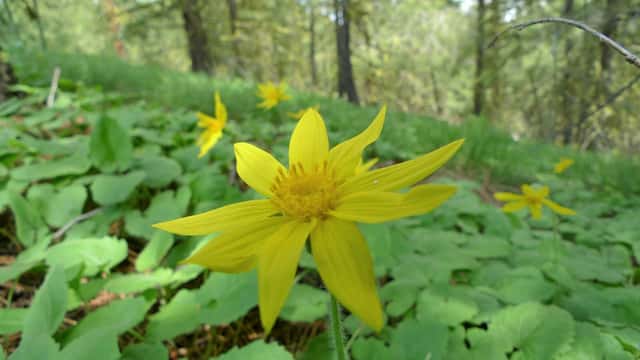
Heart-leaf arnica (Arnica cordifolia) is a medium-care plant from the Asteraceae family. Arnica cordifolia, or heart-leaf arnica, is a perennial herbaceous plant native to the coniferous forests and mountain meadows of western North America, found between 1,500 and 3,300 m in altitude. Recognizable by its opposite heart-shaped leaves and bright yellow flower heads, it spreads via creepi...
Heart-leaf arnica grows up to 60cm, watering every 7 days. It is not suitable for indoor environments and not safe for pets.
Without precautions, ingestion can cause irritation in pets. Keep out of reach of cats and dogs.
How to Care for Heart-leaf arnica?
TLDR: Heart-leaf arnica needs Partial shade, watering every 7 days, and temperatures between 15-30°C with 40-70% humidity.
How Often Should You Water Heart-leaf arnica?
Water approximately once a week, allowing the soil surface to dry between waterings; avoid overwatering, as arnica is sensitive to waterlogged soil.
How Much Light Does Heart-leaf arnica Need?
Tolerates the partial shade of understories as well as the full sun of mountain clearings; filtered light is ideal in hot climates to prevent the plant from drying out.
What Is the Best Soil for Heart-leaf arnica?
Prefer well-drained, sandy-loam soil that is slightly acidic to neutral (pH 5 to 7), enriched with organic matter.
What Pot Should You Use for Heart-leaf arnica?
Best suited for planting in the ground in rock gardens or mountain woodland gardens; if grown in a pot, choose a wide, shallow container with excellent drainage to mimic its natural conditions.
What Is Heart-leaf arnica and Where Does It Come From?
Arnica cordifolia, or heart-leaf arnica, is a perennial herbaceous plant native to the coniferous forests and mountain meadows of western North America, found between 1,500 and 3,300 m in altitude. Recognizable by its opposite heart-shaped leaves and bright yellow flower heads, it spreads via creeping rhizomes and can live for about ten years. Moderately fire-resistant, it regrows from its rhizomes after a fire and serves as an important food source for mule deer and elk. Toxic if ingested (causing nausea and heart issues), it should be reserved for external use only and kept out of reach of children and pets.
How to Propagate Heart-leaf arnica?
Rhizome division
- Keep the soil moist after division to promote establishment.
- 1 Dig up the root ball
Gently dig around the plant in early spring before growth resumes.
- 2 Separate the rhizomes
Divide the horizontal roots into sections that have at least one growth bud.
- 3 Replant
Plant the divisions immediately in rich soil and water thoroughly.
Materials needed:
Sowing
- Natural sowing in autumn often yields the best results.
- 1 Stratification
Seeds require a period of winter cold to break dormancy.
- 2 Surface sowing
Press the seeds onto moist soil without covering them, as they require light to germinate.
Materials needed:
How Big Does Heart-leaf arnica Grow?
TLDR: Heart-leaf arnica can reach up to 60cm tall with Medium growth rate.
Max height
60cm
Foliage
Deciduous
Warning: Toxic Plant
This plant can be toxic if ingested. Keep out of reach of:
Plant Uses
Medicinal
Medicinal properties
Ornamental
Great for decoration
Medicinal Uses
- Traditional topical use for bruises and sprains
- Used in tinctures to soothe muscle pain
- Recognized anti-inflammatory properties for external use; restricted to external use due to toxicity if ingested
Is your plant showing symptoms?
Click on the symptom to discover possible causes:
What Diseases Commonly Affect Heart-leaf arnica?
TLDR: Heart-leaf arnica is susceptible to 3 known diseases. Monitor regularly for early detection.
Root Rot
Root rot is a serious fungal disease that affects the root system of plants, causing them to decay and die. It is primarily caused by overwatering, poor drainage, or soil-borne fungi such as Pythium, Phytophthora, Rhizoctonia, and Fusarium. The disease thrives in waterlogged conditions where roots are deprived of oxygen, making them susceptible to fungal infection.
Crown Rot
Crown rot is a serious fungal disease that attacks the crown (base) of the plant where the stem meets the soil. It is caused by various fungal pathogens including Phytophthora, Fusarium, and Rhizoctonia. The disease thrives in waterlogged conditions and can quickly spread to kill the entire plant if not addressed promptly.
Slugs and Snails
Slugs and snails are mollusks that feed on plant tissue, causing irregular holes in leaves and damage to young seedlings. They are most active at night and in moist conditions, leaving characteristic silvery slime trails. These pests can quickly devastate gardens, especially during wet seasons.
Meaning & Symbolism
A symbol of healing and resilience: arnica regrows from its rhizomes after a fire, and its flowers have been used for generations to soothe minor wounds.
Compare with similar plants
| Attribute | Difficulty | Light | Watering | Pet Safe |
|---|---|---|---|---|
| Dark Fieldcap | Medium | Low light | 2d | ⚠️ |
| Azalea | Medium | Partial shade | 3d | ⚠️ |
| Muriel's Bamboo | Medium | Partial shade | 3d | ✓ |
| Bougainvillea | Medium | Direct sun | 7d | ⚠️ |
Choose & Compare
Sources & References
- Arnica cordifolia, heartleaf arnica - US Forest Service FEIS
- Heartleaf Arnica - Utah State University Extension
- Arnica cordifolia - Plants For A Future
- Arnica - Arnica spp. - United Plant Savers
- Arnica cordifolia - Lady Bird Johnson Wildflower Center
- How to Grow and Care for Heartleaf Arnica - PictureThis
- Heartleaf Arnica Plant Care - Greg App




