Aquifoliaceae
Japanese Holly 'Helleri': Complete Care Guide
Ilex crenata 'Helleri'
An easy to moderately demanding plant to grow: it requires a sunny to partially shaded location, fertile, well-drained, and slightly acidic soil, and regular, deep watering, especially during the first year after planting. It is very tolerant of pruning but sensitive to overly wet, poorly drained soil.
Every 7 days
Bright indirect
-26° - 35°C
% - %
Categories
What is Japanese Holly 'Helleri'?
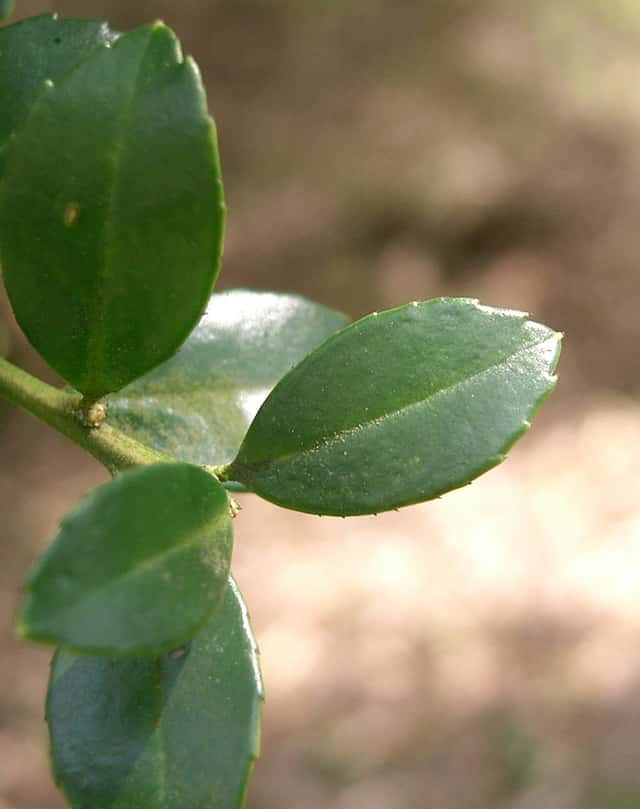
Japanese Holly 'Helleri' (Ilex crenata 'Helleri') is a medium-care plant from the Aquifoliaceae family. Japanese Holly 'Helleri' is a dwarf, evergreen cultivar of the Japanese holly (Ilex crenata) native to East Asia. It forms a dense, mounded shrub reaching 2 to 4 feet (60-120 cm) in height and width, with small, glossy, dark green leaves that resemble boxwood. Inconspicuous greenish-white flowers ap...
Japanese Holly 'Helleri' grows up to 1.2m, spread of 150cm, watering every 7 days, -26°C – 35°C. It is not suitable for indoor environments and not safe for pets.
Without precautions, ingestion can cause irritation in pets. Keep out of reach of cats and dogs.
How to Care for Japanese Holly 'Helleri'?
TLDR: Japanese Holly 'Helleri' needs Bright indirect, watering every 7 days, and temperatures between -26-35°C with 40-70% humidity.
How Often Should You Water Japanese Holly 'Helleri'?
Water deeply but infrequently—allow the top layer of soil to dry out slightly between waterings. Once established, the plant is quite drought-tolerant; however, avoid overwatering and standing water, as this can lead to root rot.
How Much Light Does Japanese Holly 'Helleri' Need?
It grows best in full sun or light partial shade—at least 4-6 hours of sunlight daily ensures a compact habit and dense foliage. In deep shade, the shrub may become leggy and lose its compact form.
What Is the Best Soil for Japanese Holly 'Helleri'?
Requires fertile, well-drained soil with a slightly acidic to neutral pH (5.0-6.5). Avoid alkaline soils, which cause leaf yellowing, and heavy, compacted soils that retain too much water.
What Pot Should You Use for Japanese Holly 'Helleri'?
For container growth, a wide, stable ceramic or clay pot with numerous drainage holes and a drainage layer at the bottom works best; this prevents waterlogging and protects against black root rot.
What Is Japanese Holly 'Helleri' and Where Does It Come From?
Japanese Holly 'Helleri' is a dwarf, evergreen cultivar of the Japanese holly (Ilex crenata) native to East Asia. It forms a dense, mounded shrub reaching 2 to 4 feet (60-120 cm) in height and width, with small, glossy, dark green leaves that resemble boxwood. Inconspicuous greenish-white flowers appear in spring, followed occasionally by black drupes in the fall. Due to its compact habit and high tolerance for pruning, it is an excellent choice for topiary, low hedges, or garden borders.
How Big Does Japanese Holly 'Helleri' Grow?
TLDR: Japanese Holly 'Helleri' can reach up to 1.2m tall with Slow growth rate.
Max height
1.2m
Spread
1.5m
Growth rate
Slow
Foliage
Evergreen
Warning: Toxic Plant
This plant can be toxic if ingested. Keep out of reach of:
Plant Uses
Ornamental
Great for decoration
Is your plant showing symptoms?
Click on the symptom to discover possible causes:
What Diseases Commonly Affect Japanese Holly 'Helleri'?
TLDR: Japanese Holly 'Helleri' is susceptible to 6 known diseases. Monitor regularly for early detection.
Root Rot
Root rot is a serious fungal disease that affects the root system of plants, causing them to decay and die. It is primarily caused by overwatering, poor drainage, or soil-borne fungi such as Pythium, Phytophthora, Rhizoctonia, and Fusarium. The disease thrives in waterlogged conditions where roots are deprived of oxygen, making them susceptible to fungal infection.
Phytophthora Root Rot
Disease caused by fungus-like organisms (oomycetes) that live in soil and can survive for years. It affects roots, stem, and crown of plants, being especially severe in waterlogged or poorly drained soils. It is the second most common cause of root rot in trees and shrubs.
Scale Insects
Scale insects are small sap-sucking pests that appear as brown, shell-like bumps on plant stems and leaves. There are over 25 species, divided into armored (hard) and unarmored (soft) scales. They feed by piercing plant tissue and extracting sap, which weakens the plant and can lead to yellowing, stunted growth, and even death if left untreated. They also excrete honeydew, which attracts ants and promotes sooty mold growth.
Spider Mites
Spider mites are tiny arachnids (less than 1/20 inch long) related to spiders and ticks that feed on plant sap. They thrive in hot, dry conditions and can cause significant damage to ornamental and vegetable plants. During severe infestations, crop losses can reach 14% or higher as these pests disrupt vital plant processes including photosynthesis, carbon dioxide absorption, and transpiration.
Meaning & Symbolism
Holly has symbolized protection, hospitality, and perseverance for centuries. Its evergreen leaves, unchanging throughout the year, are associated with eternal life and triumph over winter, making it a lasting motif for Christmas and the winter solstice.
Compare with similar plants
| Attribute | Difficulty | Light | Watering | Pet Safe |
|---|---|---|---|---|
| Dark Fieldcap | Medium | Low light | 2d | ⚠️ |
| Azalea | Medium | Partial shade | 3d | ⚠️ |
| Muriel's Bamboo | Medium | Partial shade | 3d | ✓ |
| Bougainvillea | Medium | Direct sun | 7d | ⚠️ |




