Ericaceae
Highbush Blueberry (Vaccinium corymbosum)
Vaccinium corymbosum
Grow highbush blueberry in full sun (at least 6 hours of direct light) in acidic (pH 4.5-5.5), organically rich, well-drained but consistently moist soil. It's a cold-hardy (USDA zones 3-8), medium-growth shrub well suited to home orchards and edible landscaping.
Every 3 days
Bright indirect
-30° - 32°C
40% - 70%
Categories
What is Highbush Blueberry?
Highbush Blueberry (Vaccinium corymbosum) is a medium-care plant from the Ericaceae family. Highbush blueberry (Vaccinium corymbosum) is a deciduous, fruit-bearing shrub native to eastern North America and a member of the Ericaceae (heath) family, related to azaleas and rhododendrons. It is the primary species cultivated commercially for blueberry production worldwide. Plants form upright...
Highbush Blueberry grows up to 3.7m, spread of 300cm, watering every 3 days, -30°C – 32°C, 40–70% humidity. It is not suitable for indoor environments and safe for pets.
Unlike many popular species, Highbush Blueberry is safe to keep around pets.
How to Care for Highbush Blueberry?
TLDR: Highbush Blueberry needs Bright indirect, watering every 3 days, and temperatures between -30-32°C with 40-70% humidity.
How Often Should You Water Highbush Blueberry?
Keep soil evenly moist but never waterlogged — roots are shallow and sensitive to both drought and standing water. Water deeply 2-3 times a week in summer, more during dry spells, and mulch with pine bark or sawdust to retain moisture.
How Much Light Does Highbush Blueberry Need?
Prefers full sun, at least 6 hours of direct light daily, for the heaviest fruit set and most compact growth. Tolerates partial shade (2-6 hours) but fruiting decreases.
What Is the Best Soil for Highbush Blueberry?
Requires acidic soil (pH 4.5-5.5) — unlike most garden plants. Amend soil with peat moss, composted pine bark, or elemental sulfur to lower pH. Soil should be well-drained yet rich in organic matter to hold moisture.
What Pot Should You Use for Highbush Blueberry?
If container-grown, use a large pot (40-60L / 10-15 gal) with good drainage, filled with an acidic substrate formulated for ericaceous plants (azaleas/hydrangeas).
Care Schedule
Fertilize
Every 90 days
What Is Highbush Blueberry and Where Does It Come From?
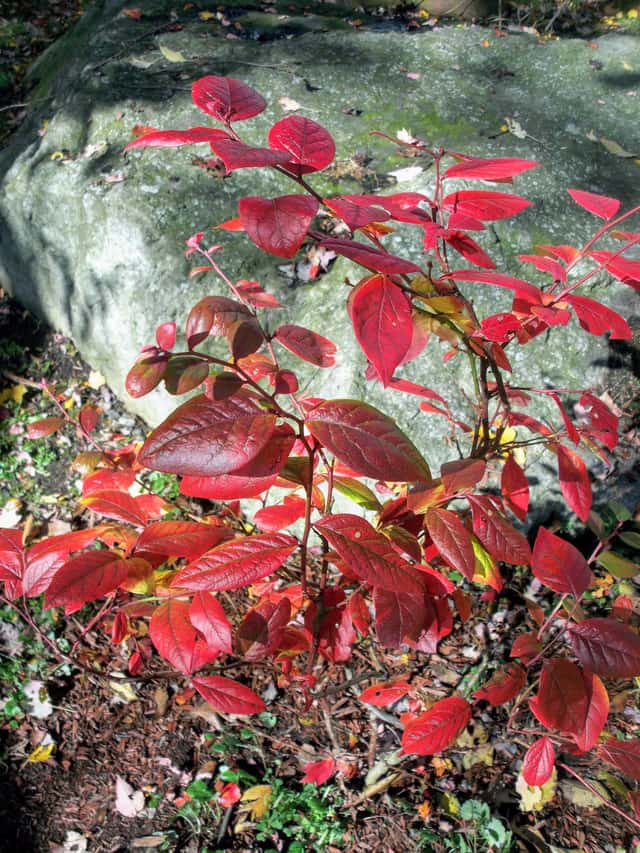
Highbush blueberry (Vaccinium corymbosum) is a deciduous, fruit-bearing shrub native to eastern North America and a member of the Ericaceae (heath) family, related to azaleas and rhododendrons. It is the primary species cultivated commercially for blueberry production worldwide. Plants form upright clumps 1.8-3.7 m tall, with green foliage that turns brilliant red-orange in fall, small white or pink bell-shaped flowers in spring, and sweet, nutrient-dense blue-purple berries in summer.
How to Propagate Highbush Blueberry?
Softwood stem cuttings
Use a humidity dome or plastic bag to keep moisture high while rooting; avoid direct sun for the first few weeks.
- 1 Take 10-15 cm cuttings from semi-hardwood growth in early summer
- 2 Strip leaves from the lower half of the cutting
- 3 Dip the cut end in rooting hormone
- 4 Plant in an acidic, well-drained mix (peat + sand)
- 5 Keep moist and shaded until roots form
Materials needed:
Ground layering
This is the most reliable method for blueberries since the branch keeps drawing nutrients from the mother plant while rooting.
- 1 Choose a low, flexible branch
- 2 Make a small nick in the bark where it will touch the soil
- 3 Bury that section, leaving the tip exposed
- 4 Pin it down with a stake or stone and keep moist
- 5 Once rooted, cut from the parent plant and transplant
Materials needed:
How Big Does Highbush Blueberry Grow?
TLDR: Highbush Blueberry can reach up to 3.7m tall with Medium growth rate.
Max height
3.7m
Spread
3.0m
Growth rate
Medium
Foliage
Deciduous
Plant Uses
Edible
Can be consumed
Ornamental
Great for decoration
Medicinal Uses
- Berries rich in antioxidants (anthocyanins)
- Traditionally used to support urinary tract and circulatory health
Culinary Uses
- Fresh eating
- Jams and preserves
- Pies and desserts
- Juices and smoothies
- Freezing for year-round use
Is your plant showing symptoms?
Click on the symptom to discover possible causes:
What Diseases Commonly Affect Highbush Blueberry?
TLDR: Highbush Blueberry is susceptible to 4 known diseases. Monitor regularly for early detection.
Brown Rot
Monilinia is a genus of ascomycete fungi that causes blossom blight and brown rot in fruit trees. It spreads most rapidly in cool, wet weather, particularly during the bloom period. Symptoms include flowers that turn brown and remain attached to the shoots, small tan spots on fruit that expand into gray-beige spore rings (sporodochia), twig dieback, and 'mummified' fruit that shrivels and often persists on the tree. It primarily affects stone fruits (peach, nectarine, apricot, plum, cherry) but can also infect pome fruits such as apple and pear.
Gray Mold (Botrytis Blight)
Gray mold, caused by the fungus Botrytis cinerea, is one of the most common fungal diseases in plants. It affects over 200 plant species, including ornamentals, vegetables, fruits, and houseplants. The disease thrives in cool, humid conditions with poor air circulation, causing grayish spots and soft rot on infected tissues.
Anthracnose
Anthracnose is a fungal disease caused by fungi in the genus Colletotrichum that affects many plants, including vegetables, fruits, and trees. The disease thrives in cool, wet conditions, causing dark, sunken lesions on leaves, stems, flowers, and fruits.
Root Rot
Root rot is a serious fungal disease that affects the root system of plants, causing them to decay and die. It is primarily caused by overwatering, poor drainage, or soil-borne fungi such as Pythium, Phytophthora, Rhizoctonia, and Fusarium. The disease thrives in waterlogged conditions where roots are deprived of oxygen, making them susceptible to fungal infection.
Meaning & Symbolism
Symbolizes abundance, nourishment, and the sweetness of wild harvest; long associated with the land and seasonal gathering traditions of Native North American peoples.
Fun Facts
It's the most commercially cultivated blueberry species in the world
Its leaves turn brilliant red in autumn, making it ornamental too
A single bush can produce fruit for over 20 years
Belongs to the same family as azaleas and rhododendrons (Ericaceae)
Frequently asked questions
Why isn't my blueberry bush producing fruit?
What soil pH does highbush blueberry need?
Is highbush blueberry toxic to dogs and cats?
When should I prune highbush blueberry?
How do I protect blueberries from mummy berry disease?
Compare with similar plants
| Attribute | Difficulty | Light | Watering | Pet Safe |
|---|---|---|---|---|
| Dark Fieldcap | Medium | Low light | 2d | ⚠️ |
| Azalea | Medium | Partial shade | 3d | ⚠️ |
| Muriel's Bamboo | Medium | Partial shade | 3d | ✓ |
| Bougainvillea | Medium | Direct sun | 7d | ⚠️ |
Choose & Compare
Sources & References
- Vaccinium corymbosum | NC State Extension Gardener Plant Toolbox
- Highbush Blueberries Guide - GardenBeast
- Highbush Blueberry Plant Care - Gardening Know How
- Vaccinium corymbosum - Plants For A Future
- Blueberry Mummy Berry - PNW Pest Management Handbooks
- Blueberry Botrytis Blight - PNW Pest Management Handbooks




