Caprifoliaceae
Himalayan honeysuckle: Edible Plant
Leycesteria formosa
An easy-care, cold-hardy shrub for full sun to light shade in any reasonably fertile, well-drained soil. Water regularly while young and during dry spells, but let the topsoil dry between waterings once established, since the roots dislike sitting wet. Cut old stems back hard in late winter to keep growth vigorous and flowering well; established plants tolerate wind, urban pollution, and poor soil with little extra care.
Every 4 days
Bright indirect
-15° - 30°C
% - %
Categories
What is Himalayan honeysuckle?
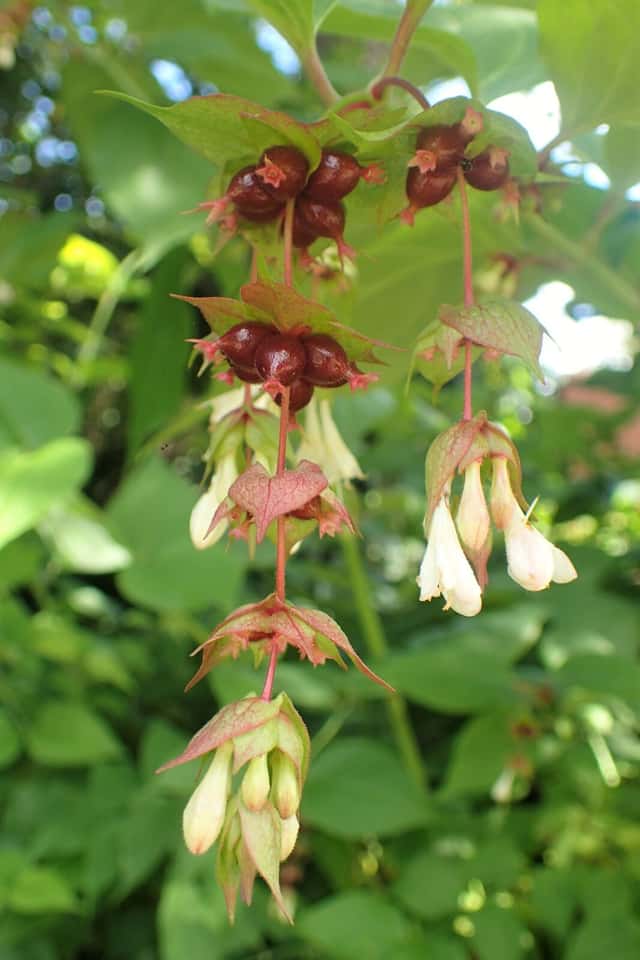
Himalayan honeysuckle (Leycesteria formosa) is a easy-care plant from the Caprifoliaceae family. Leycesteria formosa, commonly known as Himalayan honeysuckle or pheasant berry, is a fast-growing deciduous shrub native to forests and scrub in the Himalayas, southwestern China, and Myanmar. It produces hollow, cane-like stems and pendulous racemes of small white to pale-pink flowers wrapped in sh...
Himalayan honeysuckle grows up to 3.0m, spread of 250cm, watering every 4 days, -15°C – 30°C. It is not suitable for indoor environments and safe for pets.
Unlike many tropical plants, Himalayan honeysuckle tolerates watering mistakes. Best for beginners. Unlike many popular species, Himalayan honeysuckle is safe to keep around pets.
How to Care for Himalayan honeysuckle?
TLDR: Himalayan honeysuckle needs Bright indirect, watering every 4 days, and temperatures between -15-30°C with 40-70% humidity.
How Often Should You Water Himalayan honeysuckle?
Water deeply about twice a week through the growing season, letting the top few centimetres of soil dry out between waterings; cut back to every 2-3 weeks in winter. Good drainage is essential - waterlogged soil quickly leads to root rot.
How Much Light Does Himalayan honeysuckle Need?
Give at least 4 hours of direct sun a day. Full sun suits cooler climates best; in hot-summer areas provide morning sun with afternoon shade to prevent leaf scorch.
What Is the Best Soil for Himalayan honeysuckle?
Adapts to sandy, loamy, or clay soils as long as drainage is good. Aim for a mildly acidic to neutral pH and enrich poor soil with organic matter or mulch to retain moisture and protect the roots over winter.
What Pot Should You Use for Himalayan honeysuckle?
If grown in a container, choose a large pot (45-60cm / 18-24in diameter) with generous drainage holes, since the plant develops a substantial root system and resents waterlogging. A porous material like terracotta helps excess moisture evaporate; use a peat-free, loam-based mix and repot every 2-3 years in spring before new growth begins.
Care Schedule
Fertilize
Every 60 days
Repot
Every 900 days
What Is Himalayan honeysuckle and Where Does It Come From?
Leycesteria formosa, commonly known as Himalayan honeysuckle or pheasant berry, is a fast-growing deciduous shrub native to forests and scrub in the Himalayas, southwestern China, and Myanmar. It produces hollow, cane-like stems and pendulous racemes of small white to pale-pink flowers wrapped in showy wine-purple bracts, followed by soft, deep-purple berries that ripen from late summer into autumn. The berries taste mildly of caramel once fully ripe and are a favourite food of pheasants and other birds, giving the plant its common name. When old stems die back, wind whistling through their hollow interiors produces an eerie sound, inspiring the plant's Chinese name, "ghost flute".
How to Propagate Himalayan honeysuckle?
How Big Does Himalayan honeysuckle Grow?
TLDR: Himalayan honeysuckle can reach up to 3.0m tall with Fast growth rate.
Max height
3.0m
Spread
2.5m
Growth rate
Fast
Foliage
Deciduous
Plant Uses
Ornamental
Great for decoration
Edible
Can be consumed
Culinary Uses
- Fully ripe, soft, deep-purple berries can be eaten raw or made into jam, with a mild flavour reminiscent of caramel or toffee; unripe berries are hard, bitter, and best avoided.
Is your plant showing symptoms?
Click on the symptom to discover possible causes:
What Diseases Commonly Affect Himalayan honeysuckle?
TLDR: Himalayan honeysuckle is susceptible to 6 known diseases. Monitor regularly for early detection.
Aphids
Aphids are small, soft-bodied, pear-shaped insects (1/16 to 1/8 inch long) that feed by sucking nutrient-rich sap from plants. They reproduce rapidly and can quickly weaken plants, causing distorted growth and transmitting plant viruses. Aphids come in various colors including green, black, red, yellow, brown, and gray. They secrete honeydew, a sticky substance that attracts ants and encourages sooty mold growth.
Powdery Mildew
Powdery mildew is a common fungal disease caused by various fungi species including Erysiphe, Podosphaera, Oïdium, and Leveillula. It affects over 10,000 plant species worldwide. The disease thrives in warm, dry climates with high humidity and appears as a distinctive white powdery coating on plant surfaces.
Gray Mold (Botrytis Blight)
Gray mold, caused by the fungus Botrytis cinerea, is a widespread necrotrophic pathogen affecting over 1,400 plant species. It thrives in cool, humid conditions and attacks weakened or aging plant tissues, causing soft rot and characteristic gray fuzzy growth.
Scale Insects
Scale insects are small sap-sucking pests that appear as brown, shell-like bumps on plant stems and leaves. There are over 25 species, divided into armored (hard) and unarmored (soft) scales. They feed by piercing plant tissue and extracting sap, which weakens the plant and can lead to yellowing, stunted growth, and even death if left untreated. They also excrete honeydew, which attracts ants and promotes sooty mold growth.
Meaning & Symbolism
In Chinese folk tradition the plant is called "ghost flute" (鬼吹簫) because wind whistling through its hollow dead stems was thought to sound eerie. In Western gardens it is prized as a wildlife plant, its berries drawing flocks of pheasants and songbirds in autumn.
Compare with similar plants
| Attribute | Difficulty | Light | Watering | Pet Safe |
|---|---|---|---|---|
| Field Maple | Easy | Bright indirect | 14d | ✓ |
| Silver Birch | Easy | Direct sun | 14d | ✓ |
| Common Blanketflower | Easy | Direct sun | 10d | ✓ |
| Cushion Bush | Easy | Direct sun | 14d | ✓ |
Choose & Compare
Sources & References
- Leycesteria formosa - Wikipedia
- Leycesteria formosa - PFAF Plant Database
- Himalayan Honeysuckle - Natural Medicinal Herbs
- How to Grow and Care for Himalayan Honeysuckle - Gardener's Path
- Himalayan Honeysuckle Care And Information - Gardening Know How
- Leycesteria formosa - BBC Gardeners World Magazine
- Growing Himalayan Honeysuckle in a Pot - Cultivating Flora





