Apocynaceae
Himatanthus (Janaguba and Sucuuba)
Himatanthus
Tropical trees for outdoor growing in a bright spot with well-drained soil. They tolerate dry spells once established but not hard frost. Young plants can spend a few years in a large pot, but they need to go in the ground to reach their potential. Wear gloves when pruning or handling, as the latex irritates skin.
Every 10 days
Bright indirect
° - °C
% - %
Categories
What is Himatanthus?
Himatanthus (Himatanthus) is a medium-care plant from the Apocynaceae family. Himatanthus is a genus of about ten species of trees and small trees in the dogbane family (Apocynaceae), native to Panama and tropical South America, especially Brazil. Close relatives of frangipani (Plumeria) — several species were once placed in that genus — they have large, leathery leaves clust...
Himatanthus grows up to 20.0m, watering every 10 days. It is not suitable for indoor environments and safe for pets.
Unlike many popular species, Himatanthus is safe to keep around pets.
How to Care for Himatanthus?
TLDR: Himatanthus needs Bright indirect, watering every 10 days, and temperatures between 15-30°C with 40-70% humidity.
How Often Should You Water Himatanthus?
Water when the top layer of soil dries out, roughly every 10 days in warm weather; seedlings and potted plants need closer attention. Once established in the ground, the Cerrado and Caatinga species handle drought well.
How Much Light Does Himatanthus Need?
Choose a bright spot with sun for most of the day, like the open woodland and secondary forest where the genus grows wild.
What Is the Best Soil for Himatanthus?
Deep, well-drained sandy or loamy soil. Seeds germinate very well in sand.
What Pot Should You Use for Himatanthus?
Young plants can grow in a large, deep pot with drainage holes and sandy mix. As trees, they are best planted in the ground.
What Is Himatanthus and Where Does It Come From?
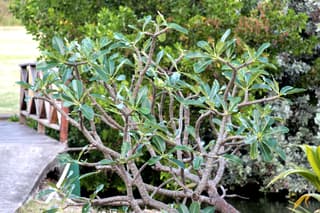
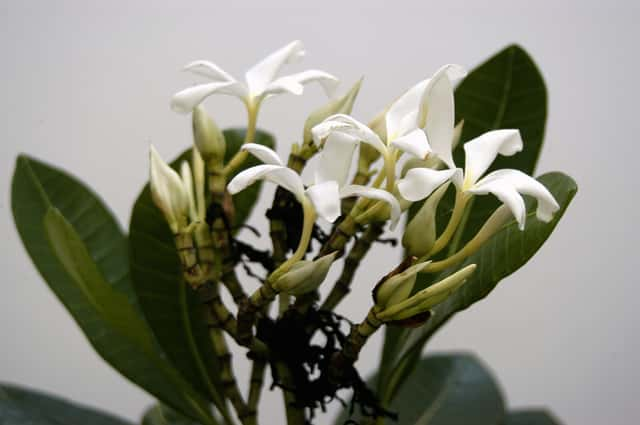
Himatanthus is a genus of about ten species of trees and small trees in the dogbane family (Apocynaceae), native to Panama and tropical South America, especially Brazil. Close relatives of frangipani (Plumeria) — several species were once placed in that genus — they have large, leathery leaves clustered at the branch tips, fragrant white flowers in terminal clusters and pod-like fruits that release winged, wind-dispersed seeds. The trunk bleeds an abundant white latex. The best-known species are janaguba (H. drasticus) from the Cerrado and Caatinga, up to 7 m tall; H. bracteatus from the Atlantic Forest; and sucuuba (H. sucuuba) from the Amazon, which reaches 20 m.
How to Propagate Himatanthus?
Seed
Use fresh seed: in trials with sucuuba, sand gave about 99% germination at 25 °C. Wear gloves when opening pods and handling the plant because of the latex.
- 1 Collect the pods as they start to split and remove the winged seeds.
- 2 Sow in washed sand or a sand and compost mix, covering lightly.
- 3 Keep moist but not soggy, somewhere warm and bright.
- 4 Once seedlings have a few pairs of leaves, pot them on individually in soil with organic matter.
Materials needed:
How Big Does Himatanthus Grow?
TLDR: Himatanthus can reach up to 20.0m tall with Medium growth rate.
Max height
20.0m
Warning: Toxic Plant
This plant can be toxic if ingested. Keep out of reach of:
Plant Uses
Ornamental
Great for decoration
Medicinal
Medicinal properties
Medicinal Uses
- Diluted latex ("janaúba milk") used in north-east Brazilian folk medicine for liver complaints, inflammation and tumours — not clinically proven and toxic at high doses
- Bark traditionally used as a purgative and against fever
Is your plant showing symptoms?
Click on the symptom to discover possible causes:
Fun Facts
Several species were once classified in Plumeria, the frangipani genus.
"Janaúba milk" sold at Brazilian markets is sometimes faked with mangaba latex.
The seeds have wings and are spread by the wind.
Frequently asked questions
Is Himatanthus toxic?
Can I grow Himatanthus in a pot?
How do you propagate Himatanthus?
Is it cold hardy?
Compare with similar plants
| Attribute | Difficulty | Light | Watering | Pet Safe |
|---|---|---|---|---|
| Dark Fieldcap | Medium | Low light | 2d | ⚠️ |
| Azalea | Medium | Partial shade | 3d | ⚠️ |
| Muriel's Bamboo | Medium | Partial shade | 3d | ✓ |
| Bougainvillea | Medium | Direct sun | 7d | ⚠️ |
Choose & Compare
Sources & References
- Himatanthus - Wikipedia
- Janaguba (Himatanthus drasticus) - Wikipédia
- Himatanthus bracteatus - Wikipedia
- Himatanthus bracteatus (fka Plumeria bracteata) - Brad's Buds and Blooms
- Planta comum no Brasil vira foco de estudo no combate ao câncer - Gazeta SP
- Toxicological evaluation of Himatanthus drasticus latex - PubMed