Apocynaceae
Hoya Callistophylla: Aromatic Plant
Hoya callistophylla
Hoya callistophylla prefers bright indirect light, moderate to high humidity, and a well-draining, airy substrate mix. The soil should be allowed to dry out almost completely between waterings, as the plant tolerates drought better than waterlogging. It is a relatively slow grower and rarely requires pruning or repotting.
Every 10 days
Bright indirect
15° - 27°C
50% - 70%
Categories
What is Hoya Callistophylla?
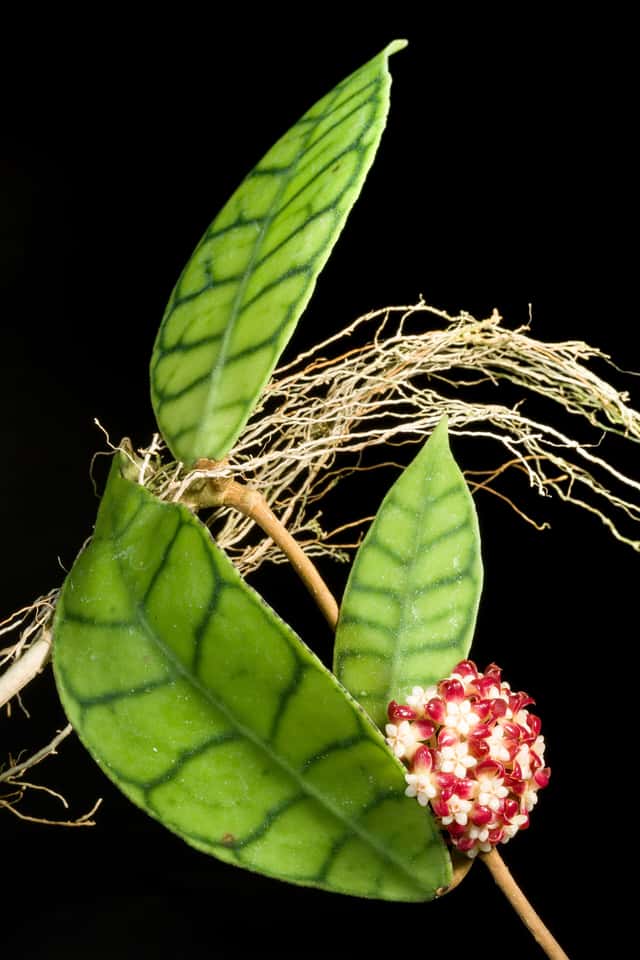
Hoya Callistophylla (Hoya callistophylla) is a medium-care plant from the Apocynaceae family. Hoya callistophylla is an epiphytic climbing plant native to the rainforests of Borneo (Sabah, Malaysia), primarily cultivated for its strikingly veined foliage. The thick, leathery leaves feature a silvery-light network of veins against a dark green background, appearing almost hand-painted. In spr...
Hoya Callistophylla grows up to 5.0m, watering every 10 days, 15°C – 27°C, 50–70% humidity. It is suitable for indoor environments and safe for pets.
Unlike many popular species, Hoya Callistophylla is safe to keep around pets. Without adequate drainage, root rot can develop within 20 days.
How to Care for Hoya Callistophylla?
TLDR: Hoya Callistophylla needs Bright indirect, watering every 10 days, and temperatures between 15-27°C with 50-70% humidity.
How Often Should You Water Hoya Callistophylla?
Only water again when the top 1-2 inches (2-5 cm) of the substrate are completely dry. Significantly reduce watering during the fall and winter. Use lukewarm, soft water and never allow water to sit in the decorative pot to prevent root rot.
How Much Light Does Hoya Callistophylla Need?
Bright and indirect light is ideal—a spot by an east or west-facing window, or a few feet away from a south-facing window. Direct midday sun causes leaf scorch, while insufficient light causes the characteristic vein patterns to fade and prevents blooming.
What Is the Best Soil for Hoya Callistophylla?
A coarse, airy substrate made of orchid bark, perlite, and some coconut husk or peat moss provides the necessary drainage. The pot must have a drainage hole, as the roots cannot tolerate standing water.
What Pot Should You Use for Hoya Callistophylla?
A plastic or terracotta pot with generous drainage holes is ideal, complemented by a hanging basket or an elevated position so the vines can hang freely. Since the plant enjoys being root-bound, choose a pot only slightly larger when repotting.
Care Schedule
Fertilize
Every 21 days
Repot
Every 900 days
What Is Hoya Callistophylla and Where Does It Come From?
Hoya callistophylla is an epiphytic climbing plant native to the rainforests of Borneo (Sabah, Malaysia), primarily cultivated for its strikingly veined foliage. The thick, leathery leaves feature a silvery-light network of veins against a dark green background, appearing almost hand-painted. In spring and summer, it produces fragrant, star-shaped flower umbels consisting of 20 to 40 individual creamy-white to pale yellow blossoms with reddish tips. As a vining plant, it is perfectly suited for hanging baskets or trellises.
How to Propagate Hoya Callistophylla?
Stem Cuttings
Use clean, sharp tools and change the water weekly if rooting in water; transplant into substrate after 2-3 months of strong root development.
- 1 Cut a healthy stem with at least 2-3 leaf nodes
- 2 Optionally dip the cut end into rooting hormone
- 3 Place the cutting in water, moist sphagnum moss, or a well-draining potting mix
- 4 Place in a warm, bright spot without direct sun and maintain high humidity
Materials needed:
How Big Does Hoya Callistophylla Grow?
TLDR: Hoya Callistophylla can reach up to 5.0m tall with Slow growth rate.
Max height
5.0m
Growth rate
Slow
Foliage
Evergreen
Plant Uses
Ornamental
Great for decoration
Aromatic
Pleasant fragrance
Is your plant showing symptoms?
Click on the symptom to discover possible causes:
What Diseases Commonly Affect Hoya Callistophylla?
TLDR: Hoya Callistophylla is susceptible to 7 known diseases. Monitor regularly for early detection.
Root Rot
Root rot is a serious fungal disease that affects the root system of plants, causing them to decay and die. It is primarily caused by overwatering, poor drainage, or soil-borne fungi such as Pythium, Phytophthora, Rhizoctonia, and Fusarium. The disease thrives in waterlogged conditions where roots are deprived of oxygen, making them susceptible to fungal infection.
Mealybugs
Mealybugs are small, soft-bodied insects covered with a white, waxy, cottony material. They are common pests of houseplants and outdoor plants in mild climates. These sap-sucking insects feed on plant tissue, causing damage, stunted growth, and can lead to plant death if left untreated. They produce sticky honeydew which attracts sooty mold.
Spider Mites
Spider mites are tiny arachnids (less than 1/20 inch long) related to spiders and ticks that feed on plant sap. They thrive in hot, dry conditions and can cause significant damage to ornamental and vegetable plants. During severe infestations, crop losses can reach 14% or higher as these pests disrupt vital plant processes including photosynthesis, carbon dioxide absorption, and transpiration.
Aphids
Aphids are small, soft-bodied, pear-shaped insects (1/16 to 1/8 inch long) that feed by sucking nutrient-rich sap from plants. They reproduce rapidly and can quickly weaken plants, causing distorted growth and transmitting plant viruses. Aphids come in various colors including green, black, red, yellow, brown, and gray. They secrete honeydew, a sticky substance that attracts ants and encourages sooty mold growth.
Meaning & Symbolism
Like other wax plants, Hoya callistophylla represents lasting love, connection, and protection—its long-lived, recurring blooms are considered a symbol of enduring relationships.
Compare with similar plants
| Attribute | Difficulty | Light | Watering | Pet Safe |
|---|---|---|---|---|
| Dark Fieldcap | Medium | Low light | 2d | ⚠️ |
| Azalea | Medium | Partial shade | 3d | ⚠️ |
| Muriel's Bamboo | Medium | Partial shade | 3d | ✓ |
| Bougainvillea | Medium | Direct sun | 7d | ⚠️ |




