Lamiaceae
Hyssop: Aromatic Plant
Hyssopus officinalis
Hyssop thrives in a sunny, dry location with well-drained, slightly alkaline (calcareous) soil. It is resistant to both drought and frost but cannot tolerate permanently waterlogged soil, which leads to root rot. Regular pruning after flowering helps maintain a compact shape and encourages prolific blooming.
Every 10 days
Direct sun
-30° - 35°C
30% - 60%
Categories
What is Hyssop?
Hyssop (Hyssopus officinalis) is a easy-care plant from the Lamiaceae family. Hyssop (Hyssopus officinalis) is a perennial, highly aromatic subshrub in the Lamiaceae family, native to the Mediterranean and Southern Europe. It grows to a height of 16–24 inches (40–60 cm) with a width of about 20 inches (50 cm), featuring narrow lanceolate leaves and blooming from July to Septe...
Hyssop grows up to 60cm, spread of 50cm, watering every 10 days, -30°C – 35°C, 30–60% humidity. It is not suitable for indoor environments and not safe for pets.
Unlike many tropical plants, Hyssop tolerates watering mistakes. Best for beginners. Without precautions, ingestion can cause irritation in pets. Keep out of reach of cats and dogs.
How to Care for Hyssop?
TLDR: Hyssop needs Direct sun, watering every 10 days, and temperatures between -30-35°C with 30-60% humidity.
How Often Should You Water Hyssop?
Water sparingly and allow the soil to dry out to a depth of several inches between waterings. Mature, established plants can handle short periods of drought without watering; overwatering is more dangerous for hyssop than a lack of water.
How Much Light Does Hyssop Need?
Plant in full sun, receiving at least 6 hours of direct light daily – the more sun, the higher the essential oil content and the more abundant the flowering. The plant can tolerate partial shade but will bloom less.
What Is the Best Soil for Hyssop?
It grows best in light, well-drained, calcareous to sandy-loam soil with a pH of 6.5–8.5. Heavy, clayey, or permanently moist soils are not suitable as they pose a risk of root rot.
What Pot Should You Use for Hyssop?
A terracotta or other unglazed pot with large drainage holes and a layer of drainage material at the bottom – breathability and drainage are crucial for hyssop in containers.
Care Schedule
Fertilize
Every 365 days
Repot
Every 730 days
What Is Hyssop and Where Does It Come From?
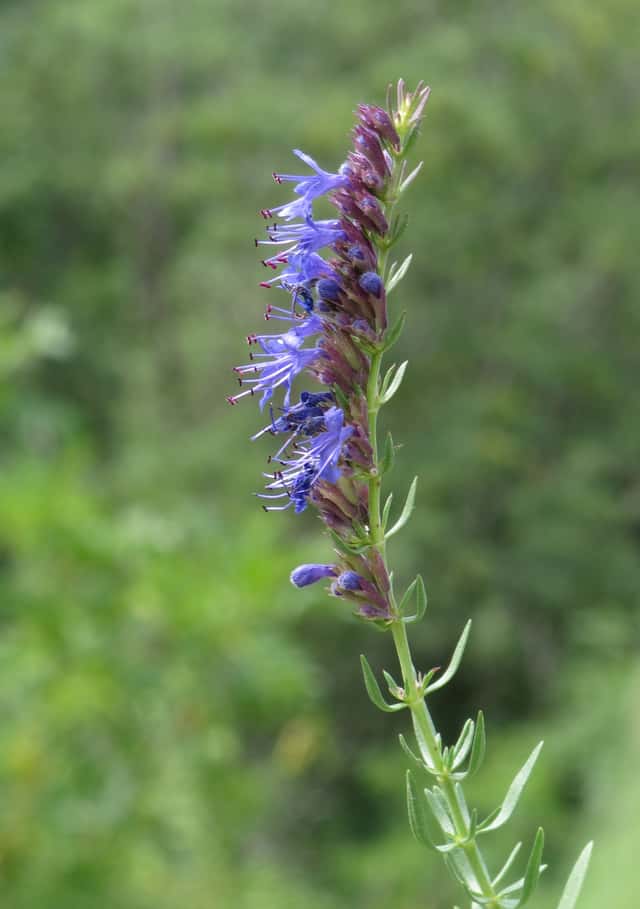
Hyssop (Hyssopus officinalis) is a perennial, highly aromatic subshrub in the Lamiaceae family, native to the Mediterranean and Southern Europe. It grows to a height of 16–24 inches (40–60 cm) with a width of about 20 inches (50 cm), featuring narrow lanceolate leaves and blooming from July to September with small blue-violet, purple, pink, or white flowers in dense spikes that strongly attract bees and butterflies. The plant is frost-hardy (zones 4–9) and very drought-tolerant, making it a popular low-maintenance ornamental and culinary herb for gardens and containers.
How to Propagate Hyssop?
Sowing seeds
- Seeds germinate best at temperatures around 60-68°F (15-20°C); germination takes 2-3 weeks.
- 1 Substrate preparation
Prepare a light, well-draining seed-starting mix.
- 2 Sowing
Sow seeds shallowly on the surface and cover only lightly.
- 3 Watering
Keep the substrate slightly moist at a temperature of 60-68°F (15-20°C) until the seeds germinate.
Materials needed:
Propagation by cuttings
- Use a rooting hormone for a higher success rate.
- 1 Taking cuttings
In late spring or early summer, take semi-hardwood cuttings 4-6 inches (10-15 cm) long.
- 2 Planting
Remove the lower leaves and insert into a mixture of sand and peat.
- 3 Rooting
Keep in partial shade and moderate humidity until the cuttings take root.
Materials needed:
Division
- Dividing in spring encourages quick rooting before summer.
- 1 Plant selection
Only divide mature plants older than 2 years.
- 2 Dividing the clump
Remove the clump from the ground and divide into smaller sections with healthy roots.
- 3 Planting
Plant individual sections at least 12 inches (30 cm) apart.
Materials needed:
How Big Does Hyssop Grow?
TLDR: Hyssop can reach up to 60cm tall with Medium growth rate.
Max height
60cm
Spread
50cm
Growth rate
Medium
Foliage
Semi-evergreen
Warning: Toxic Plant
This plant can be toxic if ingested. Keep out of reach of:
Plant Uses
Aromatic
Pleasant fragrance
Medicinal
Medicinal properties
Edible
Can be consumed
Ornamental
Great for decoration
Medicinal Uses
- Traditionally used for coughs, bronchitis, and other respiratory tract issues
- Supports digestion and relieves bloating
- Acts as a mild antiseptic; used externally to treat minor wounds
- Caution: Hyssop essential oil contains pinocamphone, which is neurotoxic in high doses – not recommended during pregnancy, breastfeeding, or for individuals with epilepsy; use internally only in standard herbal dosages (tea) and consult a doctor if uncertain
Culinary Uses
- Fresh and dried leaves are added to soups, sauces, and stuffings
- Pairs well with fatty meats (venison, lamb, duck) – aids in their digestion
- Edible flowers decorate salads and summer dishes
- Used in the production of herbal liqueurs (e.g., Chartreuse) and herbal vinegars
Is your plant showing symptoms?
Click on the symptom to discover possible causes:
What Diseases Commonly Affect Hyssop?
TLDR: Hyssop is susceptible to 6 known diseases. Monitor regularly for early detection.
Root Rot
Root rot is a serious fungal disease that affects the root system of plants, causing them to decay and die. It is primarily caused by overwatering, poor drainage, or soil-borne fungi such as Pythium, Phytophthora, Rhizoctonia, and Fusarium. The disease thrives in waterlogged conditions where roots are deprived of oxygen, making them susceptible to fungal infection.
Powdery Mildew
Powdery mildew is a common fungal disease caused by various fungi species including Erysiphe, Podosphaera, Oïdium, and Leveillula. It affects over 10,000 plant species worldwide. The disease thrives in warm, dry climates with high humidity and appears as a distinctive white powdery coating on plant surfaces.
Rust
Rust is a common fungal disease caused by fungi in the order Pucciniales that affects a wide variety of plants. The disease gets its name from the characteristic orange, yellow, or reddish-brown pustules that appear on leaves, resembling metal rust. This obligate fungal parasite requires living plants to survive and can cause significant economic losses in agricultural crops.
Aphids
Aphids are small, soft-bodied, pear-shaped insects (1/16 to 1/8 inch long) that feed by sucking nutrient-rich sap from plants. They reproduce rapidly and can quickly weaken plants, causing distorted growth and transmitting plant viruses. Aphids come in various colors including green, black, red, yellow, brown, and gray. They secrete honeydew, a sticky substance that attracts ants and encourages sooty mold growth.
Meaning & Symbolism
In both the Bible and folk tradition, hyssop is associated with purification, protection, and spiritual humility – it was used in cleansing rituals ("Purge me with hyssop, and I shall be clean," Psalm 51).
Compare with similar plants
| Attribute | Difficulty | Light | Watering | Pet Safe |
|---|---|---|---|---|
| Field Maple | Easy | Bright indirect | 14d | ✓ |
| Silver Birch | Easy | Direct sun | 14d | ✓ |
| Common Blanketflower | Easy | Direct sun | 10d | ✓ |
| Cushion Bush | Easy | Direct sun | 14d | ✓ |





