Aizoaceae
Ice Plant: Ground Cover Plant
Corpuscularia lehmannii
Grow the Ice Plant in a location with full sun to intense light and water only when the substrate is completely dry, avoiding waterlogging. Use a well-draining substrate, such as a cactus and succulent mix, and keep the plant protected from prolonged frosts. It is low-maintenance and virtually pest-free when proper drainage conditions are met.
Every 14 days
Bright indirect
5° - 35°C
10% - 40%
Categories
What is Ice Plant?
Ice Plant (Corpuscularia lehmannii) is a easy-care plant from the Aizoaceae family. Corpuscularia lehmannii, popularly known as the Ice Plant or String of Buttons, is a compact, perennial succulent from the Aizoaceae family, native to the Western Cape region of South Africa. It forms small clusters of fleshy, cylindrical leaves that are slightly translucent at the tips, featuring a...
Ice Plant grows up to 30cm, spread of 40cm, watering every 14 days, 5°C – 35°C, 10–40% humidity. It is suitable for indoor environments and safe for pets.
Unlike many tropical plants, Ice Plant tolerates watering mistakes. Best for beginners. Unlike many popular species, Ice Plant is safe to keep around pets. Without adequate drainage, root rot can develop within 28 days.
How to Care for Ice Plant?
TLDR: Ice Plant needs Bright indirect, watering every 14 days, and temperatures between 5-35°C with 10-40% humidity.
How Often Should You Water Ice Plant?
Water thoroughly but infrequently, allowing the substrate to dry out completely between waterings (approximately every 2 weeks). Use the "soak and dry" method: drench the soil well and only water again when the first few inches are totally dry to the touch. Excess water is the primary cause of root rot.
How Much Light Does Ice Plant Need?
Prefers full sun to very intense light—at least 6 hours of direct sunlight or strong indirect light daily. In very hot climates, some afternoon shade helps prevent leaf scorch. Low light causes the plant to stretch (etiolate) and results in faded colors.
What Is the Best Soil for Ice Plant?
Use a specific substrate for succulents and cacti with good drainage—mix regular potting soil with coarse sand and perlite or pumice in equal parts. Pots with drainage holes are essential to prevent water accumulation around the roots.
What Pot Should You Use for Ice Plant?
Prefer low, wide pots made of clay or unglazed ceramic, which promote moisture evaporation and accommodate the plant's clumping growth habit.
Care Schedule
Fertilize
Every 30 days
Repot
Every 730 days
What Is Ice Plant and Where Does It Come From?
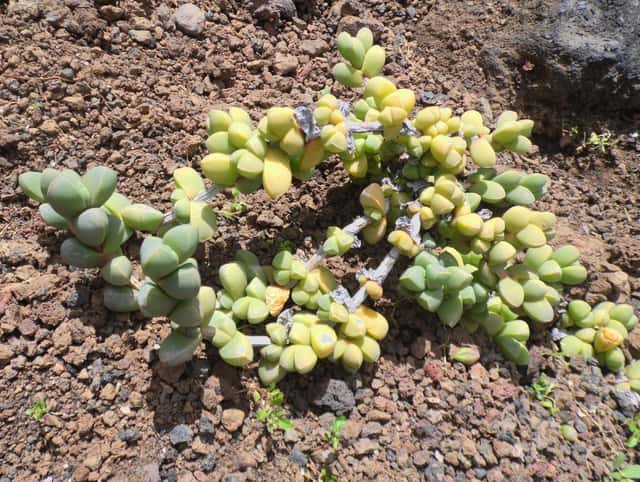
Corpuscularia lehmannii, popularly known as the Ice Plant or String of Buttons, is a compact, perennial succulent from the Aizoaceae family, native to the Western Cape region of South Africa. It forms small clusters of fleshy, cylindrical leaves that are slightly translucent at the tips, featuring a grayish-green to bluish hue that resembles grouped "fingers" or buttons. In late spring and early summer, it produces small yellow daisy-like flowers that open during the day under sunlight. It is a slow-to-moderate growing plant, highly drought-resistant and low-maintenance, making it ideal for rock gardens, shallow pots, and succulent arrangements.
How to Propagate Ice Plant?
Stem Cuttings
Use clean, sharp tools and avoid watering for the first few days after planting to prevent the cut from rotting.
- 1 Cut a healthy stem segment with a small cluster of leaves
- 2 Allow the cut to dry (callous) for 24 hours in a dry, airy place
- 3 Apply rooting hormone to the base if desired
- 4 Plant in slightly moistened succulent substrate
- 5 Water only when the substrate dries out completely and wait for rooting
Materials needed:
Seeds
Germination is slower than cuttings; recommended for those with patience.
- 1 Sow in a well-draining and slightly moist substrate
- 2 Keep in a location with full sunlight and mild temperatures
- 3 Wait for germination, which occurs in 6 to 8 weeks
Materials needed:
How Big Does Ice Plant Grow?
TLDR: Ice Plant can reach up to 30cm tall with Medium growth rate.
Max height
30cm
Spread
40cm
Growth rate
Medium
Foliage
Evergreen
Plant Uses
Ornamental
Great for decoration
Ground Cover
Soil coverage
Is your plant showing symptoms?
Click on the symptom to discover possible causes:
What Diseases Commonly Affect Ice Plant?
TLDR: Ice Plant is susceptible to 5 known diseases. Monitor regularly for early detection.
Root Rot
Root rot is a serious fungal disease that affects the root system of plants, causing them to decay and die. It is primarily caused by overwatering, poor drainage, or soil-borne fungi such as Pythium, Phytophthora, Rhizoctonia, and Fusarium. The disease thrives in waterlogged conditions where roots are deprived of oxygen, making them susceptible to fungal infection.
Leaf Spot
Leaf spot is a common fungal disease caused by various pathogens including Alternaria, Ascochyta, Colletotrichum, Septoria, and Venturia. It primarily affects leaves, causing discolored spots that can lead to premature leaf drop if left untreated.
Scale Insects
Scale insects are small sap-sucking pests that appear as brown, shell-like bumps on plant stems and leaves. There are over 25 species, divided into armored (hard) and unarmored (soft) scales. They feed by piercing plant tissue and extracting sap, which weakens the plant and can lead to yellowing, stunted growth, and even death if left untreated. They also excrete honeydew, which attracts ants and promotes sooty mold growth.
Mealybugs
Mealybugs are small, soft-bodied insects covered with a white, waxy, cottony material. They are common pests of houseplants and outdoor plants in mild climates. These sap-sucking insects feed on plant tissue, causing damage, stunted growth, and can lead to plant death if left untreated. They produce sticky honeydew which attracts sooty mold.
Meaning & Symbolism
Associated with resilience and simplicity, the Ice Plant symbolizes the ability to thrive in adverse conditions, storing water and energy for difficult times.
Compare with similar plants
| Attribute | Difficulty | Light | Watering | Pet Safe |
|---|---|---|---|---|
| Field Maple | Easy | Bright indirect | 14d | ✓ |
| Silver Birch | Easy | Direct sun | 14d | ✓ |
| Common Blanketflower | Easy | Direct sun | 10d | ✓ |
| Cushion Bush | Easy | Direct sun | 14d | ✓ |
Choose & Compare
Sources & References
- Growing Corpuscularia Lehmannii: Learn Ice Plant Succulent Care - PlantCareToday
- How to Care for Ice Plant Corpuscularia Lehmannii - SucculentsBox
- Corpuscularia lehmannii Plant Care & Growing Basics - PlantIn
- Corpuscularia lehmannii (Ice Plant) - World of Succulents
- Corpuscularia lehmannii Ice Plant - Succulents and Sunshine





