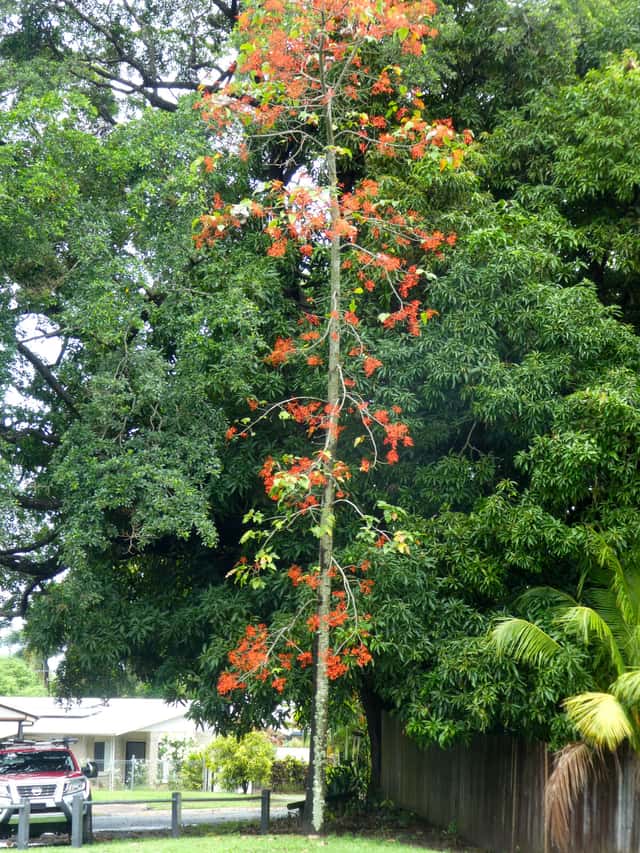
Malvaceae
Illawarra Flame Tree: Full Sun Plant
Brachychiton acerifolius
Plant in full sun to partial shade in well-drained, organic-rich soil. Water deeply every 3-4 days when young; mature trees are drought-tolerant. Prefers slightly acidic to neutral soil (pH 6.0-7.0). Fertilize in spring and autumn. Hardy in USDA zones 9-11, tolerating minimum temperatures of 5°C for mature trees. Space at least 10 meters from structures due to invasive root systems. Generally pest and disease-resistant.
Every 3 days
Direct sun
5° - 35°C
30% - 50%
Categories
What is Illawarra Flame Tree?
Illawarra Flame Tree (Brachychiton acerifolius) is a medium-care plant from the Malvaceae family. A spectacular large deciduous tree of the Malvaceae family, native to the east coast of Australia from southern New South Wales to far north Queensland. Renowned for its striking display of bright scarlet, bell-shaped flowers that appear in dense panicles on a leafless tree in late spring to early s...
Illawarra Flame Tree grows up to 18.0m, spread of 800cm, watering every 3 days, 5°C – 35°C, 30–50% humidity. It is not suitable for indoor environments and not safe for pets.
Without precautions, ingestion can cause irritation in pets. Keep out of reach of cats and dogs.
How to Care for Illawarra Flame Tree?
TLDR: Illawarra Flame Tree needs Direct sun, watering every 3 days, and temperatures between 5-35°C with 30-50% humidity.
How Often Should You Water Illawarra Flame Tree?
Young trees need regular, deep watering every 3-4 days during the first year. Check soil moisture before watering—only water if the soil feels dry to the touch. Overwatering can lead to root rot. Once established (after 2-3 years), reduce watering significantly; mature trees only need deep soaking during extended dry periods.
How Much Light Does Illawarra Flame Tree Need?
Requires full sun for optimal growth and flowering. While it tolerates partial shade, insufficient light will reduce blooming significantly. As a rainforest tree, it also benefits from some afternoon shade and protection from strong, drying winds and intense heat.
What Is the Best Soil for Illawarra Flame Tree?
Thrives in well-draining, loamy soil rich in organic matter. Amend soil with compost or organic mulch before planting. Soil should have good moisture retention without waterlogging. The tree has a very deep taproot, making transplanting difficult—choose planting location carefully.
What Pot Should You Use for Illawarra Flame Tree?
Not recommended for long-term container cultivation. If grown in a pot as a young plant, use large containers (50+ liters) with excellent drainage. Container cultivation will severely limit flowering.
Care Schedule
Fertilize
Every 180 days
What Is Illawarra Flame Tree and Where Does It Come From?
A spectacular large deciduous tree of the Malvaceae family, native to the east coast of Australia from southern New South Wales to far north Queensland. Renowned for its striking display of bright scarlet, bell-shaped flowers that appear in dense panicles on a leafless tree in late spring to early summer, creating a dramatic visual effect resembling a tree on fire. Reaches 15-18 meters in cultivation and up to 35 meters in natural habitat. Features deep lobed glossy leaves and a pyramidal growth habit. Once established, this tree is highly drought-tolerant and low-maintenance.
How Big Does Illawarra Flame Tree Grow?
TLDR: Illawarra Flame Tree can reach up to 18.0m tall with Fast growth rate.
Max height
18.0m
Spread
8.0m
Growth rate
Fast
Foliage
Deciduous
Warning: Toxic Plant
This plant can be toxic if ingested. Keep out of reach of:
Plant Uses
Ornamental
Great for decoration
Culinary Uses
- Seeds can be consumed after roasting and careful removal of irritating hairs using traditional Aboriginal preparation methods
Is your plant showing symptoms?
Click on the symptom to discover possible causes:
What Diseases Commonly Affect Illawarra Flame Tree?
TLDR: Illawarra Flame Tree is susceptible to 7 known diseases. Monitor regularly for early detection.
Spider Mites
Spider mites are tiny arachnids (less than 1/20 inch long) related to spiders and ticks that feed on plant sap. They thrive in hot, dry conditions and can cause significant damage to ornamental and vegetable plants. During severe infestations, crop losses can reach 14% or higher as these pests disrupt vital plant processes including photosynthesis, carbon dioxide absorption, and transpiration.
Scale Insects
Scale insects are small sap-sucking pests that appear as brown, shell-like bumps on plant stems and leaves. There are over 25 species, divided into armored (hard) and unarmored (soft) scales. They feed by piercing plant tissue and extracting sap, which weakens the plant and can lead to yellowing, stunted growth, and even death if left untreated. They also excrete honeydew, which attracts ants and promotes sooty mold growth.
Mealybugs
Mealybugs are small, soft-bodied insects covered with a white, waxy, cottony material. They are common pests of houseplants and outdoor plants in mild climates. These sap-sucking insects feed on plant tissue, causing damage, stunted growth, and can lead to plant death if left untreated. They produce sticky honeydew which attracts sooty mold.
Root Rot
Root rot is a serious fungal disease that affects the root system of plants, causing them to decay and die. It is primarily caused by overwatering, poor drainage, or soil-borne fungi such as Pythium, Phytophthora, Rhizoctonia, and Fusarium. The disease thrives in waterlogged conditions where roots are deprived of oxygen, making them susceptible to fungal infection.
Meaning & Symbolism
In Australian culture, the Illawarra Flame Tree symbolizes ephemeral beauty, transformation, and the fiery spirit of the land. Its spectacular blooming before leaf emergence represents renewal and vitality.
Compare with similar plants
| Attribute | Difficulty | Light | Watering | Pet Safe |
|---|---|---|---|---|
| Dark Fieldcap | Medium | Low light | 2d | ⚠️ |
| Azalea | Medium | Partial shade | 3d | ⚠️ |
| Muriel's Bamboo | Medium | Partial shade | 3d | ✓ |
| Bougainvillea | Medium | Direct sun | 7d | ⚠️ |




