Fabaceae
Illinois bundleflower: Edible Plant
Desmanthus illinoensis
A hardy, low-maintenance plant ideal for rock gardens, naturalized prairies, and low-maintenance flower beds. It requires full sun and well-drained soil; once established, it tolerates drought well and does not require regular fertilization thanks to its ability to fix atmospheric nitrogen. In rich soils, it can spread quite aggressively through self-seeding.
Every 14 days
Direct sun
-25° - 40°C
30% - 70%
Categories
What is Illinois bundleflower?
Illinois bundleflower (Desmanthus illinoensis) is a easy-care plant from the Fabaceae family. Desmanthus illinoensis, commonly known as Illinois bundleflower, is a perennial herbaceous legume native to the prairies of central and southern North America. Belonging to the Fabaceae family, it is characterized by bipinnate, fern-like leaves that fold at night and during the hottest hours of the...
Illinois bundleflower grows up to 1.2m, spread of 90cm, watering every 14 days, -25°C – 40°C, 30–70% humidity. It is not suitable for indoor environments and safe for pets.
Unlike many tropical plants, Illinois bundleflower tolerates watering mistakes. Best for beginners. Unlike many popular species, Illinois bundleflower is safe to keep around pets.
How to Care for Illinois bundleflower?
TLDR: Illinois bundleflower needs Direct sun, watering every 14 days, and temperatures between -25-40°C with 30-70% humidity.
How Often Should You Water Illinois bundleflower?
Water regularly during the first year to encourage the development of a deep root system. Once established, reduce watering and allow the soil to dry almost completely between waterings: it is a drought-tolerant plant that does not tolerate waterlogging.
How Much Light Does Illinois bundleflower Need?
Prefers full sun, with at least 6 hours of direct light per day. It tolerates partial shade but will bloom less abundantly and tends to become more leggy.
What Is the Best Soil for Illinois bundleflower?
Adapts to poor and stony soils as long as they are well-drained; avoid heavy clays and very coarse sands. The ideal pH is neutral to slightly alkaline (6.5-7.5).
What Pot Should You Use for Illinois bundleflower?
This species is not well-suited for container gardening: its deep and extensive root system requires open ground. If container cultivation is necessary, choose very large and deep pots with excellent drainage, keeping in mind that the plant will still be less vigorous than when grown in the ground.
Care Schedule
Fertilize
Every 365 days
What Is Illinois bundleflower and Where Does It Come From?
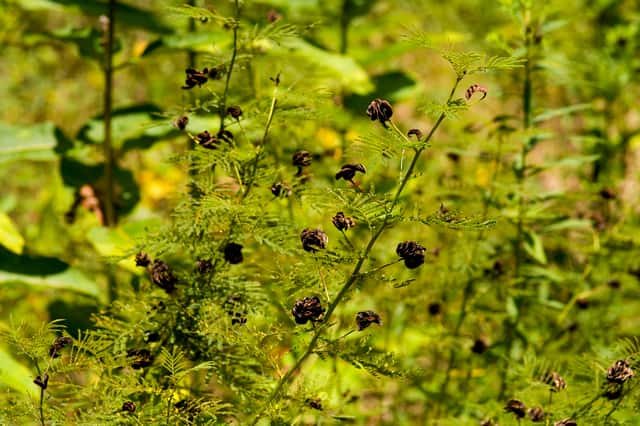
Desmanthus illinoensis, commonly known as Illinois bundleflower, is a perennial herbaceous legume native to the prairies of central and southern North America. Belonging to the Fabaceae family, it is characterized by bipinnate, fern-like leaves that fold at night and during the hottest hours of the day. It produces small, white, spherical star-shaped inflorescences composed of 25-50 florets that bloom from late spring through summer. As a nitrogen-fixing legume, it naturally enriches the soil and is extremely drought-resistant once established.
How to Propagate Illinois bundleflower?
Sowing with scarification
In nature, periodic mowing of meadows promotes natural seed scarification; the plant self-seeds spontaneously once established.
- 1 Collect mature pods in autumn and separate the seeds
- 2 Scarify the seeds (lightly abrading the hard coat with sandpaper or hot water) to break dormancy
- 3 Sow in spring directly in the field or in small pots with well-draining substrate
- 4 Keep the soil slightly moist until germination
- 5 Thin out seedlings once the first true leaves have developed
Materials needed:
How Big Does Illinois bundleflower Grow?
TLDR: Illinois bundleflower can reach up to 1.2m tall with Fast growth rate.
Max height
1.2m
Spread
90cm
Growth rate
Fast
Foliage
Deciduous
Warning: Toxic Plant
This plant can be toxic if ingested. Keep out of reach of:
Plant Uses
Edible
Can be consumed
Medicinal
Medicinal properties
Ornamental
Great for decoration
Medicinal Uses
- Leaf infusion traditionally used by the Pawnee as an external wash for itchy skin
- Seeds placed in the eye overnight and rinsed in the morning, a traditional Hopi and Paiute practice for treating trachoma/conjunctivitis
- Cautionary note: the root bark contains tryptamine alkaloids (N,N-DMT, NMT) and gramine; its use in ethnobotanical preparations (e.g., 'prairiehuasca') is not a safe or recommended medicinal use
Culinary Uses
- Edible seeds, cooked before consumption, with a protein content of approximately 38%, comparable to that of soybeans
- Studied by The Land Institute (Kansas, USA) as a potential perennial grain crop for food use
Is your plant showing symptoms?
Click on the symptom to discover possible causes:
What Diseases Commonly Affect Illinois bundleflower?
TLDR: Illinois bundleflower is susceptible to 3 known diseases. Monitor regularly for early detection.
Leaf Spot
Leaf spot is a common fungal disease caused by various pathogens including Alternaria, Ascochyta, Colletotrichum, Septoria, and Venturia. It primarily affects leaves, causing discolored spots that can lead to premature leaf drop if left untreated.
Aphids
Aphids are small, soft-bodied, pear-shaped insects (1/16 to 1/8 inch long) that feed by sucking nutrient-rich sap from plants. They reproduce rapidly and can quickly weaken plants, causing distorted growth and transmitting plant viruses. Aphids come in various colors including green, black, red, yellow, brown, and gray. They secrete honeydew, a sticky substance that attracts ants and encourages sooty mold growth.
Spider Mites
Spider mites are tiny arachnids (less than 1/20 inch long) related to spiders and ticks that feed on plant sap. They thrive in hot, dry conditions and can cause significant damage to ornamental and vegetable plants. During severe infestations, crop losses can reach 14% or higher as these pests disrupt vital plant processes including photosynthesis, carbon dioxide absorption, and transpiration.
Meaning & Symbolism
A symbol of the resilience of North American prairies: its ability to fix nitrogen and withstand drought makes it a key element in the ecological restoration of degraded soils. Among Native Americans (Pawnee, Hopi, Paiute), it was also associated with traditional remedies for the skin and eyes.
Compare with similar plants
| Attribute | Difficulty | Light | Watering | Pet Safe |
|---|---|---|---|---|
| Field Maple | Easy | Bright indirect | 14d | ✓ |
| Silver Birch | Easy | Direct sun | 14d | ✓ |
| Common Blanketflower | Easy | Direct sun | 10d | ✓ |
| Cushion Bush | Easy | Direct sun | 14d | ✓ |





