Rosaceae
Indian Hawthorn (Rhaphiolepis indica) Care Guide
Rhaphiolepis indica
Give Indian hawthorn full sun for the best flowering and strongest resistance to fungal leaf spot, plant it in well-draining soil, and water deeply but infrequently once established. It needs little fertilizer, benefits from a yearly shaping prune after flowering, and rarely requires repotting since it is almost always grown in the ground.
Every 10 days
Bright indirect
-9° - 35°C
30% - 70%
Categories
What is Indian Hawthorn?
Indian Hawthorn (Rhaphiolepis indica) is a easy-care plant from the Rosaceae family. Indian hawthorn (Rhaphiolepis indica) is a compact, evergreen shrub native to southern China, Taiwan, and Vietnam, prized in gardens worldwide for its glossy dark-green foliage and clusters of fragrant white to pink, five-petaled flowers that bloom in spring and often again in fall. Reaching about 1...
Indian Hawthorn grows up to 1.5m, spread of 150cm, watering every 10 days, -9°C – 35°C, 30–70% humidity. It is not suitable for indoor environments and safe for pets.
Unlike many tropical plants, Indian Hawthorn tolerates watering mistakes. Best for beginners. Unlike many popular species, Indian Hawthorn is safe to keep around pets.
How to Care for Indian Hawthorn?
TLDR: Indian Hawthorn needs Bright indirect, watering every 10 days, and temperatures between -9-35°C with 30-70% humidity.
How Often Should You Water Indian Hawthorn?
Water deeply once or twice a week during the first growing season to establish roots, letting the top 3-5 cm of soil dry out between waterings. Once established, reduce to every 10-14 days, and rely on rainfall during cool or rainy periods - overwatering and poor drainage are the main triggers for root problems and fungal leaf spot.
How Much Light Does Indian Hawthorn Need?
Plant in full sun for at least 6 hours of direct light daily. Full sun produces the densest growth and heaviest bloom and also keeps foliage dry enough to resist Entomosporium leaf spot; light afternoon shade is tolerated in hot climates but increases disease risk.
What Is the Best Soil for Indian Hawthorn?
Use well-draining, slightly acidic to neutral soil (pH 5.5-7.0) - sandy or loamy garden soil amended with compost works well. Avoid heavy, waterlogged clay, and ensure good air circulation around the base of the shrub to keep leaves dry.
What Pot Should You Use for Indian Hawthorn?
Best planted directly in garden soil, but if grown in a container use a wide, unglazed terracotta pot with generous drainage holes to prevent waterlogging.
Care Schedule
Fertilize
Every 90 days
What Is Indian Hawthorn and Where Does It Come From?
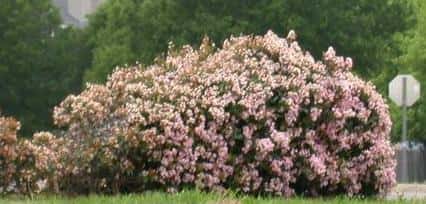
Indian hawthorn (Rhaphiolepis indica) is a compact, evergreen shrub native to southern China, Taiwan, and Vietnam, prized in gardens worldwide for its glossy dark-green foliage and clusters of fragrant white to pink, five-petaled flowers that bloom in spring and often again in fall. Reaching about 1.2-1.5 m (4-5 ft) in height and spread, it forms a dense, rounded mound that works well as a low hedge, foundation planting, or specimen shrub. Small blue-black pome fruits follow the flowers and are attractive to birds. The plant is a member of the rose family (Rosaceae) and, once established, tolerates heat, coastal salt spray, and moderate drought, making it a popular low-maintenance choice for warm-temperate and subtropical landscapes.
How to Propagate Indian Hawthorn?
Semi-hardwood stem cutting
Cover the pot with a clear plastic bag to maintain humidity, and check for root resistance after about a month before transplanting.
- 1 Take a 10-15 cm semi-hardwood cutting from a healthy, non-flowering shoot in summer.
- 2 Remove the lower leaves and dip the cut end in rooting hormone powder.
- 3 Insert the cutting into a well-draining mix of sand and perlite.
- 4 Keep the mix consistently moist and place the pot in bright, indirect light until roots form.
Materials needed:
How Big Does Indian Hawthorn Grow?
TLDR: Indian Hawthorn can reach up to 1.5m tall with Slow growth rate.
Max height
1.5m
Spread
1.5m
Growth rate
Slow
Foliage
Evergreen
Plant Uses
Ornamental
Great for decoration
Aromatic
Pleasant fragrance
Is your plant showing symptoms?
Click on the symptom to discover possible causes:
What Diseases Commonly Affect Indian Hawthorn?
TLDR: Indian Hawthorn is susceptible to 3 known diseases. Monitor regularly for early detection.
Leaf Spot
Leaf spot is a common fungal disease caused by various pathogens including Alternaria, Ascochyta, Colletotrichum, Septoria, and Venturia. It primarily affects leaves, causing discolored spots that can lead to premature leaf drop if left untreated.
Fire Blight
Fire blight is a highly destructive and contagious bacterial disease caused by Erwinia amylovora. It primarily affects plants in the Rosaceae family, including apple, pear, quince trees, and various ornamental plants. The disease can destroy an entire orchard in a single growing season under ideal conditions, with the bacterium moving approximately 11 inches per week in new growth.
Anthracnose
Anthracnose is a fungal disease caused by fungi in the genus Colletotrichum that affects many plants, including vegetables, fruits, and trees. The disease thrives in cool, wet conditions, causing dark, sunken lesions on leaves, stems, flowers, and fruits.
Meaning & Symbolism
In garden tradition, Indian hawthorn is associated with resilience and quiet protection, its dense evergreen form often planted as a living hedge that shelters a home's entrance.
Fun Facts
Despite the common name, Indian hawthorn is not related to true hawthorns (Crataegus) - it belongs to its own genus, Rhaphiolepis, within the rose family.
Its small, dark blue-black fruits are technically edible but mealy and seedy, so they are grown mainly for their flowers rather than as a food crop.
Some modern landscape cultivars, like 'Snow White' and 'Eleanor Tabor', were bred specifically for resistance to Entomosporium leaf spot.
Frequently asked questions
How often should I water Indian hawthorn?
Is Indian hawthorn toxic to cats or dogs?
Why do the leaves have red spots?
When should I prune Indian hawthorn?
How much sun does Indian hawthorn need?
Compare with similar plants
| Attribute | Difficulty | Light | Watering | Pet Safe |
|---|---|---|---|---|
| Field Maple | Easy | Bright indirect | 14d | ✓ |
| Silver Birch | Easy | Direct sun | 14d | ✓ |
| Common Blanketflower | Easy | Direct sun | 10d | ✓ |
| Cushion Bush | Easy | Direct sun | 14d | ✓ |





