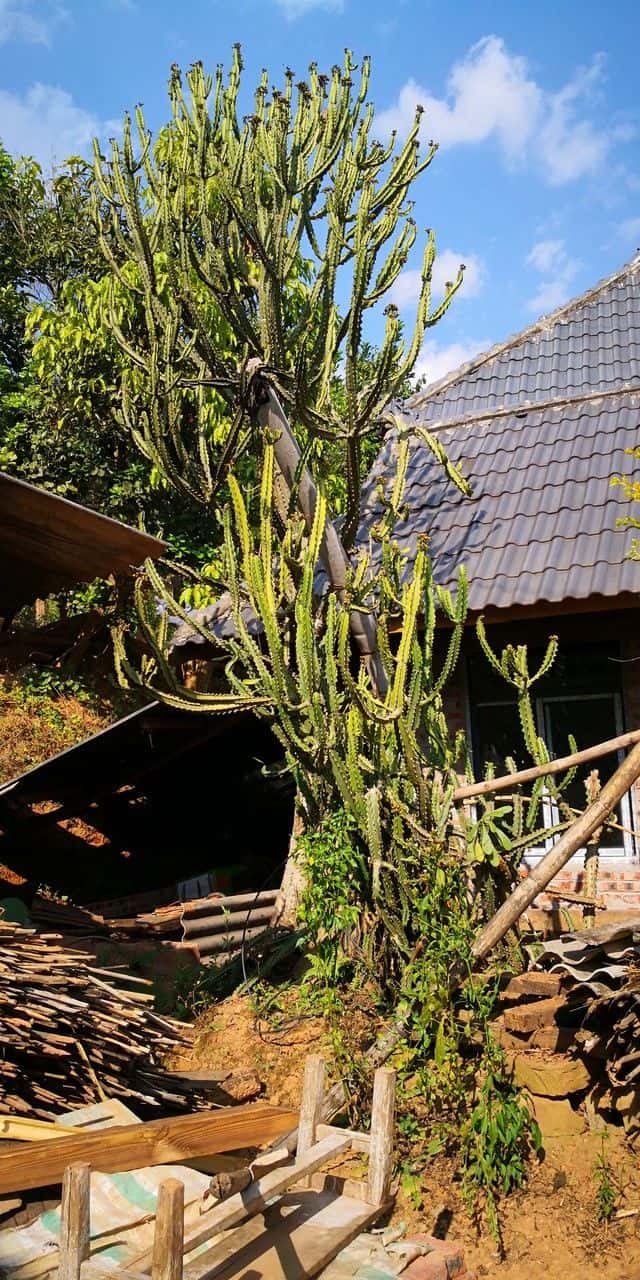
Euphorbiaceae
Indian Spurge Tree Care Guide
Euphorbia neriifolia
An extremely low-maintenance, drought-tolerant succulent that thrives in full sun to bright light and demands well-draining, sandy soil. Allow the soil to dry out completely between waterings, since it is far more tolerant of neglect than of overwatering, which is its biggest threat (root and crown rot). Handle with gloves, as the sap is a skin and eye irritant.
Every 14 days
Bright indirect
10° - 32°C
30% - 50%
Categories
What is Indian Spurge Tree?
Indian Spurge Tree (Euphorbia neriifolia) is a easy-care plant from the Euphorbiaceae family. Euphorbia neriifolia, commonly known as the Indian spurge tree, is a large, cactus-like succulent shrub or small tree native to India and naturalized across Southeast Asia. Its thick, pentagonal, spiny branches store water for long periods of drought, while its milky latex, used historically in trad...
Indian Spurge Tree grows up to 6.5m, spread of 200cm, watering every 14 days, 10°C – 32°C, 30–50% humidity. It is suitable for indoor environments and not safe for pets.
Unlike many tropical plants, Indian Spurge Tree tolerates watering mistakes. Best for beginners. Without precautions, ingestion can cause irritation in pets. Keep out of reach of cats and dogs. Without adequate drainage, root rot can develop within 28 days.
How to Care for Indian Spurge Tree?
TLDR: Indian Spurge Tree needs Bright indirect, watering every 14 days, and temperatures between 10-32°C with 30-50% humidity.
How Often Should You Water Indian Spurge Tree?
Water deeply only once the top few inches of soil are completely dry, roughly every 2 weeks during the growing season and much less in winter. When in doubt, underwater. This succulent stores plenty of moisture in its stems.
How Much Light Does Indian Spurge Tree Need?
Give it full sun to bright indirect light. Indoors, a south-facing window is ideal; outdoors it tolerates direct sun even in hot climates.
What Is the Best Soil for Indian Spurge Tree?
Use a fast-draining, sandy cactus or succulent mix (roughly 50% sand or perlite) with a slightly acidic to neutral pH to prevent waterlogging around the roots.
What Pot Should You Use for Indian Spurge Tree?
Terracotta or unglazed clay pot with generous drainage holes, which wicks away excess moisture and suits its drought-tolerant roots.
What Is Indian Spurge Tree and Where Does It Come From?
Euphorbia neriifolia, commonly known as the Indian spurge tree, is a large, cactus-like succulent shrub or small tree native to India and naturalized across Southeast Asia. Its thick, pentagonal, spiny branches store water for long periods of drought, while its milky latex, used historically in traditional medicine, is toxic and irritating on contact. It produces small clusters of yellow-green flowers with bright red bracts and is popularly grown as an ornamental hedge or living fence.
How to Propagate Indian Spurge Tree?
Stem Cutting
Always wear gloves and eye protection when cutting, as the latex sap is a strong irritant. Rinse tools and skin immediately if contact occurs.
- 1 Wearing gloves, cut a healthy 10-15 cm branch section with clean, sharp shears.
- 2 Set the cutting aside in a dry, shaded spot for 5-7 days until the cut end calluses over.
- 3 Insert the callused end into a well-draining cactus or succulent mix.
- 4 Keep the soil barely moist and place in bright, indirect light until roots establish.
- 5 Once rooted, gradually acclimate to fuller sun.
Materials needed:
Seed Propagation
Germination can be uneven; sow more seeds than needed for the desired yield.
- 1 Sow fresh seeds on the surface of a sandy, well-draining seed-starting mix.
- 2 Lightly cover with a thin layer of sand and mist to moisten.
- 3 Keep in warm conditions (24-29C) with bright, indirect light.
- 4 Maintain light surface moisture until germination.
- 5 Transplant seedlings once they have several sets of true leaves.
Materials needed:
How Big Does Indian Spurge Tree Grow?
TLDR: Indian Spurge Tree can reach up to 6.5m tall with Medium growth rate.
Max height
6.5m
Spread
2.0m
Growth rate
Medium
Foliage
Evergreen
Warning: Toxic Plant
This plant can be toxic if ingested. Keep out of reach of:
Plant Uses
Ornamental
Great for decoration
Medicinal
Medicinal properties
Edible
Can be consumed
Medicinal Uses
- Traditional treatment for constipation
- Traditional treatment for asthma and bronchitis
- Topical use for skin conditions and wound healing
- Wart removal
Culinary Uses
- Young leaves cooked as a vegetable in parts of India and the Philippines
Is your plant showing symptoms?
Click on the symptom to discover possible causes:
What Diseases Commonly Affect Indian Spurge Tree?
TLDR: Indian Spurge Tree is susceptible to 12 known diseases. Monitor regularly for early detection.
Root Rot
Root rot is a serious fungal disease that affects the root system of plants, causing them to decay and die. It is primarily caused by overwatering, poor drainage, or soil-borne fungi such as Pythium, Phytophthora, Rhizoctonia, and Fusarium. The disease thrives in waterlogged conditions where roots are deprived of oxygen, making them susceptible to fungal infection.
Overwatering
Overwatering occurs when plants receive too much water, depriving roots of oxygen and causing root rot. This environmental stress is one of the most common causes of houseplant death, as waterlogged soil prevents roots from breathing and functioning properly.
Crown Rot
Crown rot is a serious fungal disease that attacks the crown (base) of the plant where the stem meets the soil. It is caused by various fungal pathogens including Phytophthora, Fusarium, and Rhizoctonia. The disease thrives in waterlogged conditions and can quickly spread to kill the entire plant if not addressed promptly.
Leaf Spot
Leaf spot is a common fungal disease caused by various pathogens including Alternaria, Ascochyta, Colletotrichum, Septoria, and Venturia. It primarily affects leaves, causing discolored spots that can lead to premature leaf drop if left untreated.
Meaning & Symbolism
In Bathouism, the Bodo tribal religion of Assam, this plant (locally called Sijou) is considered sacred and represents Bathou Bwrai, the supreme deity; it is traditionally planted at the center of household altars.
Fun Facts
In its native India, this plant is considered sacred in Bathouism and is often planted at the center of household shrines.
Despite its cactus-like spines, Euphorbia neriifolia is not a true cactus, it belongs to the spurge family, Euphorbiaceae.
In the wild it can grow into a small tree up to 6.5 meters tall, though it stays much smaller in containers.
Frequently asked questions
Is Euphorbia neriifolia poisonous?
How often should I water my Indian spurge tree?
Can Euphorbia neriifolia be grown indoors?
Why is my Euphorbia neriifolia dropping leaves or developing soft, mushy stems?
Compare with similar plants
| Attribute | Difficulty | Light | Watering | Pet Safe |
|---|---|---|---|---|
| Field Maple | Easy | Bright indirect | 14d | ✓ |
| Silver Birch | Easy | Direct sun | 14d | ✓ |
| Common Blanketflower | Easy | Direct sun | 10d | ✓ |
| Cushion Bush | Easy | Direct sun | 14d | ✓ |





