Asteraceae
Indian Wormwood (Artemisia indica)
Artemisia indica
A tough, easy herb for full sun or light shade. It likes well-drained, even poor soil, moderate watering and a hard cut back once a year to keep it from spreading too far.
Every 10 days
Bright indirect
-15° - 38°C
30% - 70%
Categories
What is Indian wormwood?
Indian wormwood (Artemisia indica) is a easy-care plant from the Asteraceae family. Artemisia indica is an aromatic herb in the family Asteraceae, native to India, Southeast Asia, China, Korea and Japan, where it grows along roadsides, on slopes and at forest edges. It can be an annual or a short-lived perennial, sometimes almost a sub-shrub, and spreads by rhizomes. It forms branc...
Indian wormwood grows up to 1.5m, spread of 100cm, watering every 10 days, -15°C – 38°C, 30–70% humidity. It is not suitable for indoor environments and safe for pets.
Unlike many tropical plants, Indian wormwood tolerates watering mistakes. Best for beginners. Unlike many popular species, Indian wormwood is safe to keep around pets.
How to Care for Indian wormwood?
TLDR: Indian wormwood needs Bright indirect, watering every 10 days, and temperatures between -15-38°C with 30-70% humidity.
How Often Should You Water Indian wormwood?
Water when the soil is dry a few centimetres down. Once established it handles drought well; waterlogged soil rots the roots.
How Much Light Does Indian wormwood Need?
Full sun is best. It also grows in light shade but gets taller and less aromatic.
What Is the Best Soil for Indian wormwood?
Light to medium, well-drained soil, neutral to slightly alkaline. In poor, dry soil the plant lives longer and smells stronger.
What Pot Should You Use for Indian wormwood?
Best in the ground. In a container, use a large, deep pot with drainage holes and a gritty mix.
What Is Indian wormwood and Where Does It Come From?
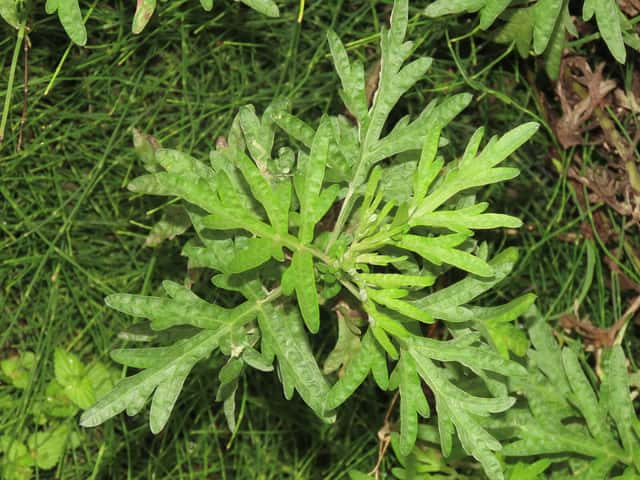
Artemisia indica is an aromatic herb in the family Asteraceae, native to India, Southeast Asia, China, Korea and Japan, where it grows along roadsides, on slopes and at forest edges. It can be an annual or a short-lived perennial, sometimes almost a sub-shrub, and spreads by rhizomes. It forms branched stems 80 to 150 cm tall with deeply cut leaves, green above and whitish below. From late summer into autumn it bears sprays of tiny yellowish flowers. It is used in traditional medicine and in Korean cooking.
How to Propagate Indian wormwood?
Division
Dividing also keeps the rhizomes from spreading too far.
- 1 In early spring, dig up part of the clump
- 2 Separate pieces of rhizome with shoots and roots
- 3 Replant at the same depth in well-drained soil
- 4 Water until it starts growing again
Materials needed:
Seed
The seed is tiny: mix it with sand for even sowing.
- 1 Sow on the surface of the mix without covering
- 2 Keep lightly moist in a bright spot
- 3 Transplant the seedlings once they are sturdy
Materials needed:
How Big Does Indian wormwood Grow?
TLDR: Indian wormwood can reach up to 1.5m tall with Fast growth rate.
Max height
1.5m
Spread
1.0m
Growth rate
Fast
Foliage
Deciduous
Warning: Toxic Plant
This plant can be toxic if ingested. Keep out of reach of:
Plant Uses
Medicinal
Medicinal properties
Aromatic
Pleasant fragrance
Edible
Can be consumed
Medicinal Uses
- Traditionally used against intestinal worms and stomach complaints
- Traditional infusion for spasms and poor appetite
- Leaf paste applied to wounds in Nepalese folk medicine
Culinary Uses
- Young leaves cooked
- Leaves pounded with glutinous rice for colour and flavour
Is your plant showing symptoms?
Click on the symptom to discover possible causes:
What Diseases Commonly Affect Indian wormwood?
TLDR: Indian wormwood is susceptible to 4 known diseases. Monitor regularly for early detection.
Aphids
Aphids are small, soft-bodied, pear-shaped insects (1/16 to 1/8 inch long) that feed by sucking nutrient-rich sap from plants. They reproduce rapidly and can quickly weaken plants, causing distorted growth and transmitting plant viruses. Aphids come in various colors including green, black, red, yellow, brown, and gray. They secrete honeydew, a sticky substance that attracts ants and encourages sooty mold growth.
Rust
Rust is a common fungal disease caused by fungi in the order Pucciniales that affects a wide variety of plants. The disease gets its name from the characteristic orange, yellow, or reddish-brown pustules that appear on leaves, resembling metal rust. This obligate fungal parasite requires living plants to survive and can cause significant economic losses in agricultural crops.
Powdery Mildew
Powdery mildew is a common fungal disease caused by various fungi species including Erysiphe, Podosphaera, Oïdium, and Leveillula. It affects over 10,000 plant species worldwide. The disease thrives in warm, dry climates with high humidity and appears as a distinctive white powdery coating on plant surfaces.
Root Rot
Root rot is a serious fungal disease that affects the root system of plants, causing them to decay and die. It is primarily caused by overwatering, poor drainage, or soil-borne fungi such as Pythium, Phytophthora, Rhizoctonia, and Fusarium. The disease thrives in waterlogged conditions where roots are deprived of oxygen, making them susceptible to fungal infection.
Fun Facts
In Korea the leaves are sold in markets and used to colour and flavour rice cakes
The dried leaves and flowers are burned as incense
The essential oil works as a larvicide
Frequently asked questions
Does Indian wormwood need a lot of water?
Does it spread?
Can it be used as a tea?
When does it flower?
Compare with similar plants
| Attribute | Difficulty | Light | Watering | Pet Safe |
|---|---|---|---|---|
| Field Maple | Easy | Bright indirect | 14d | ✓ |
| Iberian Houseleek | Easy | Direct sun | 14d | ✓ |
| Silver Birch | Easy | Direct sun | 14d | ✓ |
| Common Blanketflower | Easy | Direct sun | 10d | ✓ |





