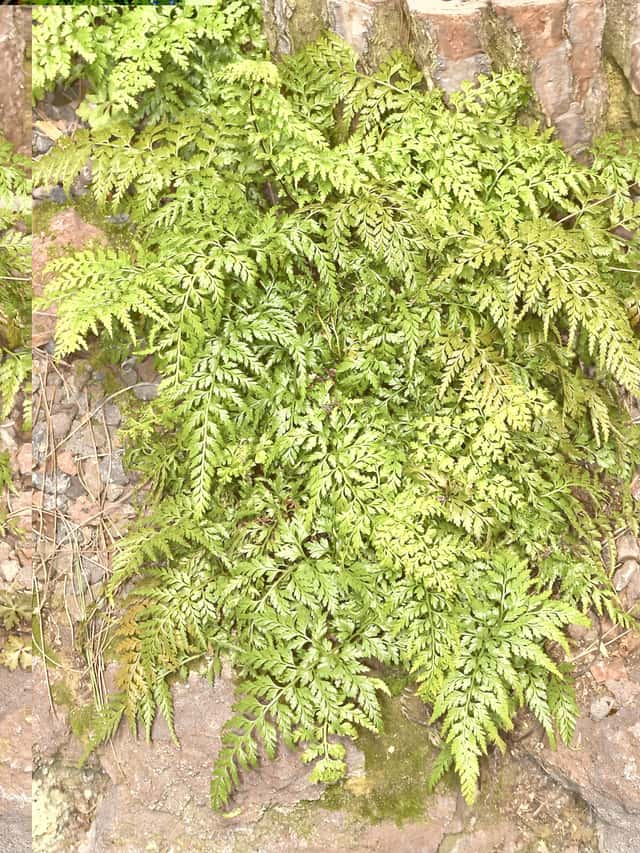
Aspleniaceae
Irish Spleenwort - Asplenium onopteris
Asplenium onopteris
Grows best in medium indirect light, an organic-rich substrate kept evenly moist, and high ambient humidity. Slow-growing and intolerant of dry soil.
Every 7 days
Partial shade
° - °C
% - %
Categories
What is Irish spleenwort?
Irish spleenwort (Asplenium onopteris) is a medium-care plant from the Aspleniaceae family. Irish spleenwort (Asplenium onopteris) is an evergreen perennial fern in the family Aspleniaceae, native to the Mediterranean Basin, Macaronesia, and the Atlantic coasts of western and central Europe, with isolated populations reaching as far north as Ireland and Poland. It grows on shaded, humid ro...
Irish spleenwort grows up to 50cm, watering every 7 days. It is suitable for indoor environments and safe for pets.
Unlike many popular species, Irish spleenwort is safe to keep around pets. Without adequate drainage, root rot can develop within 14 days.
How to Care for Irish spleenwort?
TLDR: Irish spleenwort needs Partial shade, watering every 7 days, and temperatures between 15-30°C with 40-70% humidity.
How Often Should You Water Irish spleenwort?
Water about once a week, keeping the substrate consistently moist but never waterlogged. Never let it dry out completely.
How Much Light Does Irish spleenwort Need?
Place in medium indirect light, away from direct sun, mimicking a shaded woodland floor.
What Is the Best Soil for Irish spleenwort?
Use an organic-rich, moisture-retentive but well-draining mix such as coco coir, peat, or sphagnum moss.
Care Schedule
Repot
Every 365 days
What Is Irish spleenwort and Where Does It Come From?
Irish spleenwort (Asplenium onopteris) is an evergreen perennial fern in the family Aspleniaceae, native to the Mediterranean Basin, Macaronesia, and the Atlantic coasts of western and central Europe, with isolated populations reaching as far north as Ireland and Poland. It grows on shaded, humid rock faces, banks, and woodland floors, usually on acidic substrates, up to about 1900 m elevation. The leathery, glossy dark-green fronds are triangular-ovate in outline, 2-4 times pinnate, with a reddish-brown to black petiole (stipe). Plants reach 10-50 cm in height.
How to Propagate Irish spleenwort?
Clump division
Only divide mature, well-established plants; avoid over-dividing since growth is slow.
- 1 Remove the plant from its pot and identify sections with their own roots and fronds
- 2 Carefully separate the clump into 2-3 sections using a clean knife
- 3 Repot each section into rich, moist substrate
- 4 Keep in a shaded, humid spot until re-established
Materials needed:
Spore propagation
A slow, technical process best suited to experienced growers.
- 1 Collect fertile fronds with mature (brown) sporangia on the underside
- 2 Let them dry on paper to release the spores
- 3 Sprinkle the spores over sterile, moist substrate
- 4 Cover and keep humidity constant until prothalli appear
Materials needed:
How Big Does Irish spleenwort Grow?
TLDR: Irish spleenwort can reach up to 50cm tall with Slow growth rate.
Max height
50cm
Growth rate
Slow
Foliage
Evergreen
Plant Uses
Ornamental
Great for decoration
Is your plant showing symptoms?
Click on the symptom to discover possible causes:
What Diseases Commonly Affect Irish spleenwort?
TLDR: Irish spleenwort is susceptible to 5 known diseases. Monitor regularly for early detection.
Root Rot
Root rot is a serious fungal disease that affects the root system of plants, causing them to decay and die. It is primarily caused by overwatering, poor drainage, or soil-borne fungi such as Pythium, Phytophthora, Rhizoctonia, and Fusarium. The disease thrives in waterlogged conditions where roots are deprived of oxygen, making them susceptible to fungal infection.
Overwatering
Overwatering occurs when plants receive too much water, depriving roots of oxygen and causing root rot. This environmental stress is one of the most common causes of houseplant death, as waterlogged soil prevents roots from breathing and functioning properly.
Spider Mites
Spider mites are tiny arachnids (less than 1/20 inch long) related to spiders and ticks that feed on plant sap. They thrive in hot, dry conditions and can cause significant damage to ornamental and vegetable plants. During severe infestations, crop losses can reach 14% or higher as these pests disrupt vital plant processes including photosynthesis, carbon dioxide absorption, and transpiration.
Mealybugs
Mealybugs are small, soft-bodied insects covered with a white, waxy, cottony material. They are common pests of houseplants and outdoor plants in mild climates. These sap-sucking insects feed on plant tissue, causing damage, stunted growth, and can lead to plant death if left untreated. They produce sticky honeydew which attracts sooty mold.
Fun Facts
It is a diploid fern and one of the two parents of the tetraploid Asplenium adiantum-nigrum.
Its dark name comes from the reddish-brown to black color of the frond petiole.
It grows naturally in rock crevices and old walls throughout the Mediterranean Basin.
Frequently asked questions
Is Irish spleenwort toxic to pets?
How often should I water Irish spleenwort?
Does Irish spleenwort flower?
Where should I place my Irish spleenwort?
Compare with similar plants
| Attribute | Difficulty | Light | Watering | Pet Safe |
|---|---|---|---|---|
| Dark Fieldcap | Medium | Low light | 2d | ⚠️ |
| Azalea | Medium | Partial shade | 3d | ⚠️ |
| Muriel's Bamboo | Medium | Partial shade | 3d | ✓ |
| Bougainvillea | Medium | Direct sun | 7d | ⚠️ |
Choose & Compare
Sources & References
- Asplenium onopteris - Wikipedia
- Irish Spleenwort Plant Care: Water, Light, Nutrients | Greg App
- All About Asplenium onopteris: Essential Facts
- Asplenium onopteris - BSBI
- Asplenium onopteris (Nombres populares) - CONECT-e
- Asplenium onopteris - Museu Virtual Biodiversidade
- How to Grow and Care for Western black spleenwort - PictureThis




