Begoniaceae
Iron Cross Begonia (Begonia masoniana) - Complete Care Guide
Begonia masoniana
A moderate-care houseplant that thrives in bright indirect light with consistent humidity above 50%. Water when the top inch of soil dries out, and never wet the leaves to prevent powdery mildew. Keep temperatures between 13-25°C and feed monthly during the growing season.
Every 7 days
Partial shade
13° - 25°C
50% - 80%
Categories
What is Iron Cross Begonia?
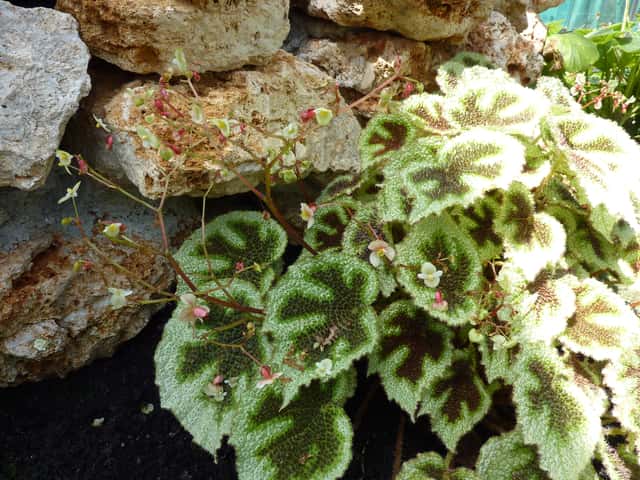
Iron Cross Begonia (Begonia masoniana) is a medium-care plant from the Begoniaceae family. Begonia masoniana, commonly known as the Iron Cross Begonia, is a striking rhizomatous begonia native to southern China and northern Vietnam. Its most distinctive feature is the bold, dark brown cross-shaped marking at the center of each leaf, which closely resembles the German Iron Cross symbol. Th...
Iron Cross Begonia grows up to 45cm, spread of 45cm, watering every 7 days, 13°C – 25°C, 50–80% humidity. It is suitable for indoor environments and not safe for pets.
Without precautions, ingestion can cause irritation in pets. Keep out of reach of cats and dogs. Without adequate drainage, root rot can develop within 14 days.
How to Care for Iron Cross Begonia?
TLDR: Iron Cross Begonia needs Partial shade, watering every 7 days, and temperatures between 13-25°C with 50-80% humidity.
How Often Should You Water Iron Cross Begonia?
Water thoroughly when the top inch of soil feels dry. Avoid getting water on the leaves, as this promotes fungal issues like powdery mildew. Reduce watering in winter when growth slows.
How Much Light Does Iron Cross Begonia Need?
Provide bright, indirect light. Avoid direct sunlight which can scorch the textured leaves. If using artificial lighting, provide 14 hours of fluorescent light as equivalent to 8 hours of natural daylight.
What Is the Best Soil for Iron Cross Begonia?
Use a rich, well-draining mix with peat moss, perlite, and vermiculite. African violet potting mix works well. Ensure good drainage to prevent root rot.
What Pot Should You Use for Iron Cross Begonia?
Use a shallow, wide pot with excellent drainage holes. Terracotta pots are a good choice as they allow the soil to breathe and help prevent overwatering. Since this is a rhizomatous begonia, it grows horizontally rather than vertically.
Care Schedule
Fertilize
Every 30 days
Repot
Every 365 days
What Is Iron Cross Begonia and Where Does It Come From?
Begonia masoniana, commonly known as the Iron Cross Begonia, is a striking rhizomatous begonia native to southern China and northern Vietnam. Its most distinctive feature is the bold, dark brown cross-shaped marking at the center of each leaf, which closely resembles the German Iron Cross symbol. The leaves are large, puckered, and textured with a brilliant chartreuse-green color. While primarily grown for its dramatic foliage, it occasionally produces small greenish-white flowers in spring and summer.
How to Propagate Iron Cross Begonia?
Stem cutting
Use clean, sharp tools. Maintain high humidity around the cutting. Avoid direct sunlight on fresh cuttings.
- 1 Take a 3-inch stem cutting with at least one leaf in early summer
- 2 Dip the cut end in rooting hormone
- 3 Place in moist sterile potting mix
- 4 Cover with a plastic bag or humidity dome to maintain high humidity
- 5 Keep in bright indirect light and maintain moisture
Materials needed:
Leaf cutting
Ensure each leaf section has a prominent vein running through it. Keep the medium consistently moist but not waterlogged.
- 1 Select a healthy mature leaf with its petiole
- 2 Cut the leaf into wedge-shaped sections, each with a main vein
- 3 Press the cut edge into moist potting mix
- 4 Cover with plastic to maintain humidity
- 5 Keep warm and in bright indirect light until new plantlets emerge
Materials needed:
How Big Does Iron Cross Begonia Grow?
TLDR: Iron Cross Begonia can reach up to 45cm tall with Slow growth rate.
Max height
45cm
Spread
45cm
Growth rate
Slow
Foliage
Evergreen
Warning: Toxic Plant
This plant can be toxic if ingested. Keep out of reach of:
Plant Uses
Ornamental
Great for decoration
Is your plant showing symptoms?
Click on the symptom to discover possible causes:
What Diseases Commonly Affect Iron Cross Begonia?
TLDR: Iron Cross Begonia is susceptible to 7 known diseases. Monitor regularly for early detection.
Powdery Mildew
Powdery mildew is a common fungal disease caused by various fungi species including Erysiphe, Podosphaera, Oïdium, and Leveillula. It affects over 10,000 plant species worldwide. The disease thrives in warm, dry climates with high humidity and appears as a distinctive white powdery coating on plant surfaces.
Root Rot
Root rot is a serious fungal disease that affects the root system of plants, causing them to decay and die. It is primarily caused by overwatering, poor drainage, or soil-borne fungi such as Pythium, Phytophthora, Rhizoctonia, and Fusarium. The disease thrives in waterlogged conditions where roots are deprived of oxygen, making them susceptible to fungal infection.
Bacterial Leaf Spot
Bacterial leaf spot is a plant disease caused by bacteria in the Xanthomonas and Pseudomonas genera that affects various ornamental and edible plants. The bacteria infect leaves through wounds or natural openings, causing characteristic lesions that can lead to premature leaf drop and plant weakening.
Aphids
Aphids are small, soft-bodied, pear-shaped insects (1/16 to 1/8 inch long) that feed by sucking nutrient-rich sap from plants. They reproduce rapidly and can quickly weaken plants, causing distorted growth and transmitting plant viruses. Aphids come in various colors including green, black, red, yellow, brown, and gray. They secrete honeydew, a sticky substance that attracts ants and encourages sooty mold growth.
Meaning & Symbolism
Symbolizes uniqueness, caution, and bold beauty due to its striking cross-patterned leaves.
Fun Facts
The bold cross-shaped marking on each leaf inspired the common name Iron Cross Begonia, referencing the German military decoration
Begonia masoniana was named after Maurice Mason, an English plant collector who introduced it to cultivation in the 1950s
Unlike many begonias grown for flowers, the Iron Cross Begonia is prized almost exclusively for its spectacular textured foliage
In its native habitat in southern China, it grows as an understory plant on limestone rocks in humid forests
Frequently asked questions
How often should I water my Iron Cross Begonia?
Why are the leaves on my Iron Cross Begonia turning brown?
Is Iron Cross Begonia toxic to pets?
How do I propagate Iron Cross Begonia?
Compare with similar plants
| Attribute | Difficulty | Light | Watering | Pet Safe |
|---|---|---|---|---|
| Dark Fieldcap | Medium | Low light | 2d | ⚠️ |
| Azalea | Medium | Partial shade | 3d | ⚠️ |
| Muriel's Bamboo | Medium | Partial shade | 3d | ✓ |
| Bougainvillea | Medium | Direct sun | 7d | ⚠️ |




