Primulaceae
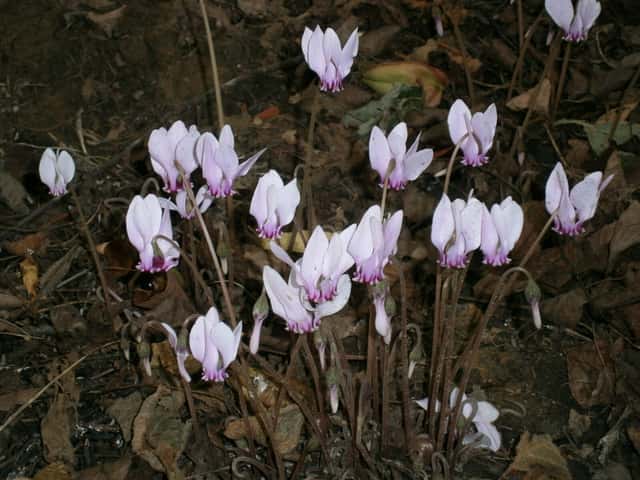
Cyclamen hederifolium: Ivy-leaved Cyclamen
Cyclamen hederifolium
Thrives in partial shade or dappled light, well-draining humus-rich soil, and moderate watering during autumn, winter, and early spring. In summer, when the tuber goes dormant, watering should be reduced almost entirely. A low-maintenance, cold-hardy plant (down to zone 5) ideal for shaded gardens.
Every 10 days
Partial shade
5° - 20°C
40% - 60%
Categories
What is Ivy-leaved Cyclamen?
Ivy-leaved Cyclamen (Cyclamen hederifolium) is a easy-care plant from the Primulaceae family. Cyclamen hederifolium, commonly known as ivy-leaved cyclamen or hardy cyclamen, is a tuberous perennial native to the Mediterranean regions of southern Europe and southwestern Turkey, including Italy, France, Greece, and the Balkans. A member of the Primulaceae family, it is one of the hardiest and...
Ivy-leaved Cyclamen grows up to 15cm, spread of 20cm, watering every 10 days, 5°C – 20°C, 40–60% humidity. It is not suitable for indoor environments and not safe for pets.
Unlike many tropical plants, Ivy-leaved Cyclamen tolerates watering mistakes. Best for beginners. Without precautions, ingestion can cause irritation in pets. Keep out of reach of cats and dogs.
How to Care for Ivy-leaved Cyclamen?
TLDR: Ivy-leaved Cyclamen needs Partial shade, watering every 10 days, and temperatures between 5-20°C with 40-60% humidity.
How Often Should You Water Ivy-leaved Cyclamen?
Water only when the top couple of centimeters of soil are dry, avoiding wetting the crown of the tuber. During summer dormancy, cut back watering drastically to prevent rot.
How Much Light Does Ivy-leaved Cyclamen Need?
Grow in partial shade or dappled light, such as beneath deciduous trees. Intense direct sun, especially in summer, can scorch the leaves.
What Is the Best Soil for Ivy-leaved Cyclamen?
Use well-draining soil rich in organic matter, with a neutral to slightly alkaline pH. A mix of garden loam, leaf mold, and coarse sand works well.
What Pot Should You Use for Ivy-leaved Cyclamen?
A shallow, wide pot with multiple drainage holes, allowing the tuber to sit near the surface of the potting mix.
Care Schedule
Fertilize
Every 30 days
What Is Ivy-leaved Cyclamen and Where Does It Come From?
Cyclamen hederifolium, commonly known as ivy-leaved cyclamen or hardy cyclamen, is a tuberous perennial native to the Mediterranean regions of southern Europe and southwestern Turkey, including Italy, France, Greece, and the Balkans. A member of the Primulaceae family, it is one of the hardiest and easiest-to-naturalize cyclamen species for temperate gardens. Its specific epithet, hederifolium, refers to the ivy-like (Hedera) shape of its leaves, which display striking silver marbling. Pink to magenta or white butterfly-shaped flowers with reflexed petals appear in late summer and autumn, typically emerging before or alongside the new foliage. After flowering, the plant produces ornamental leaves through autumn and winter before going dormant in summer, when the tuber rests beneath the soil. It is widely grown as ground cover beneath deciduous trees and shrubs, where it naturalizes into extensive carpets over the years.
How to Propagate Ivy-leaved Cyclamen?
Seed propagation
This is the most reliable method for this species, since tubers rarely produce offsets. Be patient, plants typically take 1-2 years to reach flowering size.
- 1 Collect seeds from ripe capsules in summer
- 2 Soak in warm water for 24 hours to remove the sticky coating
- 3 Sow onto well-draining potting mix and cover lightly with a thin layer of soil
- 4 Keep in a shaded, consistently moist spot until germination, which can take 4-8 weeks
- 5 Transplant young seedlings after their first year of growth
Materials needed:
Tuber division
Not recommended as a primary method, since the tuber may not survive cutting. Prefer seed propagation whenever possible.
- 1 Dig up the tuber during summer dormancy
- 2 Identify distinct growth points on the surface
- 3 Cut with a sterilized knife, ensuring each section has at least one growing point
- 4 Allow cuts to callus for 24 hours before replanting
- 5 Plant in well-draining soil with the top of the tuber slightly exposed
Materials needed:
How Big Does Ivy-leaved Cyclamen Grow?
TLDR: Ivy-leaved Cyclamen can reach up to 15cm tall with Slow growth rate.
Max height
15cm
Spread
20cm
Growth rate
Slow
Foliage
Deciduous
Warning: Toxic Plant
This plant can be toxic if ingested. Keep out of reach of:
Plant Uses
Ornamental
Great for decoration
Ground Cover
Soil coverage
Is your plant showing symptoms?
Click on the symptom to discover possible causes:
What Diseases Commonly Affect Ivy-leaved Cyclamen?
TLDR: Ivy-leaved Cyclamen is susceptible to 7 known diseases. Monitor regularly for early detection.
Gray Mold (Botrytis Blight)
Gray mold, caused by the fungus Botrytis cinerea, is a widespread necrotrophic pathogen affecting over 1,400 plant species. It thrives in cool, humid conditions and attacks weakened or aging plant tissues, causing soft rot and characteristic gray fuzzy growth.
Root Rot
Root rot is a serious fungal disease that affects the root system of plants, causing them to decay and die. It is primarily caused by overwatering, poor drainage, or soil-borne fungi such as Pythium, Phytophthora, Rhizoctonia, and Fusarium. The disease thrives in waterlogged conditions where roots are deprived of oxygen, making them susceptible to fungal infection.
Fusarium Wilt
Fusarium wilt is a serious fungal disease caused by the soil-borne fungus Fusarium oxysporum. The fungus invades roots and blocks the water-conducting vessels (xylem) of the plant, causing progressive wilting and eventual death. Host-specific forms of the pathogen exist that attack different plant species.
Bacterial Soft Rot
Bacterial soft rot is a destructive plant disease caused primarily by bacteria from the genera Pectobacterium (formerly Erwinia) and Dickeya. These bacteria produce enzymes that break down plant cell walls, causing rapid and foul-smelling tissue decomposition. It mainly affects succulent tissues such as tubers, fruits, stems, and bulbs, being especially problematic in warm and humid conditions.
Meaning & Symbolism
In the language of flowers, cyclamen symbolizes farewell, resilience, and lasting affection. Because it blooms reliably each autumn and returns year after year, it is also associated with perseverance and the cycle of life.
Fun Facts
Cyclamen hederifolium tubers can live for decades, growing wider each year, some specimens are documented to be over 100 years old.
Unlike most plants, its flowers appear before the leaves have fully unfurled.
After pollination, the flower stem coils into a spiral, drawing the seed capsule down toward the soil to aid dispersal by ants.
It is one of the few truly hardy cyclamen species, surviving harsh winters outdoors, unlike the florist cyclamen (Cyclamen persicum) sold as a houseplant.
Frequently asked questions
Is Cyclamen hederifolium toxic to cats and dogs?
When does Cyclamen hederifolium bloom?
Why is my cyclamen losing its leaves in summer?
Can I grow Cyclamen hederifolium in pots?
Compare with similar plants
| Attribute | Difficulty | Light | Watering | Pet Safe |
|---|---|---|---|---|
| Field Maple | Easy | Bright indirect | 14d | ✓ |
| Silver Birch | Easy | Direct sun | 14d | ✓ |
| Common Blanketflower | Easy | Direct sun | 10d | ✓ |
| Cushion Bush | Easy | Direct sun | 14d | ✓ |





