Fabaceae
Brazilian Rain Tree: Fast Growing
Chloroleucon tortum
Requires full sun and well-drained sandy soil. It is sensitive to frost (protect below 45°F/7°C) and waterlogged substrate, but once established, it becomes hardy and grows quickly.
Every 7 days
Bright indirect
7° - °C
% - %
Categories
What is Brazilian Rain Tree?
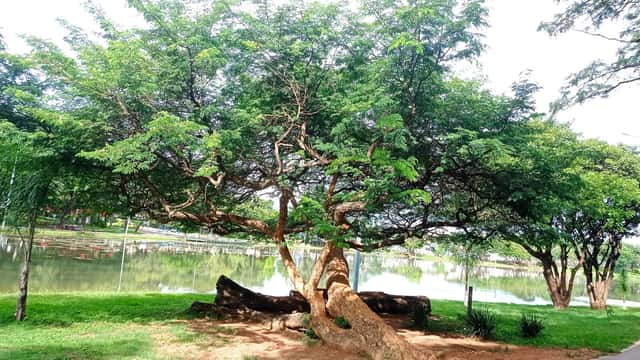
Brazilian Rain Tree (Chloroleucon tortum) is a medium-care plant from the Fabaceae family. Chloroleucon tortum, popularly known as the Brazilian Rain Tree or Tataré, is a deciduous tree native to the Atlantic Forest and the coastal restingas of Rio de Janeiro, currently considered endangered in its original habitat. It is famous for its tortuous trunk with bark that peels off in plates to...
Brazilian Rain Tree grows up to 12.0m, watering every 7 days. It is suitable for indoor environments and safe for pets.
Unlike many popular species, Brazilian Rain Tree is safe to keep around pets. Without adequate drainage, root rot can develop within 14 days.
How to Care for Brazilian Rain Tree?
TLDR: Brazilian Rain Tree needs Bright indirect, watering every 7 days, and temperatures between 7-30°C with 40-70% humidity.
How Often Should You Water Brazilian Rain Tree?
Water weekly, keeping the soil slightly moist without waterlogging—excess water promotes root rot. Young seedlings need more constant watering; established trees tolerate brief periods of drought and, if they lose their leaves due to lack of water, they usually resprout within a few weeks.
How Much Light Does Brazilian Rain Tree Need?
Grow in full sun to encourage the development of its characteristic trunk and a dense canopy; it tolerates partial shade but grows and flowers less under those conditions.
What Is the Best Soil for Brazilian Rain Tree?
Prefers sandy, well-drained soil that is slightly acidic (pH 5.5–6.5) and rich in organic matter. Avoid substrates that retain excessive water, as they promote root rot.
What Pot Should You Use for Brazilian Rain Tree?
As a garden tree, it is not suitable for standard pots due to the size it reaches; however, it is one of the most popular species for bonsai, grown in shallow pots with sandy substrate and excellent drainage.
Care Schedule
Fertilize
Every 30 days
Repot
Every 730 days
What Is Brazilian Rain Tree and Where Does It Come From?
Chloroleucon tortum, popularly known as the Brazilian Rain Tree or Tataré, is a deciduous tree native to the Atlantic Forest and the coastal restingas of Rio de Janeiro, currently considered endangered in its original habitat. It is famous for its tortuous trunk with bark that peels off in plates to form a highly ornamental marbled texture—making it one of the most sought-after species for bonsai in Brazil. Its bipinnate leaves are delicate and drop during periods of water stress, but the tree resprouts vigorously within a few weeks. It produces fragrant, globose white to cream-colored flowers during the spring and summer.
How to Propagate Brazilian Rain Tree?
Sowing
- Use freshly harvested seeds—germination power drops rapidly with storage.
- For bonsai, young seedlings can begin to be trained as soon as the stem thickens.
- 1 Collection and processing
Harvest mature pods in spring-summer and remove the seeds immediately after collection.
- 2 Breaking dormancy
Lightly scarify the seeds or soak them in warm water for 24 hours to accelerate germination.
- 3 Sowing
Sow in light, well-drained substrate, keeping moisture constant; germination usually occurs within 30 days, with a naturally low rate.
- 4 Transplanting
Transfer the seedling to its permanent location or a larger pot when it reaches 12–20 inches (30–50 cm) in height.
Materials needed:
How Big Does Brazilian Rain Tree Grow?
TLDR: Brazilian Rain Tree can reach up to 12.0m tall with Fast growth rate.
Max height
12.0m
Growth rate
Fast
Foliage
Deciduous
Plant Uses
Ornamental
Great for decoration
Is your plant showing symptoms?
Click on the symptom to discover possible causes:
What Diseases Commonly Affect Brazilian Rain Tree?
TLDR: Brazilian Rain Tree is susceptible to 5 known diseases. Monitor regularly for early detection.
Aphids
Aphids are small, soft-bodied, pear-shaped insects (1/16 to 1/8 inch long) that feed by sucking nutrient-rich sap from plants. They reproduce rapidly and can quickly weaken plants, causing distorted growth and transmitting plant viruses. Aphids come in various colors including green, black, red, yellow, brown, and gray. They secrete honeydew, a sticky substance that attracts ants and encourages sooty mold growth.
Spider Mites
Spider mites are tiny arachnids (less than 1/20 inch long) related to spiders and ticks that feed on plant sap. They thrive in hot, dry conditions and can cause significant damage to ornamental and vegetable plants. During severe infestations, crop losses can reach 14% or higher as these pests disrupt vital plant processes including photosynthesis, carbon dioxide absorption, and transpiration.
Whiteflies
Whiteflies are small, soft-bodied, winged insects closely related to aphids and mealybugs. They are moth-like in appearance, about 1/16 inch long, triangular in shape, and gray-white in color. These sap-sucking pests feed on plant tissue, causing yellowing, stunted growth, and wilting. They also excrete honeydew, which attracts ants and promotes sooty mold growth. Whiteflies can transmit serious plant viruses.
Root Rot
Root rot is a serious fungal disease that affects the root system of plants, causing them to decay and die. It is primarily caused by overwatering, poor drainage, or soil-borne fungi such as Pythium, Phytophthora, Rhizoctonia, and Fusarium. The disease thrives in waterlogged conditions where roots are deprived of oxygen, making them susceptible to fungal infection.
Meaning & Symbolism
A symbol of resilience: even when losing its leaves in the face of stress, the tree resprouts with vigor in a few weeks. Its twisted and marbled trunk is valued in bonsai culture as a representation of strength and character gained over time.
Compare with similar plants
| Attribute | Difficulty | Light | Watering | Pet Safe |
|---|---|---|---|---|
| Dark Fieldcap | Medium | Low light | 2d | ⚠️ |
| Azalea | Medium | Partial shade | 3d | ⚠️ |
| Muriel's Bamboo | Medium | Partial shade | 3d | ✓ |
| Bougainvillea | Medium | Direct sun | 7d | ⚠️ |




