Cannabaceae
Jamaican Nettle Tree: Full Sun Plant
Trema micrantha
A hardy and easy-to-grow plant, ideal for land restoration and rapid afforestation. It prefers full sun, well-drained soil, and moderate watering, tolerating short periods of drought once established.
Every 10 days
Direct sun
18° - 32°C
% - %
Categories
What is Jamaican Nettle Tree?
Jamaican Nettle Tree (Trema micrantha) is a easy-care plant from the Cannabaceae family. The Jamaican nettle tree (Trema micrantha) is a fast-growing pioneer tree in the Cannabaceae family, native to the tropical and subtropical regions of the Americas, including Brazil. It reaches 5 to 15 meters in height, featuring a dense, rounded crown, oval leaves with a rough texture, and small, g...
Jamaican Nettle Tree grows up to 15.0m, watering every 10 days, 18°C – 32°C. It is not suitable for indoor environments and not safe for pets.
Unlike many tropical plants, Jamaican Nettle Tree tolerates watering mistakes. Best for beginners. Without precautions, ingestion can cause irritation in pets. Keep out of reach of cats and dogs.
How to Care for Jamaican Nettle Tree?
TLDR: Jamaican Nettle Tree needs Direct sun, watering every 10 days, and temperatures between 18-32°C with 40-70% humidity.
How Often Should You Water Jamaican Nettle Tree?
Water regularly while young, keeping the soil slightly moist without waterlogging. Once established, it tolerates short dry spells; avoid waterlogged soils, which promote root rot.
How Much Light Does Jamaican Nettle Tree Need?
Requires full sun for full development; it is a heliophilous (pioneer) species that grows poorly in deep shade.
What Is the Best Soil for Jamaican Nettle Tree?
Adapts to various soils, from sandy to fertile, as long as they are well-drained and porous; avoid compacted or permanently waterlogged soils.
What Pot Should You Use for Jamaican Nettle Tree?
Not recommended for permanent container cultivation due to its tree-like size; young seedlings can be started in large pots (40L or more) with good drainage until final planting in the ground.
What Is Jamaican Nettle Tree and Where Does It Come From?
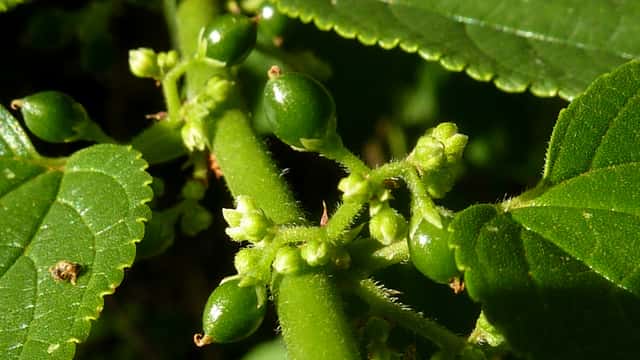
The Jamaican nettle tree (Trema micrantha) is a fast-growing pioneer tree in the Cannabaceae family, native to the tropical and subtropical regions of the Americas, including Brazil. It reaches 5 to 15 meters in height, featuring a dense, rounded crown, oval leaves with a rough texture, and small, greenish-white flowers followed by reddish fruits highly sought after by birds such as parakeets, parrots, and doves, as well as bats. As one of the first species to colonize degraded areas, abandoned pastures, and roadsides, it plays a fundamental role in soil recovery and the restoration of riparian forests.
How to Propagate Jamaican Nettle Tree?
How Big Does Jamaican Nettle Tree Grow?
TLDR: Jamaican Nettle Tree can reach up to 15.0m tall with Fast growth rate.
Max height
15.0m
Growth rate
Fast
Foliage
Semi-evergreen
Warning: Toxic Plant
This plant can be toxic if ingested. Keep out of reach of:
Plant Uses
Ornamental
Great for decoration
Medicinal
Medicinal properties
Medicinal Uses
- Sap/latex used topically for wound healing
- Leaves traditionally used in topical preparations for rheumatism (external use)
Is your plant showing symptoms?
Click on the symptom to discover possible causes:
What Diseases Commonly Affect Jamaican Nettle Tree?
TLDR: Jamaican Nettle Tree is susceptible to 4 known diseases. Monitor regularly for early detection.
Caterpillars
Caterpillars are the larval stage of moths and butterflies that feed voraciously on plant foliage, stems, flowers, and fruits. Common species include cabbage loopers, tomato hornworms, armyworms, and cutworms. These pests can cause extensive damage by consuming large amounts of plant tissue in a short time. They vary in size from small (1/4 inch) to large (5 inches), with colors ranging from green to brown, often featuring stripes or spots. Caterpillars are highly mobile and can quickly spread throughout gardens, making them one of the most destructive common pests.
Scale Insects
Scale insects are small sap-sucking pests that appear as brown, shell-like bumps on plant stems and leaves. There are over 25 species, divided into armored (hard) and unarmored (soft) scales. They feed by piercing plant tissue and extracting sap, which weakens the plant and can lead to yellowing, stunted growth, and even death if left untreated. They also excrete honeydew, which attracts ants and promotes sooty mold growth.
Sooty Mold
Sooty mold is a fungal disease that develops on surfaces coated with honeydew, a sticky sweet substance secreted by sap-sucking insects like aphids, scale insects, and whiteflies. While it does not directly infect plant tissue, it reduces photosynthetic capacity by blocking sunlight and diminishes the plant's aesthetic appearance.
Root Rot
Root rot is a serious fungal disease that affects the root system of plants, causing them to decay and die. It is primarily caused by overwatering, poor drainage, or soil-borne fungi such as Pythium, Phytophthora, Rhizoctonia, and Fusarium. The disease thrives in waterlogged conditions where roots are deprived of oxygen, making them susceptible to fungal infection.
Meaning & Symbolism
Symbolizes renewal and resilience: as a pioneer species, it is associated with new beginnings and the regeneration of nature after disturbances.
Compare with similar plants
| Attribute | Difficulty | Light | Watering | Pet Safe |
|---|---|---|---|---|
| Field Maple | Easy | Bright indirect | 14d | ✓ |
| Silver Birch | Easy | Direct sun | 14d | ✓ |
| Common Blanketflower | Easy | Direct sun | 10d | ✓ |
| Cushion Bush | Easy | Direct sun | 14d | ✓ |
Choose & Compare
Sources & References
- Grandiuva (Trema micrantha) - Agrolink
- Trema micrantha - Jardim Cor
- Trema micrantha - Useful Tropical Plants
- Trema micrantha: o que e, para que serve - Tua Saude
- Trema micrantha (TREMI) Pests - EPPO Global Database
- Florida trema (Trema micrantha) - PictureThis
- Jamaican Nettletree Plant Care - PlantIn





