Rosaceae
Japanese Plum: Complete Growing Guide
Prunus salicina
Plant in full sun with at least 6–8 hours of direct sunlight daily. Water regularly during the growing season, keeping soil consistently moist but well-drained. Fertilize every 3 months with a balanced fertilizer. Prune annually after harvest to encourage new productive growth and maintain tree shape.
Every 7 days
Direct sun
-9° - 35°C
30% - 50%
Categories
What is Japanese Plum?
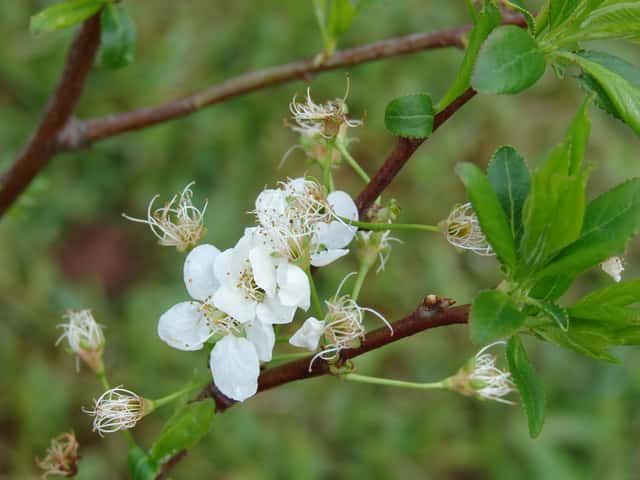
Japanese Plum (Prunus salicina) is a medium-care plant from the Rosaceae family. Prunus salicina, commonly known as the Japanese plum or Chinese plum, is a small to medium-sized deciduous tree native to China. It is widely cultivated across temperate regions of the world for its delicate white spring blossoms and juicy, flavorful fruits that ripen in summer. The tree is valued b...
Japanese Plum grows up to 12.0m, spread of 900cm, watering every 7 days, -9°C – 35°C, 30–50% humidity. It is not suitable for indoor environments and not safe for pets.
Without precautions, ingestion can cause irritation in pets. Keep out of reach of cats and dogs.
How to Care for Japanese Plum?
TLDR: Japanese Plum needs Direct sun, watering every 7 days, and temperatures between -9-35°C with 30-50% humidity.
How Often Should You Water Japanese Plum?
Water every 7 days during the growing season, increasing frequency during hot, dry spells. Allow the topsoil to partially dry between waterings but never let the root zone dry out completely. Reduce watering during winter dormancy.
How Much Light Does Japanese Plum Need?
Japanese plum requires full sun to thrive and produce fruit — choose a location that receives at least 6 to 8 hours of direct sunlight per day. Insufficient light leads to reduced flowering and poor fruit set.
What Is the Best Soil for Japanese Plum?
Prefers loamy, well-draining soil with a slightly acidic to neutral pH of 5.5–7.5. Amend the planting site with compost or aged manure to improve soil fertility and drainage before planting.
What Pot Should You Use for Japanese Plum?
Large terracotta or wooden container for pot culture; prefers in-ground planting in garden beds
Care Schedule
Fertilize
Every 90 days
What Is Japanese Plum and Where Does It Come From?
Prunus salicina, commonly known as the Japanese plum or Chinese plum, is a small to medium-sized deciduous tree native to China. It is widely cultivated across temperate regions of the world for its delicate white spring blossoms and juicy, flavorful fruits that ripen in summer. The tree is valued both as an ornamental specimen and as a productive fruit tree in home gardens and commercial orchards.
How Big Does Japanese Plum Grow?
TLDR: Japanese Plum can reach up to 12.0m tall with Medium growth rate.
Max height
12.0m
Spread
9.0m
Growth rate
Medium
Foliage
Deciduous
Warning: Toxic Plant
This plant can be toxic if ingested. Keep out of reach of:
Plant Uses
Edible
Can be consumed
Ornamental
Great for decoration
Medicinal
Medicinal properties
Medicinal Uses
- Fruits used in traditional Chinese medicine to boost immunity and aid digestion
- Leaves and bark preparations used to treat inflammation in folk medicine
Culinary Uses
- Eaten fresh as table fruit
- Made into jams, jellies, preserves, and fruit wines
- Dried, pickled, or candied for long-term preservation
- Used in sauces and savory preparations across Asian cuisines
Is your plant showing symptoms?
Click on the symptom to discover possible causes:
What Diseases Commonly Affect Japanese Plum?
TLDR: Japanese Plum is susceptible to 10 known diseases. Monitor regularly for early detection.
Bacterial Canker
Serious bacterial disease affecting stone fruits and tomatoes caused by Pseudomonas syringae or Clavibacter michiganensis. Creates sunken lesions that ooze sap.
Anthracnose
Anthracnose is a fungal disease caused by fungi in the genus Colletotrichum that affects many plants, including vegetables, fruits, and trees. The disease thrives in cool, wet conditions, causing dark, sunken lesions on leaves, stems, flowers, and fruits.
Aphids
Aphids are small, soft-bodied, pear-shaped insects (1/16 to 1/8 inch long) that feed by sucking nutrient-rich sap from plants. They reproduce rapidly and can quickly weaken plants, causing distorted growth and transmitting plant viruses. Aphids come in various colors including green, black, red, yellow, brown, and gray. They secrete honeydew, a sticky substance that attracts ants and encourages sooty mold growth.
Scale Insects
Scale insects are small sap-sucking pests that appear as brown, shell-like bumps on plant stems and leaves. There are over 25 species, divided into armored (hard) and unarmored (soft) scales. They feed by piercing plant tissue and extracting sap, which weakens the plant and can lead to yellowing, stunted growth, and even death if left untreated. They also excrete honeydew, which attracts ants and promotes sooty mold growth.
Meaning & Symbolism
In Chinese culture, the plum blossom is one of the "Four Gentlemen" of flowers, symbolizing resilience, perseverance, and hope as it blooms in late winter before the leaves appear.
Fun Facts
Japanese plum blooms before its leaves emerge, making it one of the earliest floral displays of spring
There are more than 200 named cultivars of Prunus salicina grown commercially worldwide
The pits contain amygdalin, which can break down into hydrogen cyanide — they should never be eaten
Japanese plum is used to make sumomo shu, a traditional Japanese fruit liqueur
Compare with similar plants
| Attribute | Difficulty | Light | Watering | Pet Safe |
|---|---|---|---|---|
| Dark Fieldcap | Medium | Low light | 2d | ⚠️ |
| Azalea | Medium | Partial shade | 3d | ⚠️ |
| Muriel's Bamboo | Medium | Partial shade | 3d | ✓ |
| Bougainvillea | Medium | Direct sun | 7d | ⚠️ |




