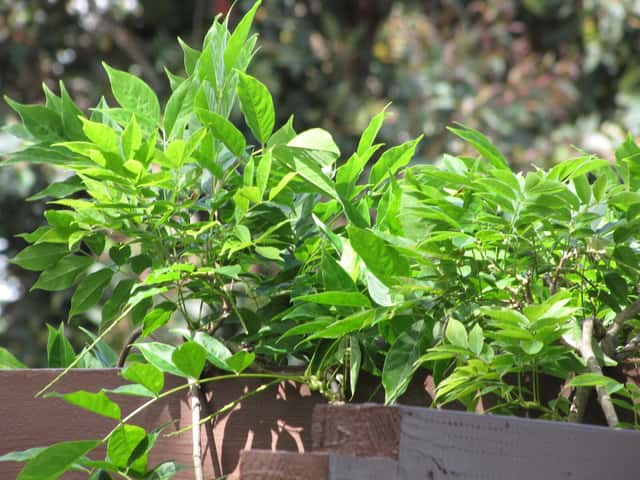
Fabaceae
Japanese Wisteria (Wisteria floribunda)
Wisteria floribunda
Thrives in full sun with well-draining soil and moderate watering, letting the topsoil dry between waterings. Needs a sturdy support structure and biannual pruning to bloom well and stay in check.
Every 7 days
Direct sun
10° - 24°C
40% - 60%
Categories
What is Japanese Wisteria?
Japanese Wisteria (Wisteria floribunda) is a medium-care plant from the Fabaceae family. Japanese Wisteria is a vigorous, woody deciduous climber native to Japan, prized for its long, fragrant, drooping flower clusters that cascade over trellises and pergolas in spring. Its stems twine clockwise around supports, thickening into gnarled trunks over the years.
Japanese Wisteria grows up to 9.0m, spread of 900cm, watering every 7 days, 10°C – 24°C, 40–60% humidity. It is not suitable for indoor environments and not safe for pets.
Without precautions, ingestion can cause irritation in pets. Keep out of reach of cats and dogs.
How to Care for Japanese Wisteria?
TLDR: Japanese Wisteria needs Direct sun, watering every 7 days, and temperatures between 10-24°C with 40-60% humidity.
How Often Should You Water Japanese Wisteria?
Water deeply once or twice a week during hot, dry weather, tapering off in winter; avoid waterlogged soil, which leads to root rot.
How Much Light Does Japanese Wisteria Need?
Plant in full sun (at least 6-8 hours of direct light daily); poor flowering is usually a sign of too much shade.
What Is the Best Soil for Japanese Wisteria?
Use organically rich, well-draining soil that is mildly acidic to neutral (pH 6.0-7.0); avoid soggy conditions.
What Pot Should You Use for Japanese Wisteria?
If grown in a container, choose a large, sturdy pot with excellent drainage and a strong trellis for training; long-term, it performs best planted in open ground.
Care Schedule
Fertilize
Every 365 days
What Is Japanese Wisteria and Where Does It Come From?
Japanese Wisteria is a vigorous, woody deciduous climber native to Japan, prized for its long, fragrant, drooping flower clusters that cascade over trellises and pergolas in spring. Its stems twine clockwise around supports, thickening into gnarled trunks over the years.
How to Propagate Japanese Wisteria?
Ground layering
Apply rooting hormone to the wound to speed rooting. Seed propagation does not reliably reproduce the parent plant's flower color or bloom quality.
- 1 Choose a flexible, healthy branch near the ground
- 2 Make a small wound in the bark where it will touch the soil
- 3 Bury that section of the branch in moist soil, leaving the tip exposed
- 4 Pin the branch down and keep the soil consistently moist until rooted
- 5 Sever the new plant from the parent once well rooted
Materials needed:
How Big Does Japanese Wisteria Grow?
TLDR: Japanese Wisteria can reach up to 9.0m tall with Fast growth rate.
Max height
9.0m
Spread
9.0m
Growth rate
Fast
Foliage
Deciduous
Warning: Toxic Plant
This plant can be toxic if ingested. Keep out of reach of:
Plant Uses
Ornamental
Great for decoration
Aromatic
Pleasant fragrance
Is your plant showing symptoms?
Click on the symptom to discover possible causes:
What Diseases Commonly Affect Japanese Wisteria?
TLDR: Japanese Wisteria is susceptible to 8 known diseases. Monitor regularly for early detection.
Aphids
Aphids are small, soft-bodied, pear-shaped insects (1/16 to 1/8 inch long) that feed by sucking nutrient-rich sap from plants. They reproduce rapidly and can quickly weaken plants, causing distorted growth and transmitting plant viruses. Aphids come in various colors including green, black, red, yellow, brown, and gray. They secrete honeydew, a sticky substance that attracts ants and encourages sooty mold growth.
Mealybugs
Mealybugs are small, soft-bodied insects covered with a white, waxy, cottony material. They are common pests of houseplants and outdoor plants in mild climates. These sap-sucking insects feed on plant tissue, causing damage, stunted growth, and can lead to plant death if left untreated. They produce sticky honeydew which attracts sooty mold.
Scale Insects
Scale insects are small sap-sucking pests that appear as brown, shell-like bumps on plant stems and leaves. There are over 25 species, divided into armored (hard) and unarmored (soft) scales. They feed by piercing plant tissue and extracting sap, which weakens the plant and can lead to yellowing, stunted growth, and even death if left untreated. They also excrete honeydew, which attracts ants and promotes sooty mold growth.
Spider Mites
Spider mites are tiny arachnids (less than 1/20 inch long) related to spiders and ticks that feed on plant sap. They thrive in hot, dry conditions and can cause significant damage to ornamental and vegetable plants. During severe infestations, crop losses can reach 14% or higher as these pests disrupt vital plant processes including photosynthesis, carbon dioxide absorption, and transpiration.
Meaning & Symbolism
In Japanese culture, wisteria (fuji) symbolizes love, sensuality, support, and longevity, with its cascading racemes celebrated at traditional spring wisteria-viewing festivals.
Fun Facts
A single wisteria vine can live over 100 years and keep blooming vigorously
The seeds and pods are the most toxic part of the plant and can cause serious symptoms if eaten
In Japan, wisteria blooms are celebrated at traditional viewing festivals called fuji matsuri
Frequently asked questions
Is Japanese Wisteria toxic to dogs and cats?
How long does it take Japanese Wisteria to bloom?
Why isn't my wisteria flowering?
How often should I prune Japanese Wisteria?
Compare with similar plants
| Attribute | Difficulty | Light | Watering | Pet Safe |
|---|---|---|---|---|
| Dark Fieldcap | Medium | Low light | 2d | ⚠️ |
| Azalea | Medium | Partial shade | 3d | ⚠️ |
| Muriel's Bamboo | Medium | Partial shade | 3d | ✓ |
| Bougainvillea | Medium | Direct sun | 7d | ⚠️ |




