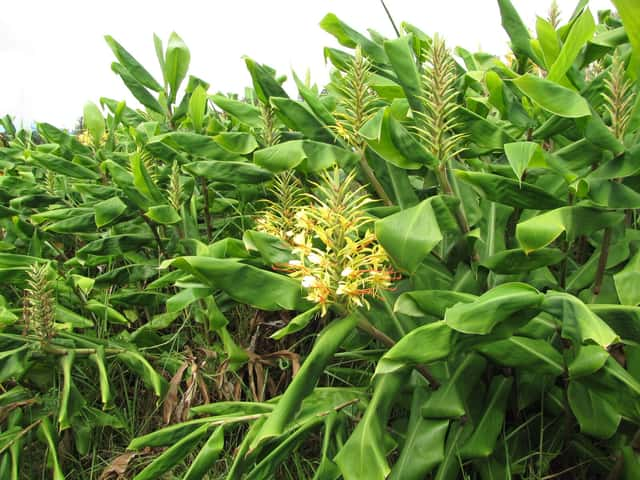
Zingiberaceae
Kahili Ginger: Aromatic Plant
Hedychium gardnerianum
Grow in full sun to partial shade in humus-rich soil kept consistently moist during the growing season. Water often and feed monthly in spring and summer; in winter the top growth dies back and the soil should be kept drier. In frost-prone areas, protect the rhizomes with a deep mulch or grow it in a container and bring it under cover. Cut back old stems at the end of the season and remove spent spikes before they set seed to stop it spreading.
Every 3 days
Bright indirect
° - °C
% - %
Categories
What is Kahili Ginger?
Kahili Ginger (Hedychium gardnerianum) is a medium-care plant from the Zingiberaceae family. Hedychium gardnerianum, known as Kahili ginger or ginger lily, is a herbaceous perennial in the ginger family (Zingiberaceae), native to the Himalayas of India, Nepal and Bhutan. It forms upright clumps up to 2.5 m tall from thick, fleshy rhizomes, with long lance-shaped leaves clasping the stems. I...
Kahili Ginger grows up to 2.5m, spread of 100cm, watering every 3 days. It is suitable for indoor environments and safe for pets.
Unlike many popular species, Kahili Ginger is safe to keep around pets. Without adequate drainage, root rot can develop within 7 days.
How to Care for Kahili Ginger?
TLDR: Kahili Ginger needs Bright indirect, watering every 3 days, and temperatures between 15-30°C with 40-70% humidity.
How Often Should You Water Kahili Ginger?
Keep the soil evenly moist through spring and summer, watering every 2-3 days in hot weather. Cut back sharply in winter while the plant is dormant: cold, waterlogged rhizomes rot.
How Much Light Does Kahili Ginger Need?
Thrives in full sun or partial shade; in very hot climates, afternoon shade prevents leaf scorch. Indoors or under glass it needs bright light to flower.
What Is the Best Soil for Kahili Ginger?
Use fertile, humus-rich soil that holds moisture but does not stay waterlogged. In containers, a loam-based compost with added organic matter and a little sand works well.
What Pot Should You Use for Kahili Ginger?
A large, deep container (40 cm or more) with good drainage holes, to make room for the fast-spreading rhizomes; plastic or glazed pots help hold moisture.
Care Schedule
Fertilize
Every 30 days
What Is Kahili Ginger and Where Does It Come From?
Hedychium gardnerianum, known as Kahili ginger or ginger lily, is a herbaceous perennial in the ginger family (Zingiberaceae), native to the Himalayas of India, Nepal and Bhutan. It forms upright clumps up to 2.5 m tall from thick, fleshy rhizomes, with long lance-shaped leaves clasping the stems. In late summer and autumn it bears cylindrical spikes of intensely fragrant lemon-yellow flowers with prominent red stamens, followed by capsules holding seeds wrapped in orange arils. It holds the RHS Award of Garden Merit, but is also listed among the IUCN's 100 worst invasive species, a serious weed in the Azores, Madeira, Hawaii and New Zealand.
How to Propagate Kahili Ginger?
Rhizome division
Use a clean, sharp knife. Divide every 2-3 years to control size and refresh the clump.
- 1 Lift the clump from the ground or pot in early spring
- 2 Cut the rhizome into sections, each with at least one bud or shoot
- 3 Plant the sections shallowly, just below the surface, in rich moist soil
- 4 Keep the soil moist and the plants sheltered until new shoots appear
Materials needed:
Seed
Sow fresh. Seedlings take a few years to flower; division is much quicker.
- 1 Collect the orange-arilled seeds as soon as the capsules split
- 2 Remove the aril and rinse the seeds
- 3 Sow in moist seed compost and keep at 21-24 °C
- 4 Pot on the seedlings once they have a few leaves
Materials needed:
How Big Does Kahili Ginger Grow?
TLDR: Kahili Ginger can reach up to 2.5m tall with Fast growth rate.
Max height
2.5m
Spread
1.0m
Growth rate
Fast
Foliage
Deciduous
Plant Uses
Ornamental
Great for decoration
Aromatic
Pleasant fragrance
Culinary Uses
- The rhizomes are edible but bland and are not used like culinary ginger
Is your plant showing symptoms?
Click on the symptom to discover possible causes:
What Diseases Commonly Affect Kahili Ginger?
TLDR: Kahili Ginger is susceptible to 4 known diseases. Monitor regularly for early detection.
Spider Mites
Spider mites are tiny arachnids (less than 1/20 inch long) related to spiders and ticks that feed on plant sap. They thrive in hot, dry conditions and can cause significant damage to ornamental and vegetable plants. During severe infestations, crop losses can reach 14% or higher as these pests disrupt vital plant processes including photosynthesis, carbon dioxide absorption, and transpiration.
Aphids
Aphids are small, soft-bodied, pear-shaped insects (1/16 to 1/8 inch long) that feed by sucking nutrient-rich sap from plants. They reproduce rapidly and can quickly weaken plants, causing distorted growth and transmitting plant viruses. Aphids come in various colors including green, black, red, yellow, brown, and gray. They secrete honeydew, a sticky substance that attracts ants and encourages sooty mold growth.
Root Rot
Root rot is a serious fungal disease that affects the root system of plants, causing them to decay and die. It is primarily caused by overwatering, poor drainage, or soil-borne fungi such as Pythium, Phytophthora, Rhizoctonia, and Fusarium. The disease thrives in waterlogged conditions where roots are deprived of oxygen, making them susceptible to fungal infection.
Slugs and Snails
Slugs and snails are mollusks that feed on plant tissue, causing irregular holes in leaves and damage to young seedlings. They are most active at night and in moist conditions, leaving characteristic silvery slime trails. These pests can quickly devastate gardens, especially during wet seasons.
Compare with similar plants
| Attribute | Difficulty | Light | Watering | Pet Safe |
|---|---|---|---|---|
| Dark Fieldcap | Medium | Low light | 2d | ⚠️ |
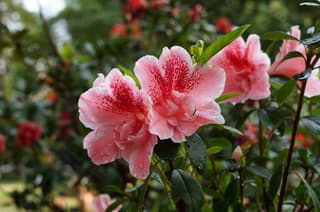
| Azalea | Medium | Partial shade | 3d | ⚠️ |
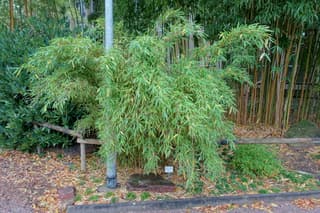
| Muriel's Bamboo | Medium | Partial shade | 3d | ✓ |
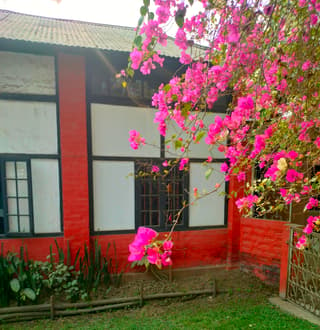
| Bougainvillea | Medium | Direct sun | 7d | ⚠️ |
Choose & Compare
Sources & References
- Hedychium gardnerianum - NC State Extension Plant Toolbox
- Hedychium gardnerianum | Kahili ginger - RHS
- Hedychium gardnerianum - Wikipedia
- Kahali Ginger - ASPCA Toxic and Non-Toxic Plants
- Hedychium gardnerianum from its discovery to its invasive status: a review (Botanical Studies, 2021)
- Ginger Lily Care: How To Grow Kahili Ginger - Plant Care Today
- Hedychium gardnerianum - invasoras.pt