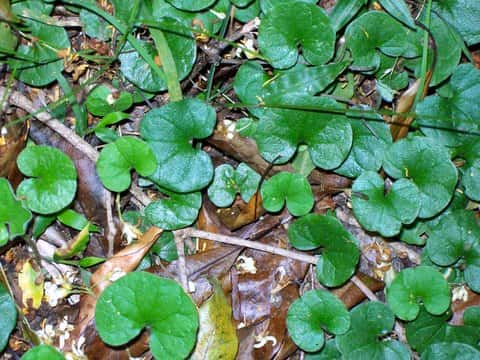
Convolvulaceae
Kidney weed: Ground Cover Plant
Dichondra repens
Easy-to-grow ground cover preferring well-drained soils. Drought tolerant once established. Thrives in full sun to partial shade. Moderate watering needs, minimal fertilization required. Excellent alternative to traditional grass lawns.
Every 3 days
Partial shade
10° - 32°C
% - %
Categories
What is Kidney weed?
Kidney weed (Dichondra repens) is a easy-care plant from the Convolvulaceae family. Low-growing perennial groundcover with small, kidney-shaped leaves. Native to tropical and cool temperate regions. Forms dense mats with vigorous spreading habit, rooting at leaf nodes.
Kidney weed grows up to 10cm, spread of 180cm, watering every 3 days, 10°C – 32°C. It is suitable for indoor environments and safe for pets.
Unlike many tropical plants, Kidney weed tolerates watering mistakes. Best for beginners. Unlike many popular species, Kidney weed is safe to keep around pets. Without adequate drainage, root rot can develop within 7 days.
How to Care for Kidney weed?
TLDR: Kidney weed needs Partial shade, watering every 3 days, and temperatures between 10-32°C with 40-70% humidity.
How Often Should You Water Kidney weed?
Keep soil evenly moist during establishment. Once established, provide deep, infrequent watering allowing soil to dry slightly between sessions. Reduce watering in cooler months.
How Much Light Does Kidney weed Need?
Grows best in full sun to partial shade. Silver varieties benefit from more direct sunlight for optimal foliage color.
What Is the Best Soil for Kidney weed?
Well-drained, fertile loamy soil is ideal. Amend with organic matter before planting. Avoid clay and poorly draining soils to prevent root rot.
What Pot Should You Use for Kidney weed?
Wide, shallow containers at least 25-30cm diameter for vigorous spreading growth. Excellent in hanging baskets.
Care Schedule
Fertilize
Every 180 days
Repot
Every 365 days
What Is Kidney weed and Where Does It Come From?
Low-growing perennial groundcover with small, kidney-shaped leaves. Native to tropical and cool temperate regions. Forms dense mats with vigorous spreading habit, rooting at leaf nodes.
How to Propagate Kidney weed?
Seed
Sow in spring-summer when nighttime temps reach 50°F and daytime 70s°F. Seeds very reliable.
- 1 Sow seeds in moist soil
- 2 Maintain temperature of 21°C or higher
- 3 Do not cover seeds - they require light to germinate
- 4 Keep soil moist but not waterlogged
- 5 Germination occurs in 7-14 days
Materials needed:
Division
Spring or early fall ideal for division. Each piece establishes quickly and easily.
- 1 Select vigorous runner sections
- 2 Separate 4-6 inch diameter divisions
- 3 Ensure each division has roots attached
- 4 Plant in well-draining soil
- 5 Keep moist until established
Materials needed:
Stem Cutting
Use rooting hormone to increase success rate. Very reliable propagation method.
- 1 Cut 4-6 inch stem pieces
- 2 Remove lower leaves
- 3 Plant in rooting medium (peat and perlite)
- 4 Keep moist and in partial shade
- 5 Roots develop in 4-8 weeks
Materials needed:
Natural Layering
Plant naturally roots at nodes - this is inherent to its growth habit. Very easy propagation.
- 1 Select creeping runner section
- 2 Cover portion with soil, keeping tip exposed
- 3 Keep soil moist
- 4 Roots develop at stem nodes naturally
- 5 Sever from parent plant when rooted
Materials needed:
How Big Does Kidney weed Grow?
TLDR: Kidney weed can reach up to 10cm tall with Fast growth rate.
Max height
10cm
Spread
1.8m
Growth rate
Fast
Foliage
Evergreen
Plant Uses
Ground Cover
Soil coverage
Ornamental
Great for decoration
Medicinal
Medicinal properties
Medicinal Uses
- Jaundice treatment
- Urinary tract infection remedy
- Fever reduction
- Dysentery treatment
- Inflammation and edema reduction
Is your plant showing symptoms?
Click on the symptom to discover possible causes:
What Diseases Commonly Affect Kidney weed?
TLDR: Kidney weed is susceptible to 4 known diseases. Monitor regularly for early detection.
Leaf Spot
Leaf spot is a common fungal disease caused by various pathogens including Alternaria, Ascochyta, Colletotrichum, Septoria, and Venturia. It primarily affects leaves, causing discolored spots that can lead to premature leaf drop if left untreated.
Powdery Mildew
Powdery mildew is a common fungal disease caused by various fungi species including Erysiphe, Podosphaera, Oïdium, and Leveillula. It affects over 10,000 plant species worldwide. The disease thrives in warm, dry climates with high humidity and appears as a distinctive white powdery coating on plant surfaces.
Root Rot
Root rot is a serious fungal disease that affects the root system of plants, causing them to decay and die. It is primarily caused by overwatering, poor drainage, or soil-borne fungi such as Pythium, Phytophthora, Rhizoctonia, and Fusarium. The disease thrives in waterlogged conditions where roots are deprived of oxygen, making them susceptible to fungal infection.
Rust
Rust is a common fungal disease caused by fungi in the order Pucciniales that affects a wide variety of plants. The disease gets its name from the characteristic orange, yellow, or reddish-brown pustules that appear on leaves, resembling metal rust. This obligate fungal parasite requires living plants to survive and can cause significant economic losses in agricultural crops.
Meaning & Symbolism
Adaptability, ground-level beauty, low-maintenance luxury, ecological mindfulness
Compare with similar plants
| Attribute | Difficulty | Light | Watering | Pet Safe |
|---|---|---|---|---|
| Field Maple | Easy | Bright indirect | 14d | ✓ |
| Silver Birch | Easy | Direct sun | 14d | ✓ |
| Common Blanketflower | Easy | Direct sun | 10d | ✓ |
| Cushion Bush | Easy | Direct sun | 14d | ✓ |
Choose & Compare
Sources & References
- How to Grow & Care for Dichondra | Garden Design
- Dichondra - Wikipedia
- Dichondra repens J.R.Forst. and G.Forst.: A Review of Its Traditional Uses, Chemistry, Pharmacology, Toxicology and Applications
- How to grow Dichondra Repens in 5 easy steps | Love The Garden
- Dichondra repens: care, characteristics, and benefits as a ground cover grass
- Propagation and germination of Dichondra repens: a complete guide





