Solanaceae
Kiss-me-quick (Brunfelsia latifolia)
Brunfelsia latifolia
Partial shade or morning sun, rich well-drained soil kept lightly moist, monthly feeding in spring and summer, and protection from frost. Keep it away from children and pets.
Every 5 days
Partial shade
10° - 32°C
50% - 80%
Categories
What is Kiss-me-quick?
Kiss-me-quick (Brunfelsia latifolia) is a medium-care plant from the Solanaceae family. Brunfelsia latifolia is an evergreen shrub in the nightshade family (Solanaceae), endemic to Brazil. It stays compact, usually 20 cm to 1 m and up to about 1.8 m, with stems branching from the base and dark green elliptic leaves 4 to 9 cm long. Clusters of 3 to 20 flowers form at the branch tips: ea...
Kiss-me-quick grows up to 1.8m, watering every 5 days, 10°C – 32°C, 50–80% humidity. It is suitable for indoor environments and not safe for pets.
Without precautions, ingestion can cause irritation in pets. Keep out of reach of cats and dogs. Without adequate drainage, root rot can develop within 10 days.
How to Care for Kiss-me-quick?
TLDR: Kiss-me-quick needs Partial shade, watering every 5 days, and temperatures between 10-32°C with 50-80% humidity.
How Often Should You Water Kiss-me-quick?
Water when the top 2 cm of soil is dry and never let it sit waterlogged. Water less in winter.
How Much Light Does Kiss-me-quick Need?
Grows best in partial shade and tolerates morning sun. Strong afternoon sun scorches the leaves.
What Is the Best Soil for Kiss-me-quick?
Use a rich, organic, well-drained mix. It tolerates slightly acidic to slightly alkaline soils.
What Pot Should You Use for Kiss-me-quick?
A 20-30 cm pot with drainage holes, filled with a rich organic mix.
Care Schedule
Fertilize
Every 30 days
Repot
Every 730 days
What Is Kiss-me-quick and Where Does It Come From?
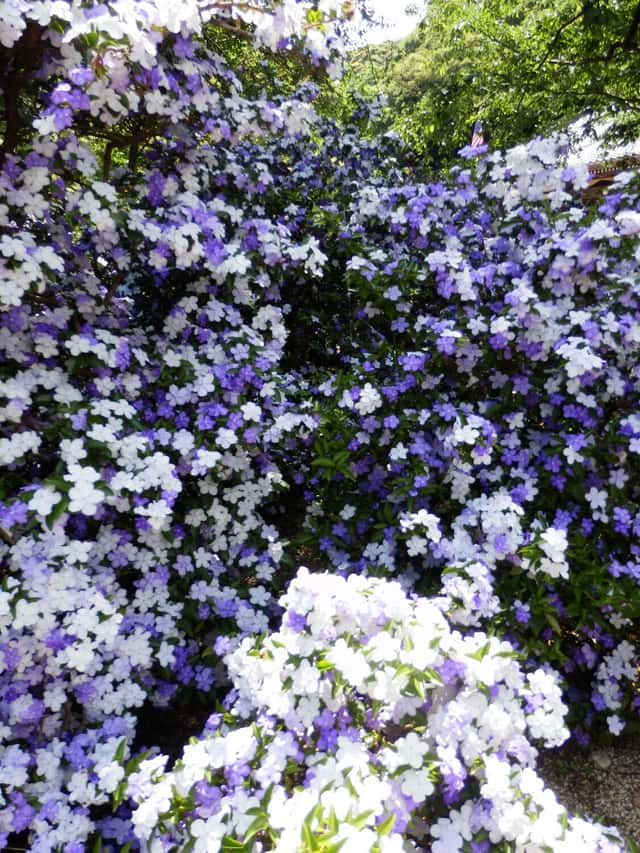
Brunfelsia latifolia is an evergreen shrub in the nightshade family (Solanaceae), endemic to Brazil. It stays compact, usually 20 cm to 1 m and up to about 1.8 m, with stems branching from the base and dark green elliptic leaves 4 to 9 cm long. Clusters of 3 to 20 flowers form at the branch tips: each opens pale purple and fades to white over a few days, so several colors show at once. It starts flowering at about 30 cm tall, which suits it to pots. All parts of the plant are toxic.
How to Propagate Kiss-me-quick?
Stem cuttings
Wear gloves because the sap is toxic. A clear plastic bag over the cuttings helps keep humidity high.
- 1 Take 10-15 cm semi-hardwood tip cuttings in spring or summer
- 2 Strip the lower leaves and dip the base in rooting hormone
- 3 Insert into a light, moist mix
- 4 Keep in bright indirect light with high humidity until rooted
Materials needed:
How Big Does Kiss-me-quick Grow?
TLDR: Kiss-me-quick can reach up to 1.8m tall with Medium growth rate.
Max height
1.8m
Growth rate
Medium
Foliage
Evergreen
Warning: Toxic Plant
This plant can be toxic if ingested. Keep out of reach of:
Plant Uses
Ornamental
Great for decoration
Is your plant showing symptoms?
Click on the symptom to discover possible causes:
What Diseases Commonly Affect Kiss-me-quick?
TLDR: Kiss-me-quick is susceptible to 5 known diseases. Monitor regularly for early detection.
Mealybugs
Mealybugs are small, soft-bodied insects covered with a white, waxy, cottony material. They are common pests of houseplants and outdoor plants in mild climates. These sap-sucking insects feed on plant tissue, causing damage, stunted growth, and can lead to plant death if left untreated. They produce sticky honeydew which attracts sooty mold.
Spider Mites
Spider mites are tiny arachnids (less than 1/20 inch long) related to spiders and ticks that feed on plant sap. They thrive in hot, dry conditions and can cause significant damage to ornamental and vegetable plants. During severe infestations, crop losses can reach 14% or higher as these pests disrupt vital plant processes including photosynthesis, carbon dioxide absorption, and transpiration.
Whiteflies
Whiteflies are small, soft-bodied, winged insects closely related to aphids and mealybugs. They are moth-like in appearance, about 1/16 inch long, triangular in shape, and gray-white in color. These sap-sucking pests feed on plant tissue, causing yellowing, stunted growth, and wilting. They also excrete honeydew, which attracts ants and promotes sooty mold growth. Whiteflies can transmit serious plant viruses.
Leaf Spot
Leaf spot is a common fungal disease caused by various pathogens including Alternaria, Ascochyta, Colletotrichum, Septoria, and Venturia. It primarily affects leaves, causing discolored spots that can lead to premature leaf drop if left untreated.
Meaning & Symbolism
The name "yesterday-today-and-tomorrow" refers to the flowers changing color over time: purple yesterday, paler today, white tomorrow.
Fun Facts
It is endemic to Brazil
It can bloom when only about 30 cm tall
It belongs to the same family as tomatoes and potatoes
Frequently asked questions
Why do the flowers change color?
Is Brunfelsia latifolia toxic?
Can I grow it in a pot?
Is it cold hardy?
Compare with similar plants
| Attribute | Difficulty | Light | Watering | Pet Safe |
|---|---|---|---|---|
| Dark Fieldcap | Medium | Low light | 2d | ⚠️ |
| Azalea | Medium | Partial shade | 3d | ⚠️ |
| Muriel's Bamboo | Medium | Partial shade | 3d | ✓ |
| Bougainvillea | Medium | Direct sun | 7d | ⚠️ |
Choose & Compare
Sources & References
- Brunfelsia latifolia - Wikipedia
- Brunfelsia spp. Yesterday, Today, and Tomorrow - UF/IFAS Extension
- Kiss Me Quick - ASPCA Toxic and Non-Toxic Plants
- Brunfelsia latifolia - World Flora Online
- Mealy Bugs - NParks Gardening Singapore
- How to treat brunfelsia plant with spots on leaves - Bunnings Workshop




