Asphodelaceae
Knoppies Oxtongue: Medicinal Uses & Care Tips
Gasteria batesiana
An easy, forgiving succulent that thrives on neglect. Give it bright, indirect light (it tolerates more shade than most succulents), water only when the soil is fully dry, and pot it in a fast-draining mineral mix. Keep it frost-free and avoid wetting the leaves to prevent fungal spotting.
Every 14 days
Partial shade
4° - °C
% - %
Categories
What is Knoppies Oxtongue?
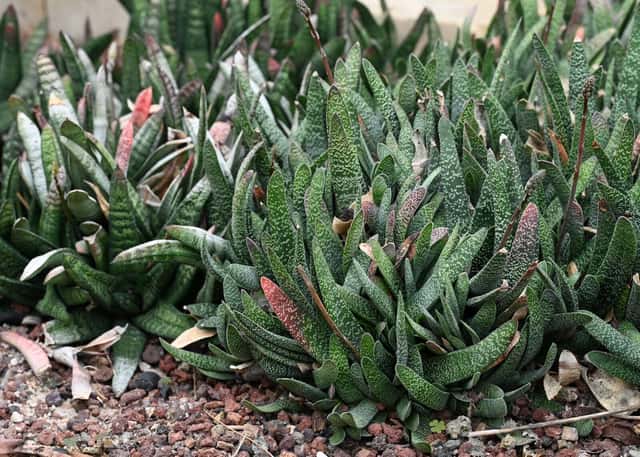
Knoppies Oxtongue (Gasteria batesiana) is a easy-care plant from the Asphodelaceae family. Gasteria batesiana, known as the Knoppies Oxtongue, is a small, slow-growing succulent native to the hot, rocky river valleys of northern KwaZulu-Natal, Eswatini, and Mpumalanga in South Africa. Its thick, dark green leaves are covered in raised white tubercles arranged in transverse bands, giving t...
Knoppies Oxtongue grows up to 10cm, spread of 30cm, watering every 14 days. It is suitable for indoor environments and safe for pets.
Unlike many tropical plants, Knoppies Oxtongue tolerates watering mistakes. Best for beginners. Unlike many popular species, Knoppies Oxtongue is safe to keep around pets. Without adequate drainage, root rot can develop within 28 days.
How to Care for Knoppies Oxtongue?
TLDR: Knoppies Oxtongue needs Partial shade, watering every 14 days, and temperatures between 4-30°C with 40-70% humidity.
How Often Should You Water Knoppies Oxtongue?
Water deeply only when the soil has completely dried out, roughly every 10-15 days in summer and much less in winter. Always let excess water drain away and never let the pot sit in a saucer of water — this species is highly sensitive to overwatering and root rot.
How Much Light Does Knoppies Oxtongue Need?
Provide bright, indirect light such as a few hours of gentle morning sun or a spot near an east-facing window. It tolerates light shade better than most succulents but will scorch in intense direct midday sun.
What Is the Best Soil for Knoppies Oxtongue?
Use a fast-draining mineral succulent mix — cactus soil amended with extra perlite, coarse sand, or pumice. A shallow, humus-enriched but very porous blend that mimics its rocky habitat works best.
What Pot Should You Use for Knoppies Oxtongue?
A shallow terracotta or unglazed clay pot with generous drainage holes is ideal — porous walls help excess moisture evaporate quickly, matching this succulent's shallow root system and drought-tolerant nature.
Care Schedule
Fertilize
Every 21 days
Repot
Every 365 days
What Is Knoppies Oxtongue and Where Does It Come From?
Gasteria batesiana, known as the Knoppies Oxtongue, is a small, slow-growing succulent native to the hot, rocky river valleys of northern KwaZulu-Natal, Eswatini, and Mpumalanga in South Africa. Its thick, dark green leaves are covered in raised white tubercles arranged in transverse bands, giving the plant a distinctively bumpy, "knoppies" (knobby) texture. The stemless rosettes slowly form small clumps as they produce offsets from the base, and in spring arching stems bear tubular, soft pink flowers with pale green tips that attract sunbirds.
How to Propagate Knoppies Oxtongue?
Offset (Pup) Division
Avoid watering immediately after separation to let the wound heal and prevent rot.
- 1 Wait until an offset (pup) at the base of the mother plant has its own small roots.
- 2 Use a clean, sharp knife to separate the pup from the parent, keeping any roots intact.
- 3 Let the cutting callus over in a dry, shaded spot for 2-3 days.
- 4 Plant in a shallow pot with well-draining succulent mix and water lightly after a week.
Materials needed:
Leaf Cutting
Be patient — leaf cuttings root slowly and some may take months to produce a new plantlet.
- 1 Gently twist off a healthy, mature leaf close to the base.
- 2 Allow the cut end to callus in a dry, shaded spot for at least 3 weeks.
- 3 Dust the callused end with fungicide to prevent rot.
- 4 Lay the leaf on top of sandy, well-draining soil and mist sparingly until roots and a new rosette form.
Materials needed:
How Big Does Knoppies Oxtongue Grow?
TLDR: Knoppies Oxtongue can reach up to 10cm tall with Slow growth rate.
Max height
10cm
Spread
30cm
Growth rate
Slow
Foliage
Evergreen
Plant Uses
Ornamental
Great for decoration
Medicinal
Medicinal properties
Medicinal Uses
- Used in traditional South African healing rituals and as a good-luck charm; not medically validated
Is your plant showing symptoms?
Click on the symptom to discover possible causes:
What Diseases Commonly Affect Knoppies Oxtongue?
TLDR: Knoppies Oxtongue is susceptible to 6 known diseases. Monitor regularly for early detection.
Root Rot
Root rot is a serious fungal disease that affects the root system of plants, causing them to decay and die. It is primarily caused by overwatering, poor drainage, or soil-borne fungi such as Pythium, Phytophthora, Rhizoctonia, and Fusarium. The disease thrives in waterlogged conditions where roots are deprived of oxygen, making them susceptible to fungal infection.
Mealybugs
Mealybugs are small, soft-bodied insects covered with a white, waxy, cottony material. They are common pests of houseplants and outdoor plants in mild climates. These sap-sucking insects feed on plant tissue, causing damage, stunted growth, and can lead to plant death if left untreated. They produce sticky honeydew which attracts sooty mold.
Aphids
Aphids are small, soft-bodied, pear-shaped insects (1/16 to 1/8 inch long) that feed by sucking nutrient-rich sap from plants. They reproduce rapidly and can quickly weaken plants, causing distorted growth and transmitting plant viruses. Aphids come in various colors including green, black, red, yellow, brown, and gray. They secrete honeydew, a sticky substance that attracts ants and encourages sooty mold growth.
Powdery Mildew
Powdery mildew is a common fungal disease caused by various fungi species including Erysiphe, Podosphaera, Oïdium, and Leveillula. It affects over 10,000 plant species worldwide. The disease thrives in warm, dry climates with high humidity and appears as a distinctive white powdery coating on plant surfaces.
Meaning & Symbolism
In South African tradition, Gasteria batesiana is carried or used by traditional healers as a charm believed to bring good luck and protection — a symbol of fortune woven into local folklore.
Compare with similar plants
| Attribute | Difficulty | Light | Watering | Pet Safe |
|---|---|---|---|---|
| Field Maple | Easy | Bright indirect | 14d | ✓ |
| Silver Birch | Easy | Direct sun | 14d | ✓ |
| Common Blanketflower | Easy | Direct sun | 10d | ✓ |
| Cushion Bush | Easy | Direct sun | 14d | ✓ |





