Malvaceae
Kola nut: Edible Plant
Cola acuminata
It requires a warm, consistently humid, semi-shaded location without direct sunlight. The soil should be deep, nutrient-rich, and well-draining with a slightly acidic pH. Its roots are sensitive to disturbance, so it is advisable to plant it in its permanent location at a young age and avoid frequent repotting. It does not tolerate temperatures below 15°C (59°F) well; therefore, in temperate climates, it thrives best in a heated conservatory or greenhouse.
Every 7 days
Partial shade
15° - 32°C
60% - 90%
Categories
What is Kola nut?
Kola nut (Cola acuminata) is a medium-care plant from the Malvaceae family. The kola nut (Cola acuminata) is an evergreen tree belonging to the mallow family (Malvaceae), originating from the lower canopy of the rainforests of West and Central Africa. It can grow up to 20 meters tall with a similar crown diameter in its natural habitat, featuring glossy, leathery, oblong-ov...
Kola nut grows up to 20.0m, spread of 2000cm, watering every 7 days, 15°C – 32°C, 60–90% humidity. It is suitable for indoor environments and not safe for pets.
Without precautions, ingestion can cause irritation in pets. Keep out of reach of cats and dogs. Without adequate drainage, root rot can develop within 14 days.
How to Care for Kola nut?
TLDR: Kola nut needs Partial shade, watering every 7 days, and temperatures between 15-32°C with 60-90% humidity.
How Often Should You Water Kola nut?
Keep the soil consistently moist but avoid a waterlogged, suffocating root zone: water when the top 2-3 centimeters of soil have dried out. Mature specimens can tolerate short periods of drought, but young plants require regular, balanced watering.
How Much Light Does Kola nut Need?
It prefers bright, filtered (indirect) light; direct sunlight can scorch its leaves. In its natural habitat, it grows in the lower canopy of the rainforest, but it develops a denser crown and produces more fruit in open, sunnier locations.
What Is the Best Soil for Kola nut?
It requires deep, humus-rich, well-aerated soil: a mixture of peat, perlite, and mature compost is ideal. It poorly tolerates high pH, calcareous soils; a slightly acidic range between 5.5 and 6.5 is most suitable.
What Pot Should You Use for Kola nut?
Choose a deeper pot, at least 30-40 cm deep, with good drainage, as the tree's taproot grows downward and does not tolerate transplanting well. Ceramic or terracotta pots help balance moisture levels in high humidity; ensure there is a drainage hole at the bottom.
What Is Kola nut and Where Does It Come From?
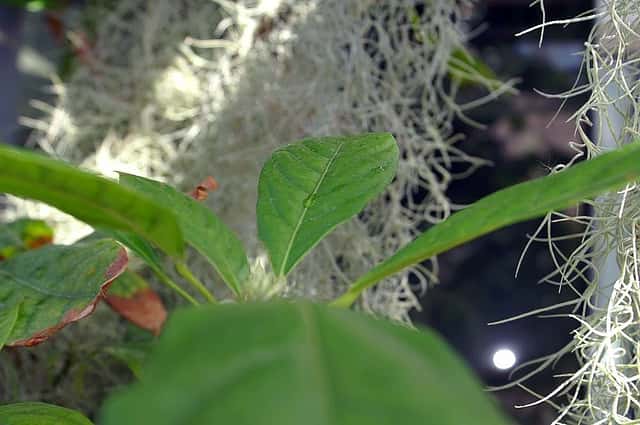
The kola nut (Cola acuminata) is an evergreen tree belonging to the mallow family (Malvaceae), originating from the lower canopy of the rainforests of West and Central Africa. It can grow up to 20 meters tall with a similar crown diameter in its natural habitat, featuring glossy, leathery, oblong-ovate leaves. Its small, petal-less flowers are creamy yellow with purple striations and bloom in clusters on woodier shoots. The fruit, contained in a woody pod, holds seeds rich in caffeine and theobromine—the famous kola nuts—which have been chewed for centuries in West Africa for their stimulating effects and were the original namesake and ingredient for cola-flavored soft drinks, including Coca-Cola.
How to Propagate Kola nut?
How Big Does Kola nut Grow?
TLDR: Kola nut can reach up to 20.0m tall with Medium growth rate.
Max height
20.0m
Spread
20.0m
Growth rate
Medium
Foliage
Evergreen
Warning: Toxic Plant
This plant can be toxic if ingested. Keep out of reach of:
Plant Uses
Ornamental
Great for decoration
Edible
Can be consumed
Medicinal
Medicinal properties
Medicinal Uses
- As a natural stimulant to reduce fatigue and exhaustion
- As a digestive aid to alleviate symptoms of diarrhea and dysentery
- For the traditional treatment of headaches and migraines
- As an appetite suppressant in West African folk medicine
- To relieve coughs and chest complaints using a decoction made from leaves and bark
Culinary Uses
- Chewing the seeds as a stimulating, caffeinated snack
- An infusion made from ground seeds as a stimulating beverage
- As a flavoring base for cola-flavored soft drinks (originally e.g., Coca-Cola)
- As a natural red dye in food products
- As an ingredient in heat-resistant chocolate products
Is your plant showing symptoms?
Click on the symptom to discover possible causes:
What Diseases Commonly Affect Kola nut?
TLDR: Kola nut is susceptible to 5 known diseases. Monitor regularly for early detection.
Root Rot
Root rot is a serious fungal disease that affects the root system of plants, causing them to decay and die. It is primarily caused by overwatering, poor drainage, or soil-borne fungi such as Pythium, Phytophthora, Rhizoctonia, and Fusarium. The disease thrives in waterlogged conditions where roots are deprived of oxygen, making them susceptible to fungal infection.
Anthracnose
Anthracnose is a fungal disease caused by fungi in the genus Colletotrichum that affects many plants, including vegetables, fruits, and trees. The disease thrives in cool, wet conditions, causing dark, sunken lesions on leaves, stems, flowers, and fruits.
Mealybugs
Mealybugs are small, soft-bodied insects covered with a white, waxy, cottony material. They are common pests of houseplants and outdoor plants in mild climates. These sap-sucking insects feed on plant tissue, causing damage, stunted growth, and can lead to plant death if left untreated. They produce sticky honeydew which attracts sooty mold.
sap-sucking pests
Group of pests including aphids and scales, feeding on sugary sap on leaves, twigs, and branches. These pests often produce honeydew, which can later be infected by a fungal disease
Meaning & Symbolism
In West Africa, the kola nut is a symbol of hospitality, respect, and unity. The ceremony of 'breaking the kola' accompanies marriages, peace treaties, ancestral rites, and important meetings alike: the host expresses goodwill, and the guest shows appreciation for the relationship by accepting it. In some cultures—such as in Mali—red-tinted kola nuts are also regarded as symbols of love, happiness, and good fortune.
Compare with similar plants
| Attribute | Difficulty | Light | Watering | Pet Safe |
|---|---|---|---|---|
| Dark Fieldcap | Medium | Low light | 2d | ⚠️ |
| Azalea | Medium | Partial shade | 3d | ⚠️ |
| Muriel's Bamboo | Medium | Partial shade | 3d | ✓ |
| Bougainvillea | Medium | Direct sun | 7d | ⚠️ |




