Cornaceae
Kousa Dogwood (Cornus kousa)
Cornus kousa
A temperate ornamental tree, hardy to about -25 °C (USDA zones 5-8). Give it sun or part shade, rich, moist, well-drained loam and water in dry spells. It grows slowly and needs little pruning. Not an indoor plant.
Every 7 days
Bright indirect
-25° - °C
% - %
Categories
What is Kousa Dogwood?
Kousa Dogwood (Cornus kousa) is a medium-care plant from the Cornaceae family. Cornus kousa is a small deciduous tree native to East Asia: China, Japan, Korea, Taiwan and the eastern Himalaya. It reaches 6-9 m tall with a broad, rounded crown. In late spring and early summer, after the leaves are out, it is covered in white star-shaped "flowers": actually four pointed bracts,...
Kousa Dogwood grows up to 9.0m, spread of 900cm, watering every 7 days. It is not suitable for indoor environments and safe for pets.
Unlike many popular species, Kousa Dogwood is safe to keep around pets.
How to Care for Kousa Dogwood?
TLDR: Kousa Dogwood needs Bright indirect, watering every 7 days, and temperatures between -25-30°C with 40-70% humidity.
How Often Should You Water Kousa Dogwood?
Water deeply about once a week for the first two years and during dry spells. Established trees cope better, but drought and reflected heat scorch the leaf edges. Mulch over the roots helps keep the soil moist.
How Much Light Does Kousa Dogwood Need?
Full sun to part shade. It flowers best in sun; where summers are very hot, give it afternoon shade and keep it away from walls and paving that reflect heat.
What Is the Best Soil for Kousa Dogwood?
Rich, moist, well-drained loam, ideally acidic to neutral. It tolerates clay but not shallow chalky soils.
What Pot Should You Use for Kousa Dogwood?
Best in the ground. Young trees can spend a few years in a large, deep pot with drainage holes, but it needs to go into the garden.
What Is Kousa Dogwood and Where Does It Come From?
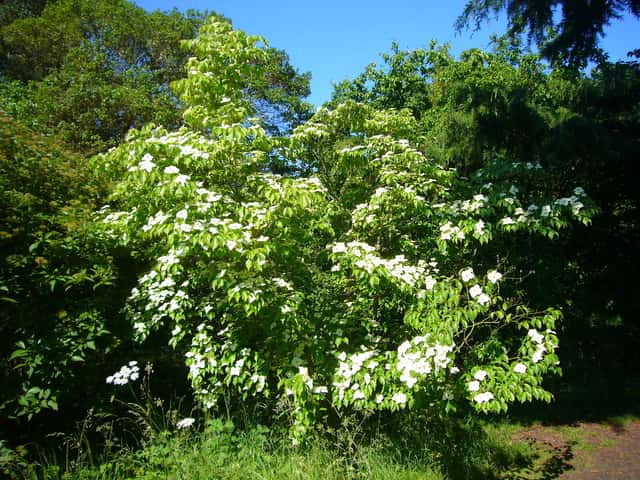
Cornus kousa is a small deciduous tree native to East Asia: China, Japan, Korea, Taiwan and the eastern Himalaya. It reaches 6-9 m tall with a broad, rounded crown. In late spring and early summer, after the leaves are out, it is covered in white star-shaped "flowers": actually four pointed bracts, 5-7 cm long, around a button of tiny true flowers. The bracts often turn pinkish as they age. Late in summer come round red fruits that look like large raspberries, with sweet, custardy pulp. In autumn the leaves turn red to purple, and the bark of older trunks peels in patches into a mosaic.
How to Propagate Kousa Dogwood?
Seed
Seedlings take years to flower and can vary. A warm spell before the cold treatment can help stored seed.
- 1 Take seeds from ripe fruits and wash off all pulp, which inhibits germination
- 2 Sow straight away in a cold frame or outdoor seedbed
- 3 If you store seed, keep it moist in the fridge for 3-4 months before sowing
- 4 Pot up seedlings once they have a few true leaves
Materials needed:
Semi-ripe cuttings
Layering young shoots in early summer also works but takes about 9 months to root.
- 1 In midsummer, take 10-15 cm semi-ripe side shoots
- 2 Strip the lower leaves and dip in rooting hormone
- 3 Insert in a light, moist mix in a closed frame or under plastic
- 4 Keep in bright shade and moist until rooted
Materials needed:
How Big Does Kousa Dogwood Grow?
TLDR: Kousa Dogwood can reach up to 9.0m tall with Slow growth rate.
Max height
9.0m
Spread
9.0m
Growth rate
Slow
Foliage
Deciduous
Plant Uses
Ornamental
Great for decoration
Edible
Can be consumed
Culinary Uses
- Ripe fruit eaten raw: sweet, custardy pulp (discard skin and seeds)
- Jams and purées made from the pulp
- Young leaves, cooked
Is your plant showing symptoms?
Click on the symptom to discover possible causes:
What Diseases Commonly Affect Kousa Dogwood?
TLDR: Kousa Dogwood is susceptible to 10 known diseases. Monitor regularly for early detection.
Anthracnose
Anthracnose is a fungal disease caused by fungi in the genus Colletotrichum that affects many plants, including vegetables, fruits, and trees. The disease thrives in cool, wet conditions, causing dark, sunken lesions on leaves, stems, flowers, and fruits.
Gray Mold (Botrytis Blight)
Gray mold, caused by the fungus Botrytis cinerea, is one of the most common fungal diseases in plants. It affects over 200 plant species, including ornamentals, vegetables, fruits, and houseplants. The disease thrives in cool, humid conditions with poor air circulation, causing grayish spots and soft rot on infected tissues.
Canker
Canker is a disease caused by various fungi and bacteria that create necrotic, sunken areas on bark of branches, stems, and trunks. Pathogens enter through wounds and natural openings, especially when plants are stressed. Canker can gradually weaken or kill branches by disrupting water and nutrient flow.
Xylella fastidiosa
Xylella fastidiosa is a harmful bacterium that lives in a plant’s xylem (the tubes that move water). It clogs these tubes, so parts of the plant dry out even when the soil is moist. Typical signs include brown, crispy leaf edges (leaf scorch), yellowing between veins, stunted growth, one-sided dieback on shoots or branches, early leaf drop, and small or shrivelled fruit. It spreads mainly by small sap-feeding insects such as spittlebugs and sharpshooters, and by moving infected plants or cuttings. Many plants can be affected, including olive, grapevine, citrus, almond, cherry, lavender, rosemary, oleander, oak, and maple. This is a regulated disease in many regions.
Fun Facts
The white 'petals' are not petals: they are bracts, modified leaves around the tiny true flowers.
The fruit looks like a large raspberry dangling on a long stalk.
On old trees the bark flakes off in patches, leaving a mosaic of grey, tan and cream.
Frequently asked questions
Is kousa dogwood fruit edible?
When does kousa dogwood bloom?
Does it get anthracnose like flowering dogwood?
Can it take hot climates?
Compare with similar plants
| Attribute | Difficulty | Light | Watering | Pet Safe |
|---|---|---|---|---|
| Dark Fieldcap | Medium | Low light | 2d | ⚠️ |
| Azalea | Medium | Partial shade | 3d | ⚠️ |
| Muriel's Bamboo | Medium | Partial shade | 3d | ✓ |
| Bougainvillea | Medium | Direct sun | 7d | ⚠️ |