Orchidaceae
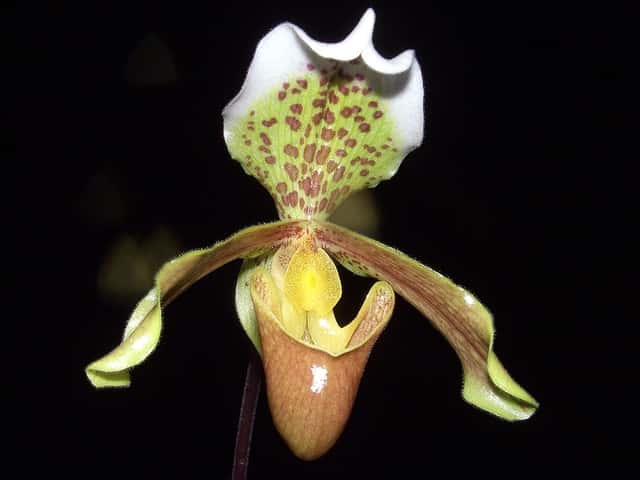
Lady Slipper Orchid (Paphiopedilum insigne)
Paphiopedilum insigne
A moderately demanding orchid that thrives in cool to intermediate temperatures with indirect light. Water weekly, keeping the medium slightly moist but never waterlogged. Provide 50-70% humidity and good air circulation. Fertilize monthly during the growing season and repot every two years when the medium breaks down.
Every 7 days
Partial shade
10° - 27°C
50% - 70%
Categories
What is Lady Slipper Orchid?
Lady Slipper Orchid (Paphiopedilum insigne) is a medium-care plant from the Orchidaceae family. Paphiopedilum insigne is a stunning terrestrial orchid native to the misty forests of Southeast Asia and the Himalayas. Known for its distinctive pouch-shaped lip that resembles a delicate slipper, this cool-growing orchid produces elegant flowers in shades of green, yellow, and brown with character...
Lady Slipper Orchid grows up to 60cm, spread of 30cm, watering every 7 days, 10°C – 27°C, 50–70% humidity. It is suitable for indoor environments and safe for pets.
Unlike many popular species, Lady Slipper Orchid is safe to keep around pets. Without adequate drainage, root rot can develop within 14 days.
How to Care for Lady Slipper Orchid?
TLDR: Lady Slipper Orchid needs Partial shade, watering every 7 days, and temperatures between 10-27°C with 50-70% humidity.
How Often Should You Water Lady Slipper Orchid?
Water thoroughly when the top inch of the potting medium feels dry, typically once a week. Use tepid water and avoid wetting the crown, as standing water in the leaf axils can cause bacterial rot. Reduce watering slightly in winter.
How Much Light Does Lady Slipper Orchid Need?
Provide bright, indirect light (800-1000 foot-candles). East or west-facing windows are ideal. Avoid direct sunlight, which can burn the leaves. The plain green leaves indicate this is a cool-growing type that tolerates lower light than mottled-leaf varieties.
What Is the Best Soil for Lady Slipper Orchid?
Use a well-draining orchid mix of fine-grade fir bark, perlite, and sphagnum moss. The medium should retain some moisture while allowing air to reach the roots. Repot every 2 years or when the medium starts to decompose.
What Pot Should You Use for Lady Slipper Orchid?
Use plastic or ceramic pots with drainage holes. Plastic retains moisture longer, which suits this species. Avoid terracotta as it dries out too quickly. Choose a pot just large enough for the root system.
Care Schedule
Fertilize
Every 30 days
Misting
Every 3 days
Repot
Every 730 days
What Is Lady Slipper Orchid and Where Does It Come From?
Paphiopedilum insigne is a stunning terrestrial orchid native to the misty forests of Southeast Asia and the Himalayas. Known for its distinctive pouch-shaped lip that resembles a delicate slipper, this cool-growing orchid produces elegant flowers in shades of green, yellow, and brown with characteristic spotted patterns. It is the type species of the Paphiopedilum genus and has been cultivated since the 19th century, prized for its long-lasting blooms that can persist for 6-8 weeks.
How to Propagate Lady Slipper Orchid?
Division
Only divide mature clumps with multiple growths. Single-growth divisions rarely survive. Best done after flowering in spring.
- 1 Wait until the plant has at least 3-4 growths in a clump
- 2 Remove the plant from its pot after flowering
- 3 Carefully separate divisions ensuring each has at least 2-3 growths with healthy roots
- 4 Dust cut surfaces with cinnamon or fungicide
- 5 Pot each division in fresh orchid medium
Materials needed:
How Big Does Lady Slipper Orchid Grow?
TLDR: Lady Slipper Orchid can reach up to 60cm tall with Slow growth rate.
Max height
60cm
Spread
30cm
Growth rate
Slow
Foliage
Evergreen
Plant Uses
Ornamental
Great for decoration
Is your plant showing symptoms?
Click on the symptom to discover possible causes:
What Diseases Commonly Affect Lady Slipper Orchid?
TLDR: Lady Slipper Orchid is susceptible to 10 known diseases. Monitor regularly for early detection.
Root Rot
Root rot is a serious fungal disease that affects the root system of plants, causing them to decay and die. It is primarily caused by overwatering, poor drainage, or soil-borne fungi such as Pythium, Phytophthora, Rhizoctonia, and Fusarium. The disease thrives in waterlogged conditions where roots are deprived of oxygen, making them susceptible to fungal infection.
Anthracnose
Anthracnose is a fungal disease caused by fungi in the genus Colletotrichum that affects many plants, including vegetables, fruits, and trees. The disease thrives in cool, wet conditions, causing dark, sunken lesions on leaves, stems, flowers, and fruits.
Mealybugs
Mealybugs are small, soft-bodied insects covered with a white, waxy, cottony material. They are common pests of houseplants and outdoor plants in mild climates. These sap-sucking insects feed on plant tissue, causing damage, stunted growth, and can lead to plant death if left untreated. They produce sticky honeydew which attracts sooty mold.
Aphids
Aphids are small, soft-bodied, pear-shaped insects (1/16 to 1/8 inch long) that feed by sucking nutrient-rich sap from plants. They reproduce rapidly and can quickly weaken plants, causing distorted growth and transmitting plant viruses. Aphids come in various colors including green, black, red, yellow, brown, and gray. They secrete honeydew, a sticky substance that attracts ants and encourages sooty mold growth.
Meaning & Symbolism
Symbolizes elegance, refinement, and sophisticated beauty. In Victorian times, orchids represented luxury and rare beauty.
Fun Facts
Paphiopedilum insigne is the type species of the entire Paphiopedilum genus, first described in 1820
The distinctive pouch-shaped lip acts as a natural insect trap to aid pollination
A single flower can last 6-8 weeks on the plant, making it one of the longest-lasting orchid blooms
This species was one of the first tropical orchids to be successfully cultivated in Europe in the 19th century
Frequently asked questions
How often should I water my Lady Slipper Orchid?
Why is my Paphiopedilum insigne not blooming?
Is the Lady Slipper Orchid toxic to pets?
How do I repot a Paphiopedilum insigne?
Compare with similar plants
| Attribute | Difficulty | Light | Watering | Pet Safe |
|---|---|---|---|---|
| Dark Fieldcap | Medium | Low light | 2d | ⚠️ |
| Azalea | Medium | Partial shade | 3d | ⚠️ |
| Muriel's Bamboo | Medium | Partial shade | 3d | ✓ |
| Bougainvillea | Medium | Direct sun | 7d | ⚠️ |




