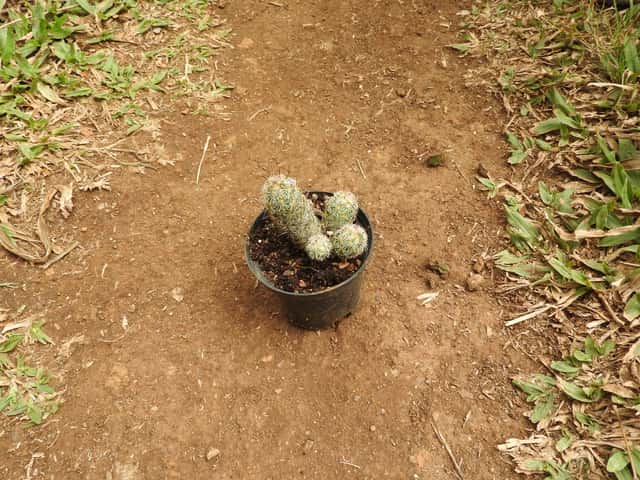
Cactaceae
Ladyfinger Cactus: Full Sun Plant
Mammillaria elongata
Easy-care cactus that thrives with direct sunlight and infrequent watering. Tolerates drought well and requires substrate with excellent drainage. Produces small flowers in spring.
Every 21 days
Direct sun
4° - 35°C
10% - 40%
Categories
What is Ladyfinger Cactus?
Ladyfinger Cactus (Mammillaria elongata) is a easy-care plant from the Cactaceae family. Mammillaria elongata is a small cactus native to central Mexico, valued for its clustered cylindrical stems that form dense, compact mounds. Its golden or copper-colored spines give it a bright, decorative appearance. Ideal for beginners due to its resilience and easy care.
Ladyfinger Cactus grows up to 15cm, spread of 30cm, watering every 21 days, 4°C – 35°C, 10–40% humidity. It is suitable for indoor environments and safe for pets.
Unlike many tropical plants, Ladyfinger Cactus tolerates watering mistakes. Best for beginners. Unlike many popular species, Ladyfinger Cactus is safe to keep around pets. Without adequate drainage, root rot can develop within 42 days.
How to Care for Ladyfinger Cactus?
TLDR: Ladyfinger Cactus needs Direct sun, watering every 21 days, and temperatures between 4-35°C with 10-40% humidity.
How Often Should You Water Ladyfinger Cactus?
Water only when the substrate is completely dry. Every 2-3 weeks in summer, almost stop watering in winter. Excess water causes root rot.
How Much Light Does Ladyfinger Cactus Need?
Requires at least 4 hours of direct sunlight daily. Place near a sunny window. With low light, stems elongate and lose their compact shape.
What Is the Best Soil for Ladyfinger Cactus?
Use cactus mix with excellent drainage: 2 parts peat, 1 part coarse sand, and 1 part perlite. The pot must have drainage holes.
What Pot Should You Use for Ladyfinger Cactus?
Terracotta pot with drainage holes. Clay allows substrate to dry faster, preventing rot.
Care Schedule
Fertilize
Every 30 days
Repot
Every 730 days
What Is Ladyfinger Cactus and Where Does It Come From?
Mammillaria elongata is a small cactus native to central Mexico, valued for its clustered cylindrical stems that form dense, compact mounds. Its golden or copper-colored spines give it a bright, decorative appearance. Ideal for beginners due to its resilience and easy care.
How to Propagate Ladyfinger Cactus?
Offsets
Propagation by offsets is the easiest and most effective method
- 1 Wait until basal offsets reach 2-3 cm
- 2 Carefully separate from mother plant with a clean knife
- 3 Let the wound dry for 2-3 days in a shaded spot
- 4 Plant in dry cactus substrate
- 5 Do not water for the first week
Materials needed:
How Big Does Ladyfinger Cactus Grow?
TLDR: Ladyfinger Cactus can reach up to 15cm tall with Slow growth rate.
Max height
15cm
Spread
30cm
Growth rate
Slow
Foliage
Evergreen
Plant Uses
Ornamental
Great for decoration
Is your plant showing symptoms?
Click on the symptom to discover possible causes:
What Diseases Commonly Affect Ladyfinger Cactus?
TLDR: Ladyfinger Cactus is susceptible to 26 known diseases. Monitor regularly for early detection.
Root Rot
Root rot is a serious fungal disease that affects the root system of plants, causing them to decay and die. It is primarily caused by overwatering, poor drainage, or soil-borne fungi such as Pythium, Phytophthora, Rhizoctonia, and Fusarium. The disease thrives in waterlogged conditions where roots are deprived of oxygen, making them susceptible to fungal infection.
Pythium Root Rot
Pythium root rot is a serious fungal disease caused by various Pythium species including P. aphanidermatum, P. ultimum, and P. irregulare. These water molds are present in practically all cultivated soils and attack plant roots under wet conditions, causing rapid wet rot that can extend into the stem. The disease is favored by poor drainage, overwatering, and specific temperatures depending on the species.
Phytophthora Root Rot
Disease caused by fungus-like organisms (oomycetes) that live in soil and can survive for years. It affects roots, stem, and crown of plants, being especially severe in waterlogged or poorly drained soils. It is the second most common cause of root rot in trees and shrubs.
Crown Rot
Crown rot is a serious fungal disease that attacks the crown (base) of the plant where the stem meets the soil. It is caused by various fungal pathogens including Phytophthora, Fusarium, and Rhizoctonia. The disease thrives in waterlogged conditions and can quickly spread to kill the entire plant if not addressed promptly.
Meaning & Symbolism
Symbolizes resilience, adaptation, and survival in adverse conditions. Represents the ability to thrive with little.
Compare with similar plants
| Attribute | Difficulty | Light | Watering | Pet Safe |
|---|---|---|---|---|
| Field Maple | Easy | Bright indirect | 14d | ✓ |
| Silver Birch | Easy | Direct sun | 14d | ✓ |
| Common Blanketflower | Easy | Direct sun | 10d | ✓ |
| Cushion Bush | Easy | Direct sun | 14d | ✓ |





