Malvaceae
Large-leaved Lime: Aromatic Plant
Tilia platyphyllos
A hardy, low-maintenance shade tree best grown in full sun to part shade in fertile, well-drained soil. Tolerates heavy pruning and is generally resilient once established.
Every 14 days
Bright indirect
-34° - 35°C
40% - 70%
Categories
What is Large-leaved Lime?
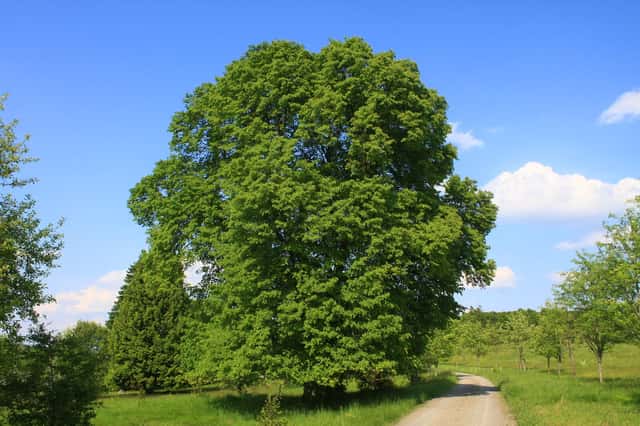
Large-leaved Lime (Tilia platyphyllos) is a easy-care plant from the Malvaceae family. The large-leaved lime (Tilia platyphyllos) is a large deciduous tree native to Europe, in the family Malvaceae. It grows up to 25 m tall with a dense, pyramidal crown. Its fragrant pale-yellow flowers, highly attractive to bees, are traditionally harvested to brew linden tea.
Large-leaved Lime grows up to 25.0m, spread of 1500cm, watering every 14 days, -34°C – 35°C, 40–70% humidity. It is not suitable for indoor environments and safe for pets.
Unlike many tropical plants, Large-leaved Lime tolerates watering mistakes. Best for beginners. Unlike many popular species, Large-leaved Lime is safe to keep around pets.
How to Care for Large-leaved Lime?
TLDR: Large-leaved Lime needs Bright indirect, watering every 14 days, and temperatures between -34-35°C with 40-70% humidity.
How Often Should You Water Large-leaved Lime?
Water regularly during the first few years to establish deep roots; mature trees tolerate moderate drought but dislike waterlogged soil.
How Much Light Does Large-leaved Lime Need?
Prefers full sun but tolerates partial shade; good light exposure supports abundant summer flowering.
What Is the Best Soil for Large-leaved Lime?
Adapts to clay, loam, and sandy soils as long as they are fertile and well-drained, with a neutral to mildly alkaline pH.
What Pot Should You Use for Large-leaved Lime?
Not suitable for container growing due to its mature size; plant directly in open ground with ample space.
What Is Large-leaved Lime and Where Does It Come From?
The large-leaved lime (Tilia platyphyllos) is a large deciduous tree native to Europe, in the family Malvaceae. It grows up to 25 m tall with a dense, pyramidal crown. Its fragrant pale-yellow flowers, highly attractive to bees, are traditionally harvested to brew linden tea.
How to Propagate Large-leaved Lime?
Seed propagation
Germination is slow and uneven; seeds often need double dormancy-breaking stratification.
- 1 Collect ripe seeds in autumn
- 2 Cold-stratify for 3-4 months before sowing
- 3 Sow in well-drained substrate in spring
Materials needed:
Ground layering
A traditional method historically used to propagate lindens before nursery stock was widely available.
- 1 Bend a low, flexible branch down to the soil
- 2 Nick the bark where it touches the ground
- 3 Cover with soil and keep consistently moist until rooted
- 4 Sever from the parent tree once rooted
Materials needed:
How Big Does Large-leaved Lime Grow?
TLDR: Large-leaved Lime can reach up to 25.0m tall with Medium growth rate.
Max height
25.0m
Spread
15.0m
Growth rate
Medium
Foliage
Deciduous
Plant Uses
Ornamental
Great for decoration
Medicinal
Medicinal properties
Edible
Can be consumed
Aromatic
Pleasant fragrance
Medicinal Uses
- Flower tea traditionally used as a calming, sleep-supporting infusion
- Traditionally used to ease cold symptoms and mild anxiety
Culinary Uses
- Dried flowers brewed as linden tea (tilleul)
- Young leaves edible in salads
Is your plant showing symptoms?
Click on the symptom to discover possible causes:
What Diseases Commonly Affect Large-leaved Lime?
TLDR: Large-leaved Lime is susceptible to 10 known diseases. Monitor regularly for early detection.
Aphids
Aphids are small, soft-bodied, pear-shaped insects (1/16 to 1/8 inch long) that feed by sucking nutrient-rich sap from plants. They reproduce rapidly and can quickly weaken plants, causing distorted growth and transmitting plant viruses. Aphids come in various colors including green, black, red, yellow, brown, and gray. They secrete honeydew, a sticky substance that attracts ants and encourages sooty mold growth.
Sooty Mold
Sooty mold is a fungal disease that develops on surfaces coated with honeydew, a sticky sweet substance secreted by sap-sucking insects like aphids, scale insects, and whiteflies. While it does not directly infect plant tissue, it reduces photosynthetic capacity by blocking sunlight and diminishes the plant's aesthetic appearance.
Powdery Mildew
Powdery mildew is a common fungal disease caused by various fungi species including Erysiphe, Podosphaera, Oïdium, and Leveillula. It affects over 10,000 plant species worldwide. The disease thrives in warm, dry climates with high humidity and appears as a distinctive white powdery coating on plant surfaces.
Leaf Spot
Leaf spot is a common fungal disease caused by various pathogens including Alternaria, Ascochyta, Colletotrichum, Septoria, and Venturia. It primarily affects leaves, causing discolored spots that can lead to premature leaf drop if left untreated.
Meaning & Symbolism
In European folklore the linden symbolizes love, friendship, and protection; sacred to Aphrodite and Freyja, it remains a national emblem of the Czech Republic, Slovakia, and Slovenia.
Compare with similar plants
| Attribute | Difficulty | Light | Watering | Pet Safe |
|---|---|---|---|---|
| Field Maple | Easy | Bright indirect | 14d | ✓ |
| Silver Birch | Easy | Direct sun | 14d | ✓ |
| Common Blanketflower | Easy | Direct sun | 10d | ✓ |
| Cushion Bush | Easy | Direct sun | 14d | ✓ |
Choose & Compare
Sources & References
- Tilia platyphyllos - NC State Extension Gardener Plant Toolbox
- Tilia platyphyllos - PFAF Plant Database
- Toxic and Non-toxic Plants: Linden - ASPCA
- Linden (Tilia spp.)-Sooty Mold - PNW Plant Disease Management Handbook
- Linden (Tilia)-Linden Gall Mite - PNW Insect Management Handbook
- Lime tree in culture - Wikipedia
- Tilia Trees in Portland, Aphids, and Pesticide Advisory - Portland.gov





