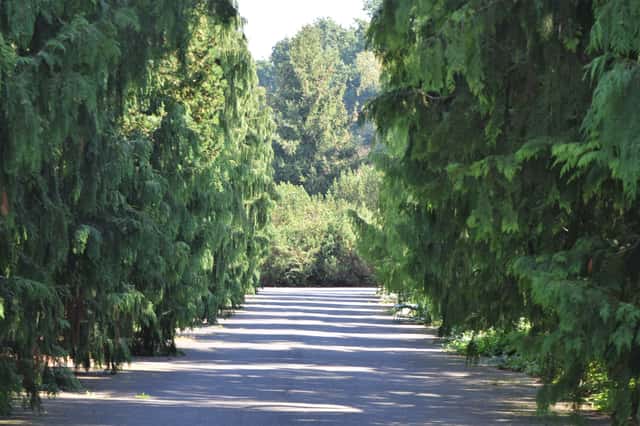
Cupressaceae
Lawson's Cypress – Chamaecyparis lawsoniana
Chamaecyparis lawsoniana
Lawson's Cypress thrives in full sun to partial shade with consistently moist, well-draining soil. Water every 7–14 days depending on season, avoid waterlogged conditions. Hardy in zones 5a–9b, tolerating temperatures as low as -18°C.
Every 10 days
Bright indirect
-18° - 35°C
50% - 80%
Categories
What is Lawson's Cypress?
Lawson's Cypress (Chamaecyparis lawsoniana) is a medium-care plant from the Cupressaceae family. Chamaecyparis lawsoniana, known as Lawson's Cypress or Port-Orford-cedar, is a large evergreen conifer native to southwestern Oregon and northwestern California. Renowned for its graceful, drooping branch tips and scale-like foliage, it is widely cultivated as an ornamental tree and hedge plant in t...
Lawson's Cypress grows up to 30.0m, spread of 600cm, watering every 10 days, -18°C – 35°C, 50–80% humidity. It is not suitable for indoor environments and safe for pets.
Unlike many popular species, Lawson's Cypress is safe to keep around pets.
How to Care for Lawson's Cypress?
TLDR: Lawson's Cypress needs Bright indirect, watering every 10 days, and temperatures between -18-35°C with 50-80% humidity.
How Often Should You Water Lawson's Cypress?
Water deeply every 7–14 days, allowing the top inch of soil to dry slightly between waterings. Avoid overwatering — root rot is the primary risk. Mulch around the base to retain moisture during dry spells.
How Much Light Does Lawson's Cypress Need?
Prefers full sun (6+ hours/day) but tolerates partial shade. In hotter climates, afternoon shade prevents foliage scorch. Bright direct light ensures dense, healthy foliage and good form.
What Is the Best Soil for Lawson's Cypress?
Plant in well-draining loamy or sandy soil with a pH of 5.5–7.5. Amend heavy clay soils with sand or perlite. Avoid waterlogged or compacted soils.
What Pot Should You Use for Lawson's Cypress?
Outdoors in open ground or large containers; not suited for standard indoor pots.
Care Schedule
Fertilize
Every 14 days
Misting
Every 3 days
Rotate
Every 7 days
Repot
Every 365 days
What Is Lawson's Cypress and Where Does It Come From?
Chamaecyparis lawsoniana, known as Lawson's Cypress or Port-Orford-cedar, is a large evergreen conifer native to southwestern Oregon and northwestern California. Renowned for its graceful, drooping branch tips and scale-like foliage, it is widely cultivated as an ornamental tree and hedge plant in temperate gardens worldwide.
How Big Does Lawson's Cypress Grow?
TLDR: Lawson's Cypress can reach up to 30.0m tall with Slow growth rate.
Max height
30.0m
Spread
6.0m
Growth rate
Slow
Foliage
Evergreen
Plant Uses
Ornamental
Great for decoration
Is your plant showing symptoms?
Click on the symptom to discover possible causes:
What Diseases Commonly Affect Lawson's Cypress?
TLDR: Lawson's Cypress is susceptible to 8 known diseases. Monitor regularly for early detection.
Root Rot
Root rot is a serious fungal disease that affects the root system of plants, causing them to decay and die. It is primarily caused by overwatering, poor drainage, or soil-borne fungi such as Pythium, Phytophthora, Rhizoctonia, and Fusarium. The disease thrives in waterlogged conditions where roots are deprived of oxygen, making them susceptible to fungal infection.
Phytophthora Root Rot
Disease caused by fungus-like organisms (oomycetes) that live in soil and can survive for years. It affects roots, stem, and crown of plants, being especially severe in waterlogged or poorly drained soils. It is the second most common cause of root rot in trees and shrubs.
Canker
Canker is a disease caused by various fungi and bacteria that create necrotic, sunken areas on bark of branches, stems, and trunks. Pathogens enter through wounds and natural openings, especially when plants are stressed. Canker can gradually weaken or kill branches by disrupting water and nutrient flow.
Aphids
Aphids are small, soft-bodied, pear-shaped insects (1/16 to 1/8 inch long) that feed by sucking nutrient-rich sap from plants. They reproduce rapidly and can quickly weaken plants, causing distorted growth and transmitting plant viruses. Aphids come in various colors including green, black, red, yellow, brown, and gray. They secrete honeydew, a sticky substance that attracts ants and encourages sooty mold growth.
Fun Facts
Lawson's Cypress timber is so prized it was once used to make coffins in Japan and matches in the US.
The species has over 200 named cultivars, ranging from tiny dwarfs to 60-metre giants.
Native to a small coastal region straddling Oregon and California, it was introduced to Europe in 1854.
Frequently asked questions
How fast does Lawson's Cypress grow?
Is Lawson's Cypress toxic to pets?
Can I grow Lawson's Cypress in a pot?
Compare with similar plants
| Attribute | Difficulty | Light | Watering | Pet Safe |
|---|---|---|---|---|
| Dark Fieldcap | Medium | Low light | 2d | ⚠️ |
| Azalea | Medium | Partial shade | 3d | ⚠️ |
| Muriel's Bamboo | Medium | Partial shade | 3d | ✓ |
| Bougainvillea | Medium | Direct sun | 7d | ⚠️ |




